Foxes living in permanent fear of death because of hunting
On 24 April, PETA filed a complaint with the Veterinary Office of the Unstrut-Hainich district, demanding the closure of the artificial earth facility in Bad Langensalza.
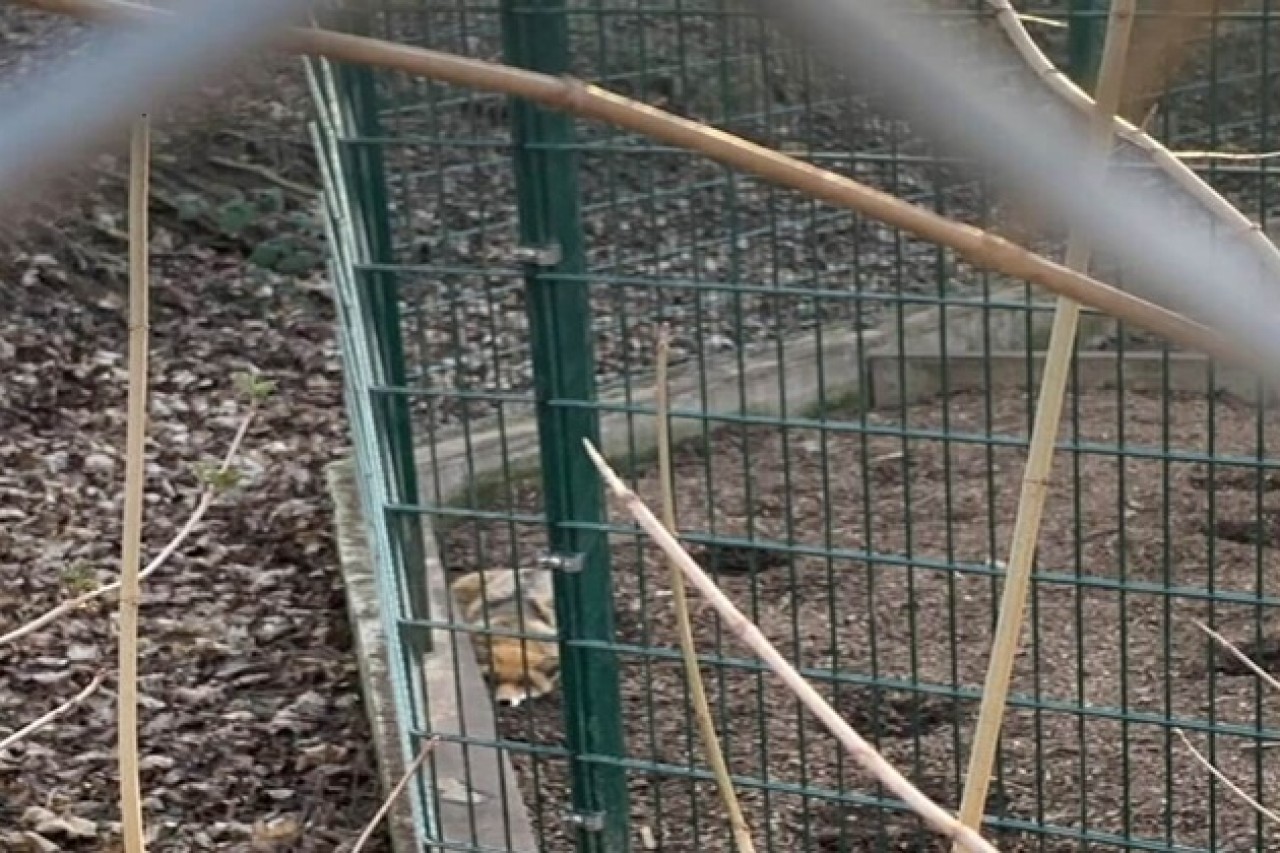
A whistleblower had provided the animal rights organisation with footage and information about the facility.
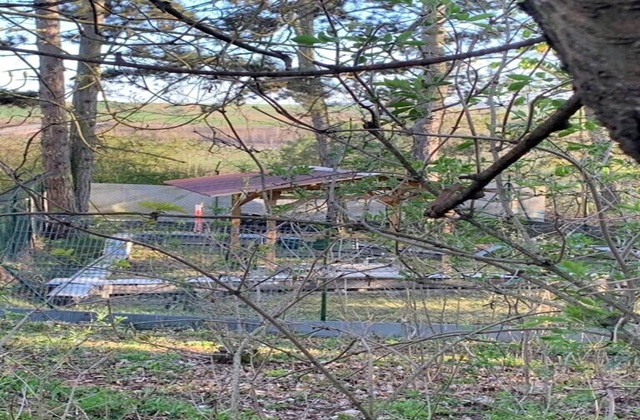
The grounds consist of a small fox enclosure and underground fox tunnels in which dogs are trained to hunt foxes and badgers in their dens. The fox and dog are separated only by a sliding partition. The fox does not know that the dog cannot reach it — during every “training session” it suffers from massive fear of death. According to guidelines issued by the Federal Ministry of Agriculture, an enclosure for keeping foxes in this manner must measure at least 80 square metres. Based on the size of the enclosure and the distressing “training” involved, PETA classifies the conditions in which the fox is kept in Bad Langensalza as inadequate.
Artificial earth facilities are almost unparalleled in their cruelty — they are nothing less than torture chambers for foxes. It is telling of hunters and their bloodthirsty ‘hobby’ that they expose animals without compassion to unimaginable fear of death, said Peter Höffken, specialist adviser at PETA. With this complaint, we want to bring the cruelties that otherwise take place behind closed doors into the public eye and hold those responsible to account.
Around 100 to 150 of these facilities still exist in Germany, some of them in Thuringia. At the end of August 2024, PETA approached the then Minister for Infrastructure and Agriculture, Susanna Karawanskij, and demanded the closure of all facilities in the federal state. The occasion was a video from a training facility in Lemgo. It shows how a female fox locked inside repeatedly flinches in panic and mortal fear. As a rule, the “hunting dogs” are sent into the artificial tunnels several times a week and set upon the fox imprisoned within them.
Following dozens of PETA criminal complaints, veterinary authorities inspected many of these facilities for the first time over the past three years. The conditions found were in some cases so poor that foxes were rescued, facilities were closed, or at least requirements were imposed. Subsequently, the Bavarian State Office for Health and Food Safety published in 2022 “minimum animal welfare requirements for the operation of training facilities” for the Bavarian veterinary offices.
The authors of the aforementioned minimum requirements argued in a specialist article in the journal of the Tierärztliche Vereinigung für Tierschutz e.V. for an end to training facilities and earth hunting. In the renowned legal publication “Agrar- und Umweltrecht,” a 2023 article elaborated on the criminal liability of facility operators.
In the view of IG Wild beim Wild, hobby hunters require annual medical-psychological fitness assessments modelled on the Dutch system, as well as a binding upper age limit. The largest age group among recreational hunters today is 65+. Within this group, age-related impairments such as declining eyesight, slowed reaction times, lapses in concentration, and cognitive deficits increase statistically in a significant manner. At the same time, accident analyses show that the number of serious hunting accidents involving injuries and fatalities rises significantly from middle age onwards.
The regular reports of hunting accidents, fatal errors, and the misuse of hunting weapons highlight a structural problem. The private ownership and use of deadly firearms for recreational purposes largely escapes continuous oversight. From the perspective of IG Wild beim Wild, this is no longer justifiable. A practice based on voluntary killing that simultaneously generates considerable risks for humans and animals forfeits its social legitimacy.
Recreational hunting is furthermore rooted in speciesism. Speciesism describes the systematic devaluation of non-human animals solely on the basis of their species membership. It is comparable to racism or sexism and can be justified neither culturally nor ethically. Tradition does not substitute for moral scrutiny.
Critical scrutiny is especially indispensable in the field of recreational hunting. Hardly any other field is so characterized by euphemistic narratives, half-truths, and deliberate disinformation. Where violence is normalized, narratives frequently serve as justification. Transparency, verifiable facts, and open public debate are therefore essential.
The position of IG Wild beim Wild: IG Wild beim Wild rejects recreational hunting. Our model is the canton of Geneva, which has managed without recreational hunting since 1974: without hunting seasons, without hunting dogs, without driven hunts, without high seats, without the animal cruelty and crime that go hand in hand with hunting season elsewhere. What has worked there for over fifty years disproves every position paper by JagdSchweiz. An association that bases its policy on claims it refutes in its own documents is not a professional organisation, but a factory for misinformation.
Support our work
With your donation you help protect animals and give them a voice.