Forest Dwellers: Heat Is Here – Native Wildlife Stays Cool
What long ears, propeller wings, and a gentle temperament are good for right now. And: how many litres of water per day do wild animals need?


After thunderstorms and severe weather, temperatures will rise to up to 40 degrees, warn meteorologists. Not only humans are groaning under the heat — wildlife is now moving «veeeery slowly» too. Staying cool — that is the motto of the forest dwellers! In doing so, they also pull out one or two evolutionary tricks from their bag.
Roe Deer Lie Down
Roe deer are on the verge of the exhausting mating season — a time when things really get going. For now, still in a very «chilled» mood and leisurely wandering through the forest, they lazily settle down in the shade of the woods when the heat sets in. In the cooler evening and morning hours, they then slowly head out in search of food.
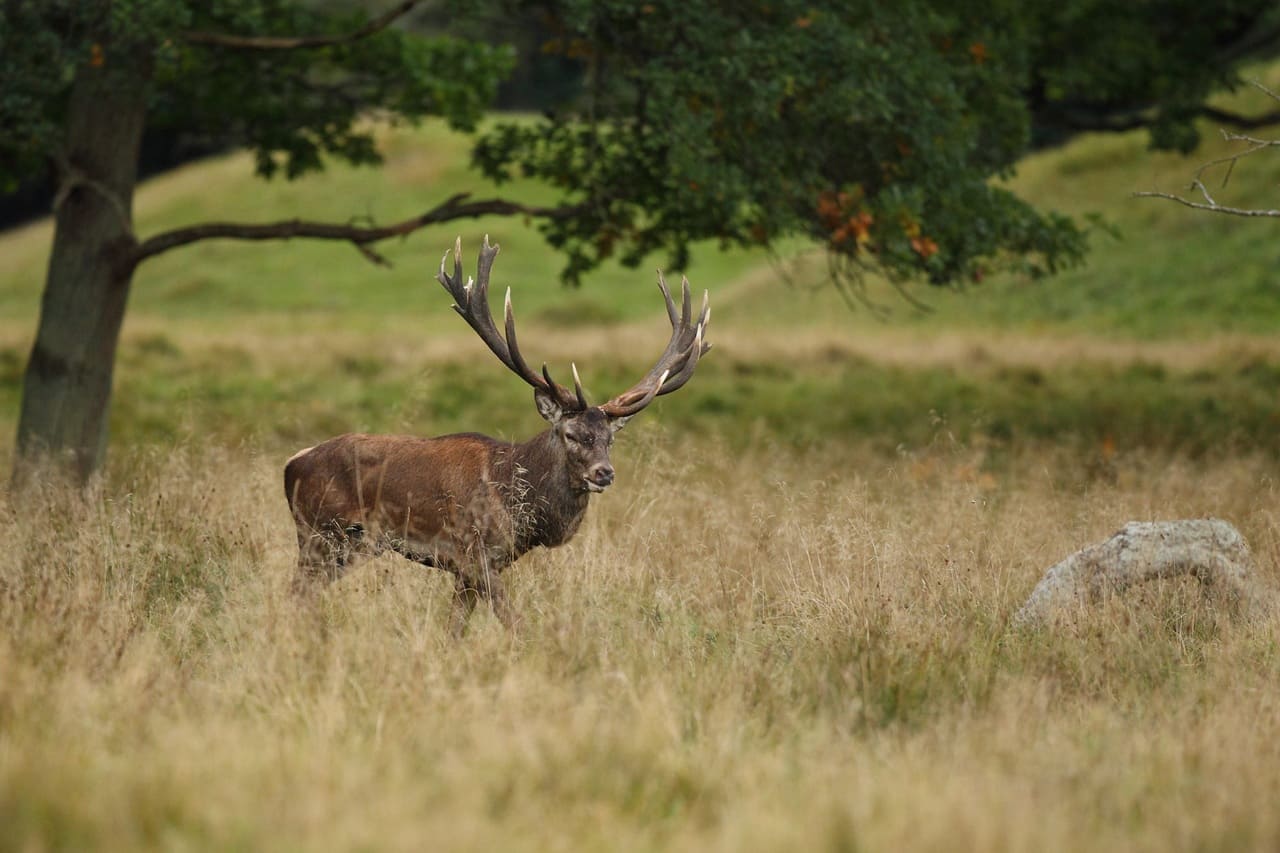
Red deer and roe deer graze on juicy plant parts, preferably at dawn. They also know where water sources are that do not dry up even in the heat, and they make use of these for a refreshing bath. Red deer sometimes undertake long journeys to find them. Once the source is found, they rest.
Wild Boar Claim Natural Bathing Spots
Sweating like a pig? That comparison doesn’t hold up, because wild boar have almost no sweat glands. Wild boar cannot sweat effectively and therefore cool themselves from the outside. Instead of an extra ration of water, on hot days they need refreshing baths — and the boar know exactly where the best mud baths in the forest are to be found.
A forest bath like that is wonderfully refreshing: these are the damp wallows and shallow ponds found in the forest, still filled from the last rain. Since sows always live together in family groups — aunts, sisters, nieces — entire families gather at the cooling waters. That can be up to 30 animals — all following the commands of the lead sow, who heads up the bathing parties.
The Fox and Mole Stay in Their Burrows
It does it right and takes a long siesta – follow its example if possible! In extreme heat, foxes spend the day in shady dens or dig hollows in the ground, removing the warm upper layer of soil. Like dogs, they pant away the heat through their tongues.
The Animal of the Year 2020 is not exposed to extreme heat: its burrow stays cool. Its food – as many earthworms as possible – is rich in water, and the air inside the burrow is very humid, so moles rarely need to drink at all.
Bumblebees become «fans»
Bumblebees stay near the nest in the heat – the brood must not dry out! They now use their wings like propellers – generating a hint of cooling through rapid wingbeats.
Young hares benefit from an inner «water tank»
Like elephants, hares use their large ears as air conditioning: when it gets very hot, blood flow to the ears increases, the blood cools there, and this saves on sweating. This is also why the ears of hare species in hot regions are much larger than those of hare species in cold regions. Hares also cover a large part of their fluid needs through food, as plants such as herbs also provide moisture.
Hares release body heat through their long ears and rest in a small hollow in the meadow. In young hares that are still nursing, the fat in the mother’s milk serves in summer as a kind of internal «water reserve». Since breaking down 1 gram of fat in an animal’s body produces 1.1 grams of water, young hares have water available even in dry seasons, which they can use – for example through panting and salivation – to prevent overheating.
Infobox: How many litres of water do wild animals need per day?
– Roe deer: one to two litres; water is largely absorbed through plant-based food and by nibbling at morning dew.
– Red deer: up to ten litres per day; water is taken in by «scooping» from ponds, streams and pools and by eating plant-based food.
– Wild boar: around two to three litres. Wild boar retreat to shady watering spots in the forest. In hot periods, creating wallows can help – less for drinking than for cooling down.
Why the common mosquito is beneficial
Even their buzzing puts us on high alert: mosquito attacks loom in the bedroom, in the forest, and at the lake. These pests are not sparing us this summer either. The warm, humid weather is ideal for the reproduction of the common mosquito! After the heavy summer thunderstorms, they find breeding grounds everywhere. Each female mosquito lays between 200 and 400 eggs, and the offspring hatch within just a few days. «For humans, the common mosquito – Culex pipiens – is a real nuisance. For wildlife, on the other hand, it is a welcome snack«, says Jenifer Calvi of the Deutsche Wildtier Stiftung. «Because for many native wild animals, mosquitoes are right at the top of the menu!«
Mosquitoes are an important food source for wildlife at every stage of their development – from egg to larva and pupa through to the fully grown insect. In the water, small fish and dragonflies feed on mosquito eggs. The slightly larger larvae are eagerly snapped up by birds, while bats and other insectivores catch the fully grown Culex pipiens in flight and devour them. Mosquitoes therefore fulfil an important role in nature. «They exist in this world to be eaten«, says Calvi. «Incidentally, the term ‘common’ in the species name simply means ‘ordinary’: it has nothing to do with the mosquito being mean or nasty!«
Good mosquito, bad mosquito? The sex of the insect plays a role here. Jenifer Calvi: «While the females bite because they need blood for their offspring, the males do not sting at all!«
Birds pant like dogs
Birds are also well equipped for the current weather conditions. Since birds have a body temperature of 41 degrees and can generally tolerate an increase of up to 46 degrees, they cope with the heat far better than humans.
Unlike humans, however, they do not sweat, which means they lose less fluid. This does, however, make cooling down more difficult. That is why birds pant like dogs. By breathing in and out, water evaporates in their beaks.
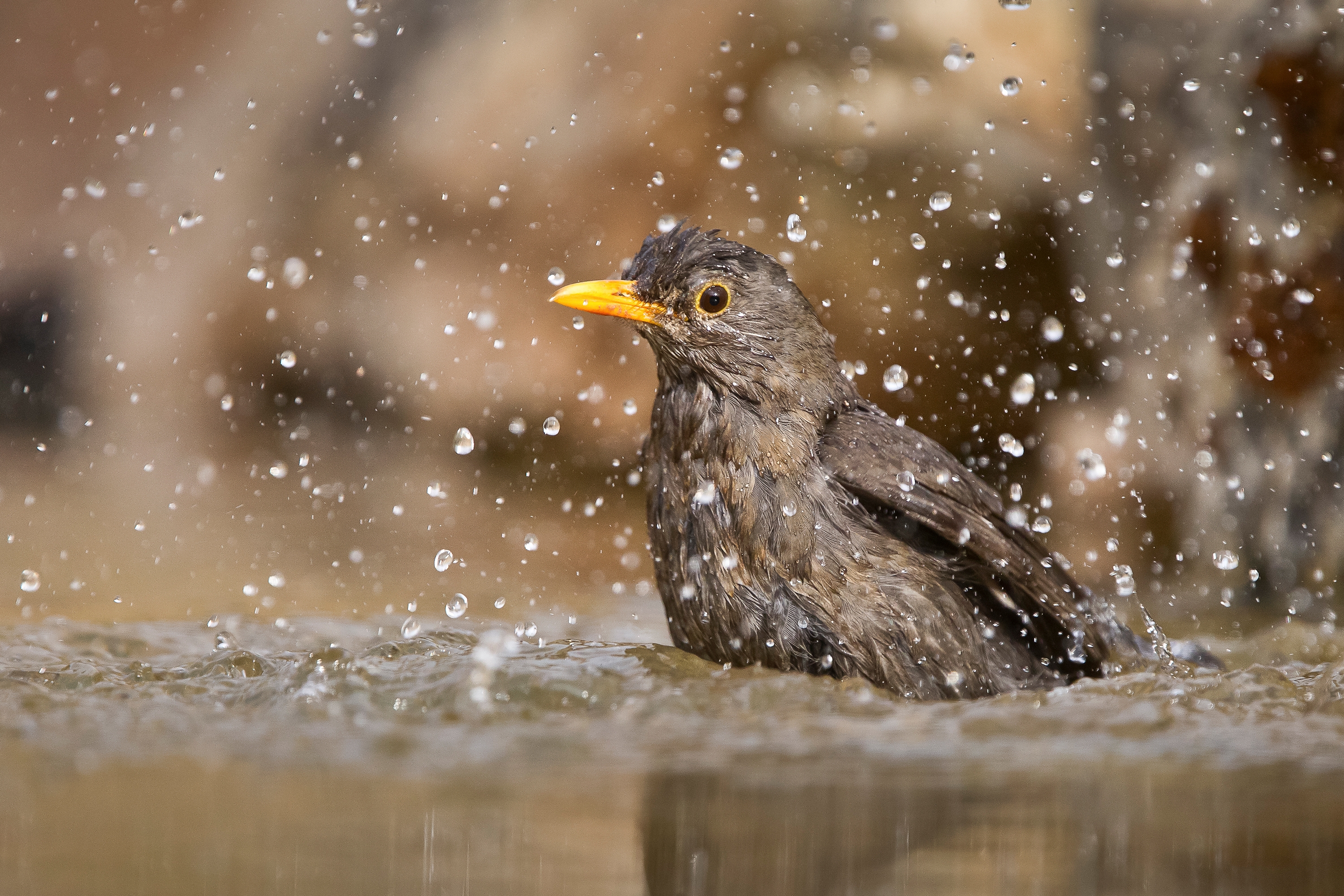
Photo © Beat Rüegger
This is how the feathered animals release heat. In addition, the animals are more active during the cooler evening and morning hours.
Birds have mastered a chemical water-saving trick: they excrete metabolic waste products as uric acid, which can be concentrated far more easily and expelled with very little water. Mammals, by contrast, excrete urea, which requires significantly more water. The concentrated uric acid is visible as the white blob in bird droppings. Thanks to such built-in conservation mechanisms, birds can get by with very little water!
Nevertheless, the animals can use all the help they can get. Anyone who wants to help birds through the high temperatures needs only a small dish or a flower pot saucer with water. This provides birds with an opportunity to drink or bathe. It is important that the water is changed daily.
Hedgehog: a dish of water is most welcome
The hedgehog escapes intense heat by retreating to cool, shady hiding spots. It absorbs a large portion of its fluid intake through food, but also enjoys drinking water! Note: please only put out water — not cow's milk – as this is not digestible for many hedgehogs.
More on the subject of recreational hunting: In our dossiers on recreational hunting gather fact-checks, analyses and background reports. The scientific evidence is presented in the overview Studies on the Effects of Recreational Hunting.
The position of IG Wild beim Wild: IG Wild beim Wild rejects recreational hunting. Our model is the canton of Geneva, which has managed without recreational hunting since 1974: without hunting seasons, without hunting dogs, without driven hunts, without high seats, without the animal cruelty and crime that go hand in hand with hunting season elsewhere. What has worked there for over fifty years disproves every position paper by JagdSchweiz. An association that bases its policy on claims it refutes in its own documents is not a professional organisation, but a factory for misinformation.