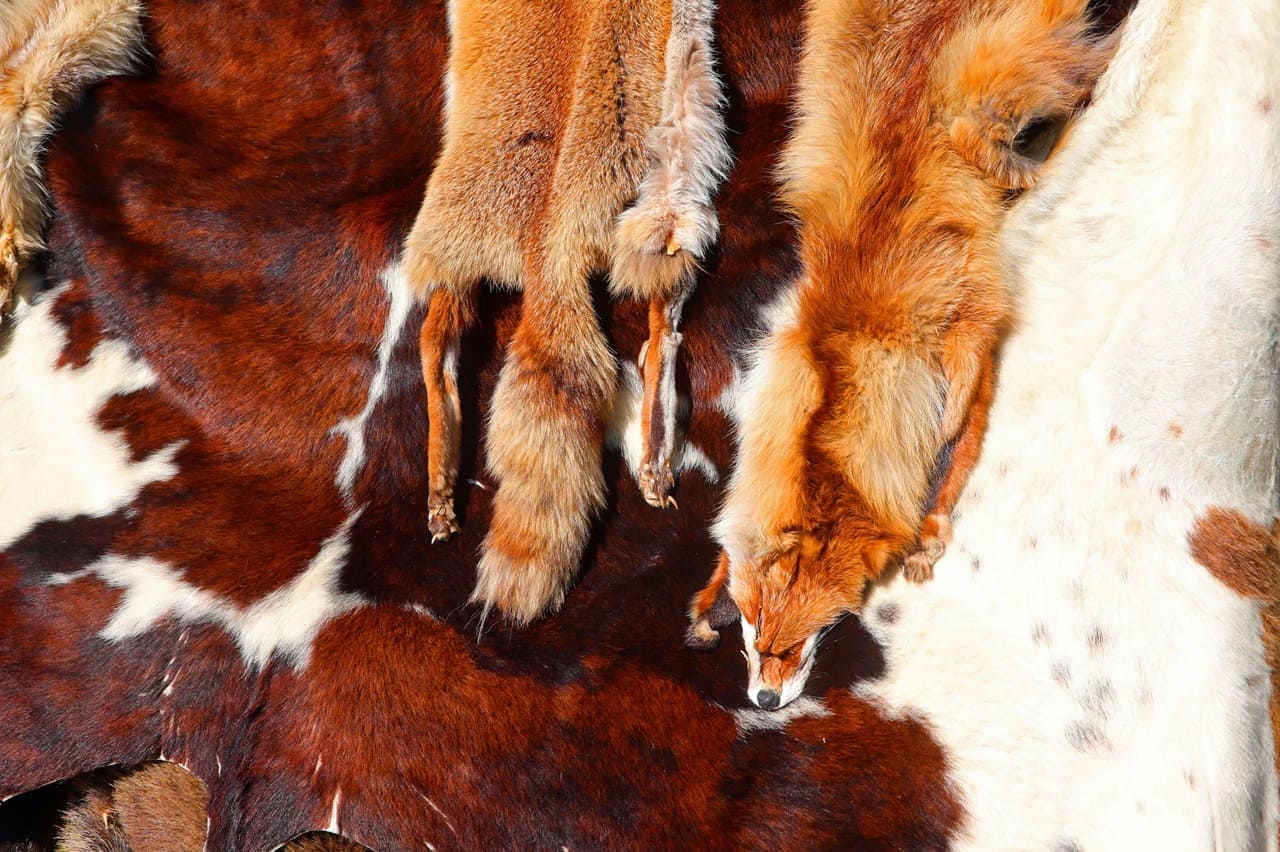
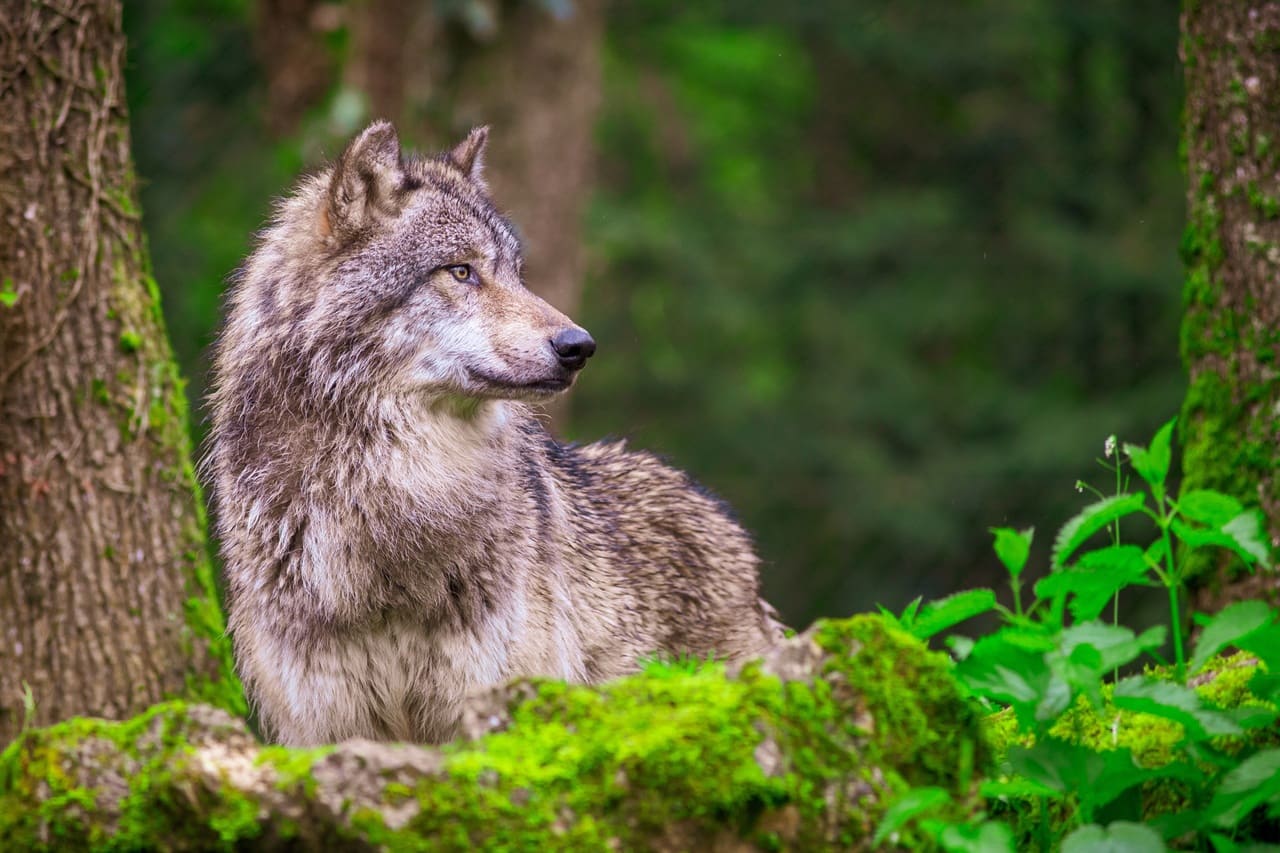
Finland opens fire on the wolf
From 1 January, wolves in Finland are once again to be shot. What is described on Nordisch.info as a sober “population regulation” is in reality a profound change of course: the government is lifting a protection that has been in place since 1973 and initially releasing 65 wolves for culling. Agriculture Minister Sari Essayah speaks of a “historic step”.


Historic the step certainly is — but from a conservation perspective, it is a step in the wrong direction.
The government has initiated an amendment to the Hunting Act that ends the previously year-round closed season for wolves. In future, the hunting season is to be determined by government decree, with regional culling quotas set by the Ministry of Agriculture. At the outset, 65 wolves are earmarked.
The official justification: growing public concern about wolves and other large predators. Wolves, it is claimed, prey on livestock and domestic animals. The fact that no human being has been killed by a wolf in Finland since the 19th century barely features in the security-policy alarmism.
The numbers behind the panic
The wolf population in Finland has indeed grown in recent years. The state research institute Luke estimates that in March 2025 there were approximately 413 to 465 wolves in the country, with a most probable figure of around 430 animals. That represents roughly 46 percent more than the previous year, when approximately 295 individuals were assumed.
Two details are important:
- The estimate refers to late winter, when the population is at its lowest. Over the course of the year it rises through new offspring and falls again through natural mortality and legal as well as illegal killings.
- The animals are distributed across only 76 territories — that is, small, isolated sub-populations.
At the same time, data from Luke and the national large carnivore website Suurpedot.fi show: the wolf remains classified as "endangered" in Finland — a species whose population could continue to decline without protective measures.
The government argues that the rapid increase justifies "population management". What is being overlooked: in the northern reindeer area, the wolf has effectively already been eradicated. There, 26 wolves were shot under special permits in a single winter, and no permanently verifiable packs exist in this zone any longer.
An endangered animal is politically cleared for killing
Several scientific studies and national assessments confirm that the Finnish wolf remains an endangered species. An analysis of the Finnish resident wolf population notes that the species is listed as threatened under the Finnish Red List and should be strictly protected outside the reindeer area.
The Finnish Nature League Suomen luonnonsuojeluliitto goes even further, describing it as a "critically endangered" species. In a statement from October 2025, the association criticised plans for a general wolf hunt as "completely premature and excessive". The species has not yet achieved what is known as favourable conservation status.
Particularly alarming: Finnish conservationists recall that a similar "population hunt" in 2015/16 already led to a massive collapse of the population. It is precisely this outcome against which they are once again warning.
The EU paves the way, member states press ahead
The offensive against the wolf is not a purely Finnish phenomenon, but part of a Europe-wide shift.
In December 2024, the contracting parties to the Bern Convention decided to downgrade the wolf's protected status from "strictly protected" to "protected". This makes it easier for member states to authorise hunts.
In May 2025, the EU Parliament followed suit: the Habitats Directive was amended and the wolf removed from the strictly protected list. The new rules permit regulatory hunts as long as favourable conservation status is formally claimed. Environmental organisations criticise the relaxation as politically motivated and poorly grounded in science.
In this atmosphere, Finland is immediately exploiting the new legal playing field. The fact that the country has already had to defend its wolf hunting practices before the European Court of Justice twice, and lost a 2007 European Commission case because shooting permits were being issued too leniently, plays virtually no role in the current debate.
Conservationists sound the alarm
Suomen luonnonsuojeluliitto is calling for a “timeout” on wolf hunting. Before any form of population-level hunting is introduced, the management plan for the species must be updated through broad participation. Only once population size, distribution range, and genetic diversity are permanently stable can controlled hunting be discussed.
The NGO also criticizes the fact that, alongside general hunting, generous special permits are to continue to be issued in parallel, and that police are additionally permitted to have wolves killed. In a recent assessment, the organization classified ten out of 37 exemption permits as unlawful, on the grounds that the legal requirements had not been met.
The conservationists warn: when shots are fired into family packs, social structures break down, young wolves roam alone and lose their wariness of settlements. This very dynamic could cause the number of “problem animals” to increase rather than decrease.
A sense of security instead of facts
The government points to “growing public concern” and cites increasing sightings near villages. Indeed, the number of reported encounters has multiplied: between January and May 2025 alone, 12’000 sightings in the wild and 4’000 reports of wolves in residential areas were recorded — more than twice as many as in the same period of the previous year.
These figures, however, say little about actual risks. They also reflect the growing public awareness of the species, the proliferation of wildlife cameras, and an increasing willingness to report observations. At the same time, the hard fact remains that no person in Finland has been killed by a wolf since 1882.
In contrast, very real risks exist for the wolves themselves: shooting orders, legal and illegal killings, and genetic impoverishment caused by small, isolated subpopulations.
What 65 culls would mean
At first glance, 65 wolves in a population of around 430 animals may appear to represent a moderate quota. Yet this perspective overlooks several points:
- This number is only the beginning. The 65 animals are considered an “entry point.” The law allows the quota to be flexibly adjusted upward in the future.
- Additional killings are added on top of this. Wolves are already being killed today through special permits, traffic accidents, and illegal hunting. Luke documented 26 shootings in a single year in the reindeer area alone.
- Small population, large impact. A study on the Finnish wolf population indicates that even relatively low additional mortality can tip the population into decline, as there are still far fewer packs than would be necessary for a long-term stable population.
Against this backdrop, the planned quota is not a “precautionary measure.” It is a politically set target that can push the species to the brink of another collapse.
European Context: The Wolf as Scapegoat
Finland is not alone in its offensive. Sweden launched a wolf hunt at the beginning of the year aimed at halving the national population from around 375 animals to approximately 170. International conservation organizations assess the approach as potentially incompatible with EU law, given that the wolf is also classified as endangered there.
At the same time, the EU is lowering protection standards, citing conflicts with pastoral farming. Yet even analyses close to the EU show that preventive measures such as livestock guardian dogs, fences, and modified grazing practices can be significantly more effective than rifles.
Nevertheless, the wolf is being politically transformed into a symbol of rural frustration, a projection screen for fears of social change. This explains why governments announce harsh measures against an animal that, objectively speaking, rarely attacks livestock and virtually never endangers humans, while other causes of the pastoral farming crisis — price pressure, subsidy systems, global trade — are tackled far less vigorously.
Alternatives to the Gun
Animal welfare organizations and many experts call for consistent promotion of prevention instead of hunting:
- financial support for wolf-proof electric fences
- funding programs for livestock guardian dogs
- swift compensation payments for livestock losses
- awareness campaigns on how not to attract wolves (food, waste, unsecured compost sites)
Such measures are more demanding than a culling decision, but they address the real problem: the coexistence of humans and predators in cultivated landscapes.
The Finnish administration is familiar with these instruments but politically relies on the easily communicable signal of hunting. In a question before the EU Parliament, the thesis was repeated that hunting "makes wolves shy of humans again".
Research, however, shows that precisely untargeted culling destroys pack structures and can thus increase the risk that inexperienced lone animals seek out settlements or display atypical behaviour.
The Finnish wolf is not a success story that can now be “trimmed back with a few shots.” It remains an endangered species with a fragile population structure that continues to depend on consistent protection. The planned hunt may give certain interest groups the short-term feeling of being “in control” again. In the long term, it threatens to destroy precisely what is so proudly invoked in Sunday speeches: the oft-cited Nordic closeness to nature and respect for wild animals.
As long as governments like Helsinki's make the wolf a political bargaining chip, it is clear who ultimately pays the price: a predator that only does what it has been needed for in ecosystems for thousands of years.