Chamois in Switzerland: Populations Declining Dramatically
The chamois population in Switzerland has been declining steadily for years. Recreational hunting and habitat loss are taking a heavy toll on chamois. More about wildlife in Switzerland.


The chamois population in Switzerland has been declining steadily for years.
Authorities are now taking action. The federal government, cantons, and hobby hunters want to bring chamois culling under greater control. However, it is likely to be a long time before populations recover.
In certain regions of Switzerland, chamois numbers are lower than at any point since the turn of the millennium. Figures from the Federal Hunting Statistics show that in 2005, more than 97’000 animals still roamed the Alpine arc. Ten years later, the federal government estimates the population at around 91’000 individuals.
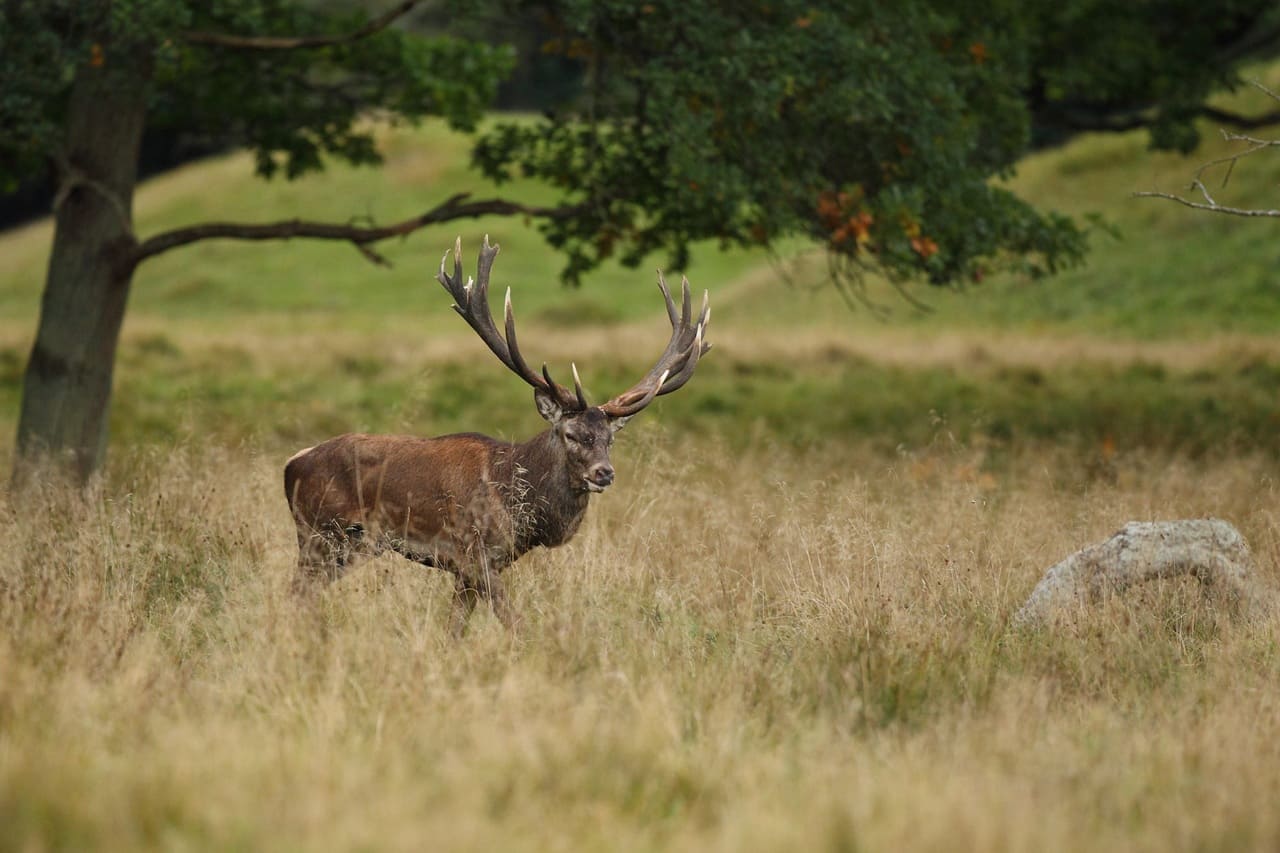
The culling figures from the same survey confirm this trend. The total Swiss chamois hunting bag has collapsed since 1994, falling from just under 20’000 animals to 11’650 in 2015. Over the same period, the number of red deer shot has more than doubled. This trend is not limited to Switzerland and can also be observed in other Alpine countries.
Exposed to Numerous Risks
The reasons for the decline in the chamois population are varied. Reinhard Schnidrig, head of the Wildlife and Forest Biodiversity section at the Federal Office for the Environment (FOEN), told the news agency sda of a “mix of causes.”
Chamois are being increasingly restricted in their habitat by the growth of recreational activities and intensifying tourism. In winter in particular, they lack the peace and quiet they need in their resting areas. Many young animals do not survive the high-Alpine winter because they cannot find enough food.
In addition, competition with red deer and ibex, as well as the return of predators, is also having an impact. “Lynx prey primarily on forest-dwelling chamois.” Last but not least, diseases such as chamois blindness, mange, and other parasitic and infectious conditions may also be partly responsible for high mortality rates.
Errors in Hunting Planning
At least in some areas, one reason is obvious: the hobby hunters, who like to reconcile their actions with necessity and nature conservation, could be to blame, along with entirely misguided hunting planning in some cantons. The cause is said to be an insufficient consideration of harsh winters when designing and determining culling targets and quotas. In recent years, more chamois have been released for culling in order to protect forests. The hunting pressure has increased, explains Schnidrig. He cites his home region, the Upper Valais, as an example: “In the Goms, we are probably paying today the price for overly intensive hunting.”
Opinions differ on the question of how far the decline is linked to the increasing presence of wolves and lynx in the Swiss Alps. In particular, cantons such as Jura and Fribourg are said to complain about the lynx. However, the chamois population there is too insignificant to explain the decline in Switzerland-wide statistics.
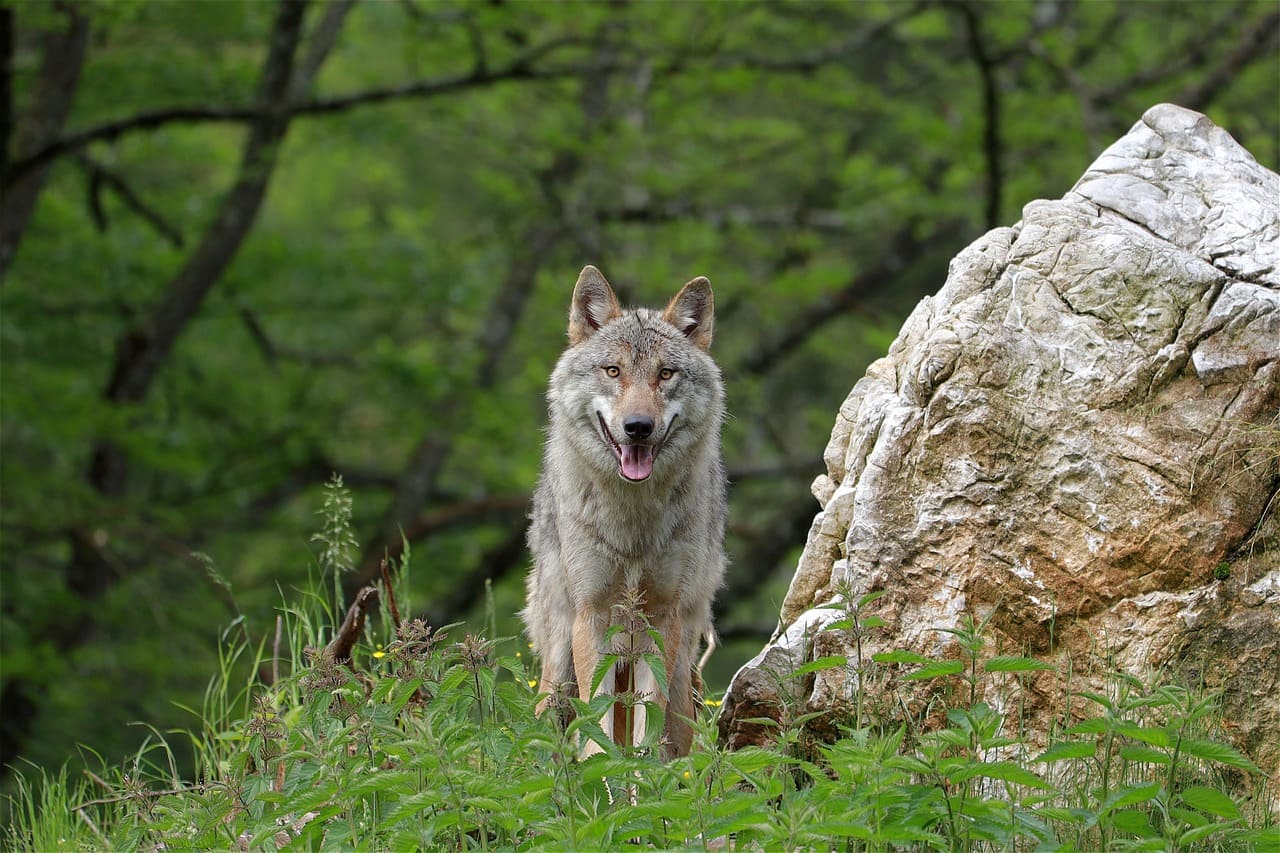
The wolf preferentially hunts deer. This is evident in the Calanda massif in Graubünden, where the deer population has settled at a natural level.
Raising awareness among recreational hunters
The hobby hunters are prepared to bear part of the responsibility and take on the challenges. In a position paper from last December, they committed to making chamois hunting “more sustainable” and “more responsible” in order to halt the decline in chamois populations.
The joint document by JagdSchweiz and the current Conference for Forest, Wildlife and Landscape (KWL) is the result of a conference held in 2015, at which cantonal hunting authorities, hobby hunters, and politicians discussed solutions to the declining chamois population.
Their conclusion: well-founded hunting planning with annually flexible culling figures, as well as raising awareness among hobby hunters, is necessary. To this end, JagdSchweiz and the cantonal hunting authorities are stepping up their public relations work. Hobby hunting fails as a means of population control — the decline in chamois is yet further evidence of this.
Wildlife should be better able to rest
“We must now carry out educational work,” says David Clavadetscher, Managing Director of JagdSchweiz, when asked. The risk factors for chamois have become more pronounced in recent years.
All cantons must also take action. In the future, they should regularly collect data on population size, growth rates, and composition. Such data are not currently available everywhere.
Furthermore, the impacts of climate change and disease on the chamois population are to be analyzed in greater depth. Tourism managers must also take their responsibility seriously: wildlife rest zones and summer grazing areas should be respected more consistently.
No swift recovery in sight
Despite the formulated code and the proposed measures, it is likely to take a long time before chamois populations in Switzerland are healthy again. “Patience and staying power are needed,” the position paper states.
Female chamois do not give birth until the age of three or four, and typically have only one young at a time, rarely two or three. Due to the low reproduction rate and the relatively late sexual maturity of the animals, populations recover only slowly.
Schnidrig predicts: “It will take one chamois generation before populations grow again on a large scale.” Males can reach an age of 15 years, while females live up to twenty years.