EU Parliament: Live Animal Transport Reform Fails
The EU Parliament failed to agree on a reform of the cruel live animal transports. Millions of animals continue to suffer on long journeys.

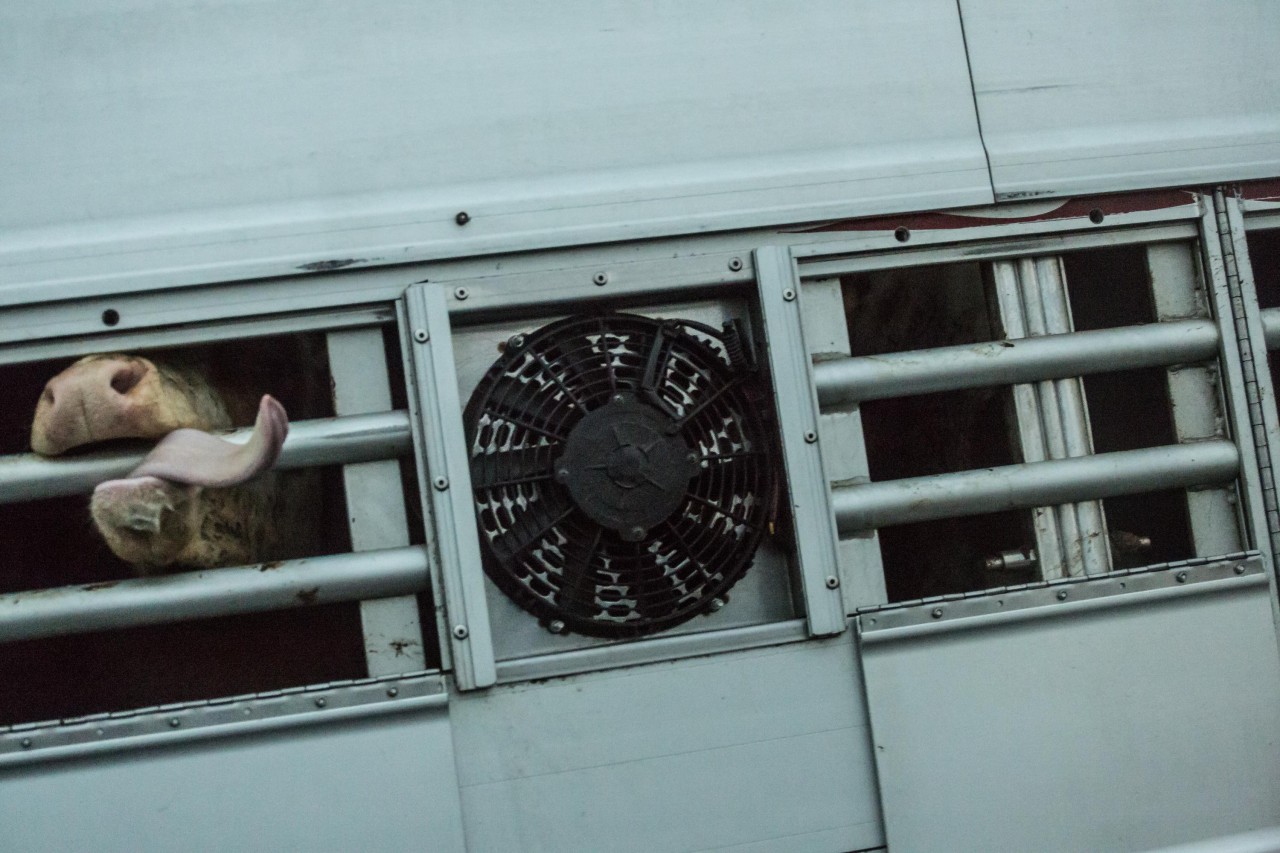
On 20 January 2022, the EU Parliament voted on the recommendations of the Committee of Inquiry on the Protection of Animals during Transport (ANIT).
The amendment proposed by the Greens/EFA group included limiting road transports to a maximum of eight hours and sea transports to 24 hours.
According to animal welfare organisations, EU parliamentarians missed the opportunity to strengthen the proposal of the Committee of Inquiry on live animal transport (ANIT). On the contrary, the recommendations concerning the transport of unweaned calves and pregnant animals were weakened even further. Nevertheless, some important points — such as a four-hour limit for rabbits and poultry and the call to prioritise the transport of meat and carcasses over live animals — are included in the final recommendations.
The long-overdue implementation of a comprehensive ban on live animal transport to third countries, however, remains a distant goal.
All members of parliament who voted against limiting the transport of sentient beings to at least eight hours are responsible for the suffering of millions, which will now continue on Europe’s roads and across its borders — they should be ashamed.
This decision is yet another kick in the teeth for animal welfare. In cramped lorries or on mostly amateurishly converted ferries, cattle, sheep and other animals are forced to endure the often week-long horror journeys — typically packed tightly together and surrounded by their own excrement — usually without adequate food or water. Many of them die slowly and in agony, as medical care is almost entirely absent; these losses are factored in from the outset.
Animals from Germany are also transported to non-EU countries and killed there, usually without stunning — including calves from the dairy industry, since they produce no milk and are considered 'worthless.' All these sentient beings are subjected to hardships for purely economic reasons that we would never tolerate in the case of dogs or cats.
PETA is now calling on Federal Agriculture Minister Cem Özdemir not to accept this outcome, but to actively advocate for an EU-wide ban on long-distance transport. We also appeal to all consumers to choose vegan products, so as not to support this deplorable exploitation of animals.
FOUR PAWS: «We need a total ban on sea transport and exports to third countries, a ban on the transport of unweaned animals, and a drastic reduction in overall transport times.»
«The report published by ANIT has highlighted many important concerns and shortcomings in the current legal framework and in the implementation of the legislation. We hope that the member states and the EU Commission will review the entire report and consider a drastic reduction of maximum transport times to 0 hours for unweaned animals, 4 hours for poultry and rabbits, and 8 hours for all other animals.»
Background
The Committee of Inquiry on the Protection of Animals during Transport (ANIT) was established in June 2020 to investigate alleged violations in the application of the «Transport Regulation» Council Regulation (EC) No. 1/2005 on the protection of animals during transport.
It is the fourth committee of inquiry in the history of the EU Parliament since the Maastricht Treaty of 1992, and the first on the subject of animal welfare. Having received overwhelming support when it was established in June 2020, the committee was granted an extension to allow for an even more thorough assessment of issues related to animal transport. In total, the ANIT ran for 18 months.
Revision of EU Legislation
Next year, the European Commission will subject most animal welfare laws and regulations to a thorough fitness check. The goal is to assess whether the legal framework for animals in the European Union is still adequate or not. As part of this longer process, the European Commission has launched a public consultation to give all citizens of Europe the opportunity to express their opinions and priorities.