Animal Welfare vs. Species Conservation: Ethical Advantages
Species conservation dominates headlines and nature conservation projects. Yet it often overlooks the suffering of individual living beings. A new debate raises the question: Should we not first protect animals as sentient individuals — rather than abstract species?


Animal welfare takes seriously that animals are sentient beings and are morally relevant as individuals.
It protects concrete living beings, not abstract categories such as “species”.
The avoidance of suffering is an immediately comprehensible, universal ethical value. Species or biodiversity conservation is more abstract and harder to justify.
Even “ugly”, non-threatened or invasive animals deserve protection. Species conservation often concerns itself only with rare or “charismatic” species.
Animal welfare rejects killing as a means, whereas species conservation sometimes deliberately kills animals (e.g. invasive species). This makes animal welfare more consistent with principles such as non-violence.
In zoos, animals are bred to preserve species, and surplus animals are killed. Species conservation accepts “surplus killings”; animal welfare does not.
Wildlife populations are sometimes regulated in order to stabilise an ecosystem. Species conservation endorses culling; animal welfare seeks non-lethal alternatives in cooperation with science.
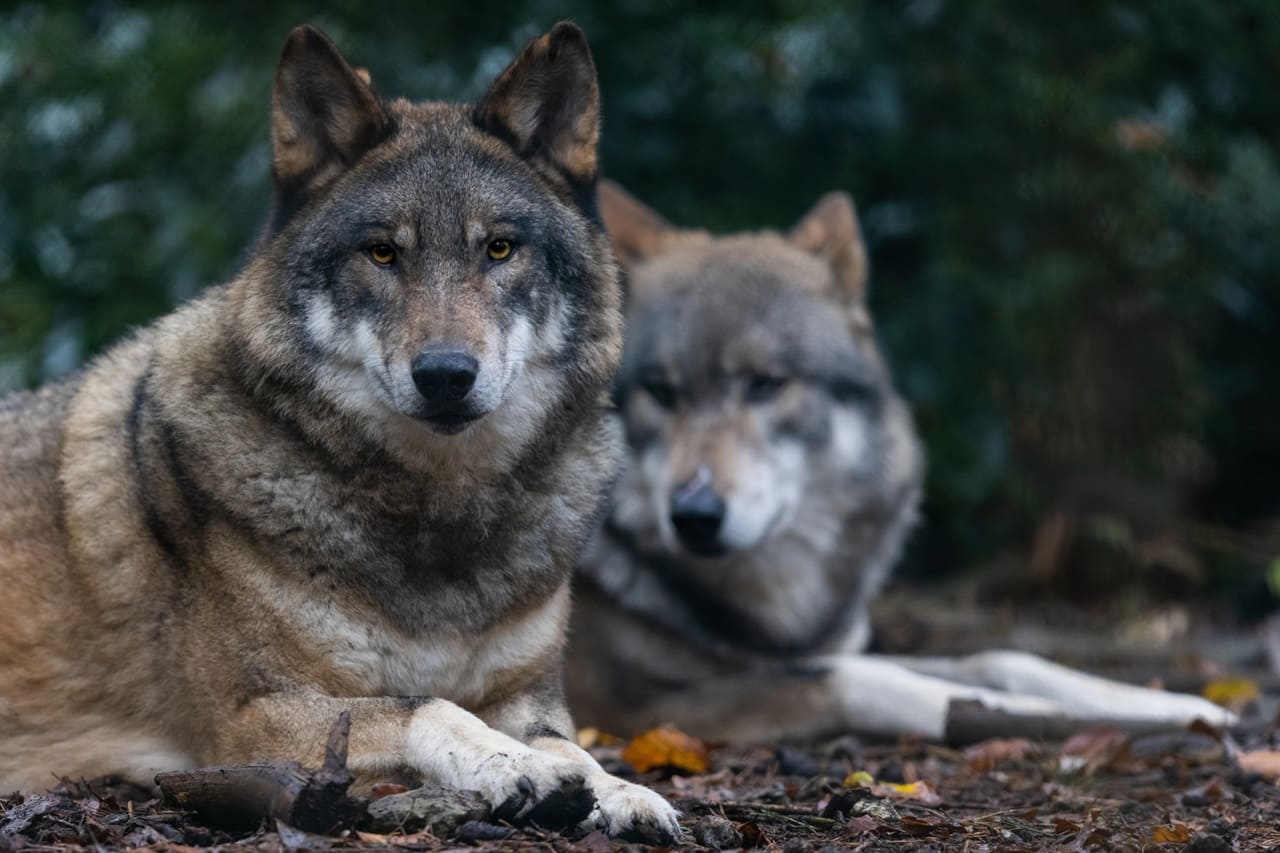
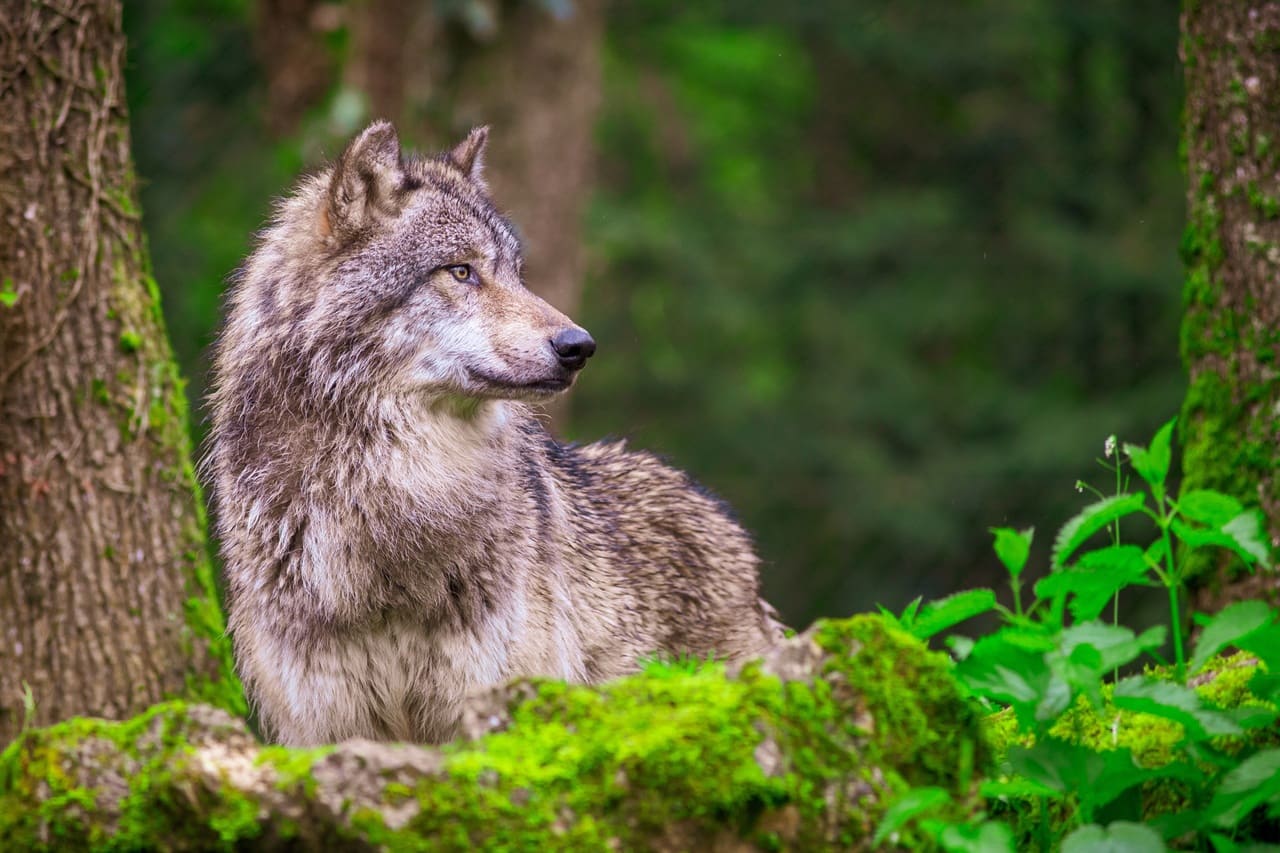
Species conservation focuses on “flagship” species (pandas, tigers, wolves); animal welfare regards all sentient animals as equal. Unequal treatment is ethically questionable from an animal welfare perspective.
This means that species conservation in practice frequently violates the fundamental principles of animal welfare — for example when animals are killed, displaced or confined. No animal species has ever driven another to extinction; that is done only by recreational hunters. Animals act instinctively, not with the aim of exterminating species. Humans act consciously and deliberately. This means we bear responsibility, because we can foresee the consequences.
hobby hunters and incompetent politicians can, through targeted, large-scale hunting or habitat destruction, trigger within a few decades what would otherwise endure for millennia in nature. Recreational hunters and modern technology, global connectivity and markets enable extreme pressure that no other species exerts in this form.
Humans cause, through hunting, fishing, agriculture, habitat destruction and climate change, the currently fastest mass extinction in 65 million years.
This is precisely where the great moral difference lies between human intervention and “natural” competition such as the wolf.
It is assumed that the souls in human bodies and in animals do not differ in their essential nature. Therefore, non-violence as a binding rule of conduct protects, in principle, animals just as it does humans. Non-violence distinguishes humans from predators in the animal kingdom. Most wild animals feed on a vegan diet.
Peace is characterized by the absence of violence. Non-violence enhances the quality of life of all involved. This applies not only to fellow human beings, but to every form of life. Living on products such as fruits, nuts, etc., whose harvesting is possible without destroying the plant, is also non-violence. Non-violence is the sublime expression of the higher human nature. The tendency of lower human nature to assert egotism leads to exploitation, hardening, heartlessness, insults, mistreatment, fighting and quarrelling. These are expressions of a false attitude. Recreational hunters literally walk over dead bodies.
Animal welfare is ethically superior because it takes seriously the suffering of sentient individuals, while species conservation frequently disregards this suffering in favour of abstract goals. Humans differ from other animals in that they can act deliberately and foresee consequences. From this arises a moral duty towards non-violence and the equal treatment of all sentient beings.
If we can avoid suffering, we should do so – not only for humans, but for all sentient beings. Non-violence is the noble expression of a higher human nature and promotes the quality of life of all involved. Hunting and slaughter are associated with violence, while a non-violent approach to animals strengthens peace and compassion. Human beings differ from predators in the animal world precisely through the capacity for self-reflection and the ability to choose a different path.
Animal welfare is more than a marginal issue – it is a moral guiding principle. Instead of saving abstract species, we should place the well-being of the individual at the centre. Only in this way can we develop an ethics that truly embodies non-violence and respect for all life.
| You can help all animals and our planet with compassion. Choose empathy on your plate and in your glass. Go vegan. |
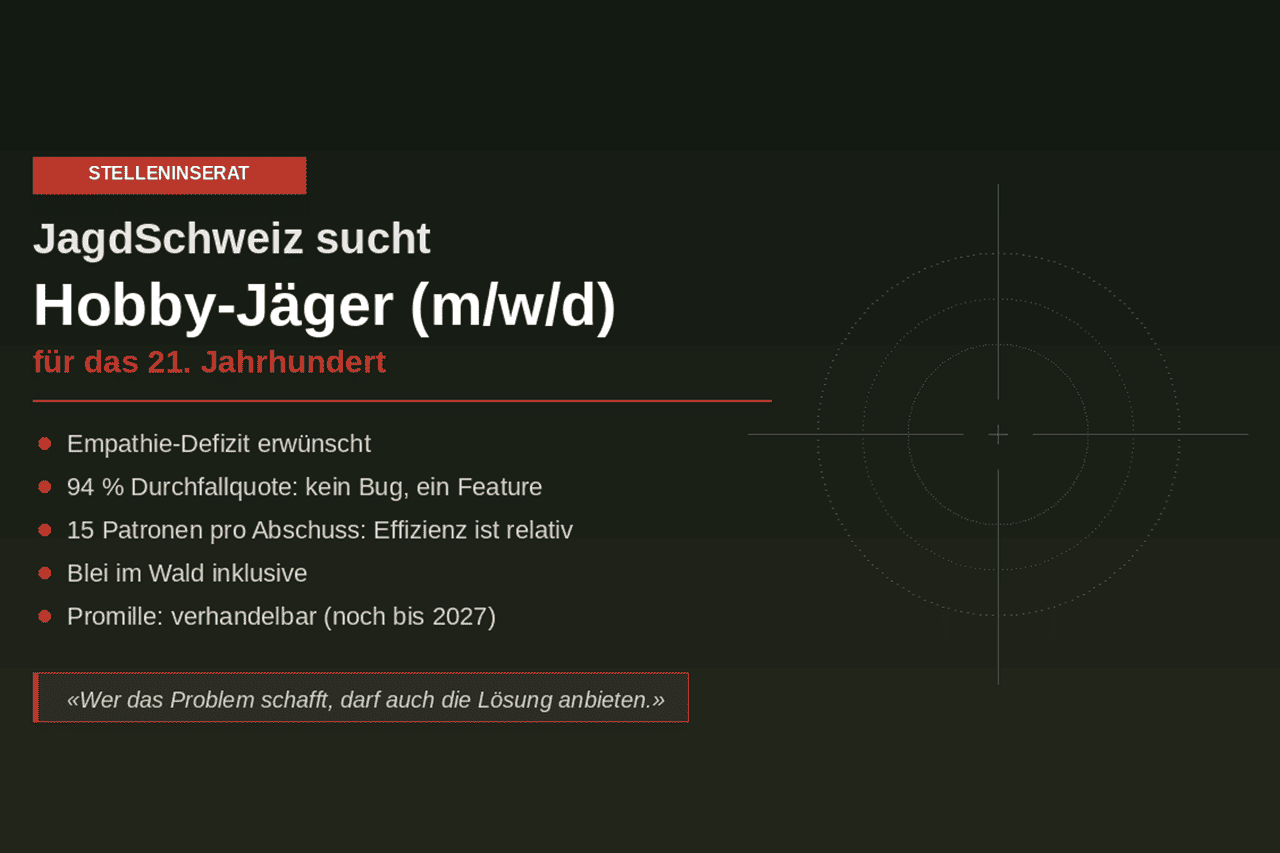
More on the subject of recreational hunting: In our dossiers on the criticism of recreational hunting gather fact-checks, analyses and background reports. What the research says about this is shown by Hunting fact-checked: the state of research.
The position of IG Wild beim Wild: IG Wild beim Wild rejects recreational hunting. Our model is the canton of Geneva, which has managed without recreational hunting since 1974: without hunting seasons, without hunting dogs, without driven hunts, without high seats, without the animal cruelty and crime that go hand in hand with hunting season elsewhere. What has worked there for over fifty years disproves every position paper by JagdSchweiz. An association that bases its policy on claims it refutes in its own documents is not a professional organisation, but a factory for misinformation.