EU as second largest driver of global deforestation
According to WWF, the EU is responsible for 16% of global tropical deforestation. Soy, palm oil, and beef are destroying the most forest.

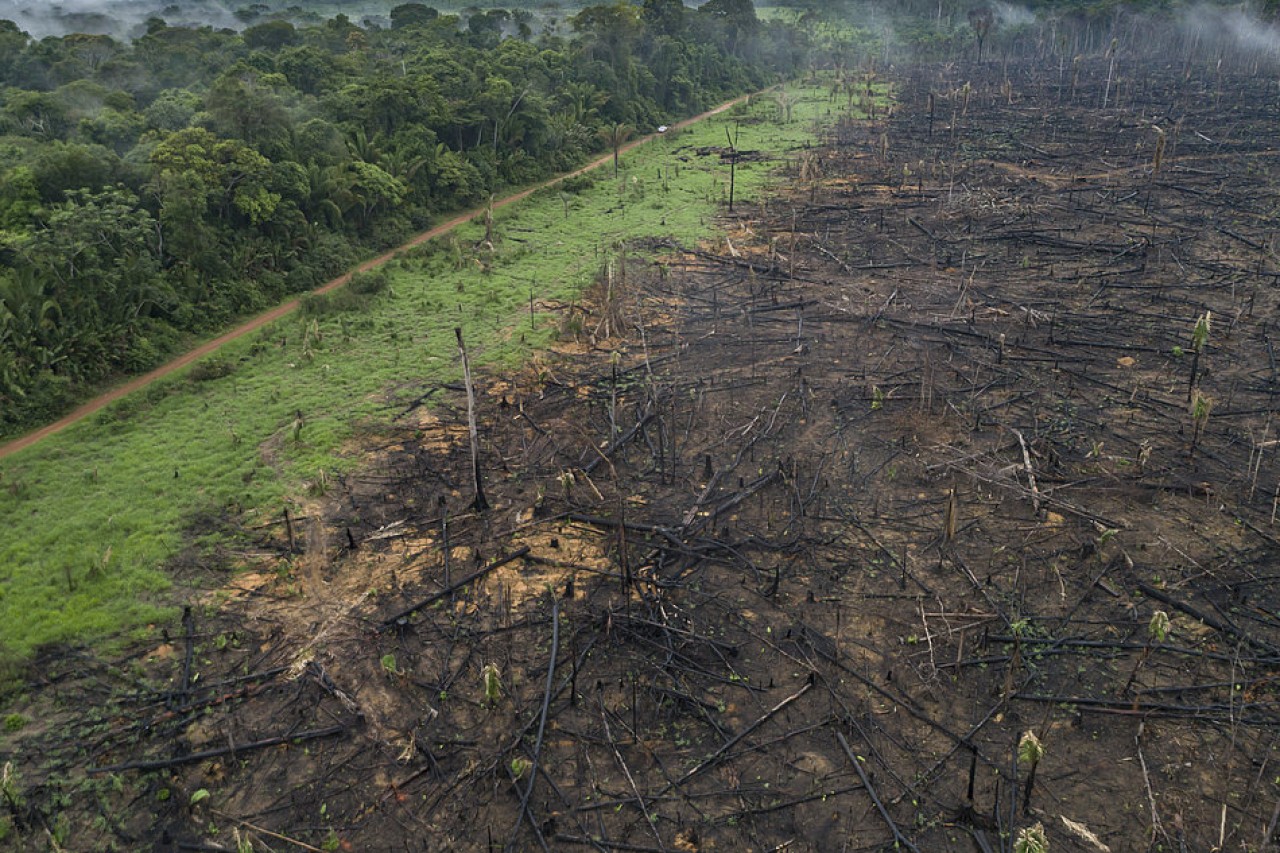
The EU is among the largest drivers of forest destruction.
This is shown by a WWF report published in April 2021, which examines the impact of trade relationships on deforestation and destruction of nature from 2005 to 2017. According to the report, 16 percent of global tropical deforestation linked to international trade is attributable to the EU. This places it second in the «world rankings of forest destroyers», behind China (24 percent) and ahead of India (9 percent) and the USA (7 percent).
WWF calls for deforestation-free supply chains
WWF is calling on the federal government and the EU Commission to take responsibility and, as a consequence of the report, to ensure better and binding environmental and social standards in international trade relations. As a first step, WWF is urging the federal government to advocate with the EU Commission for a strong EU law for deforestation-free supply chains. It must prevent intact natural areas such as forests, savannas, and wetlands from continuing to be converted into agricultural land for our consumption.
The era of nature destruction must end, because natural ecosystems such as forests are our life insurance. They are climate saviours, a treasure trove of biodiversity and a bulwark against future pandemics. We need a paradigm shift in global trade: products that end up on the European market must not be produced at the expense of nature and human rights.
Christine Scholl, WWF expert on sustainable supply chains
Soy, palm oil, and beef as the main drivers
During the study period, imports of soy, palm oil, and beef caused the most tropical deforestation, followed by wood products, cocoa, and coffee. EU consumption destroyed the most forest area in Brazil, Indonesia, and Paraguay. Through imported deforestation, the EU indirectly caused 116 million tonnes of CO2 emissions in 2017. This corresponds to more than a quarter of EU emissions from the agricultural sector in the same year. These indirect emissions are not recorded in official greenhouse gas emission statistics.
Within the EU, Germany imported by far the most deforestation between 2005 and 2017, with an average of 43,700 hectares of forest destroyed annually for German imports. In total, 80 percent of the imported deforestation across the entire EU is attributable to the eight largest economies. Scholl comments: «It is a vicious cycle, because intact nature is the foundation of any long-term successful economy. Voluntary declarations of intent by governments and companies to make supply chains deforestation-free have so far only stopped the destruction of nature in isolated cases. It is therefore all the more important that the EU Commission sets a binding framework with a targeted and ambitious law.»
Savannas and wetlands also threatened
In addition to forests, this law must also protect other ecosystems, according to the WWF, otherwise the destruction of nature will simply shift from forests to other ecosystems such as wetlands, grasslands, and savannas. However, these are just as important for the climate, biodiversity, and the livelihoods of local people as tropical forests, and are already under enormous pressure: According to WWF research, in 2018 almost a quarter of the EU's soy imports from the South American countries studied came from the Cerrado savanna, where the destruction of the ecosystem in favour of agricultural use is advancing particularly rapidly.
According to a recently published WWF food study, a shift in diet can also help reduce deforestation pressure on rainforests: If the meat consumption of all Germans is halved to an average of 470 grams per week — in favour of more legumes and nuts — Germany's diet-related land requirements also decrease by almost three million hectares. This is roughly equivalent to the size of Brandenburg.

Unterstütze unsere Arbeit
With your donation, you help protect animals and give them a voice.
Donate now →