Alternatives to Recreational Hunting Against Swine Fever
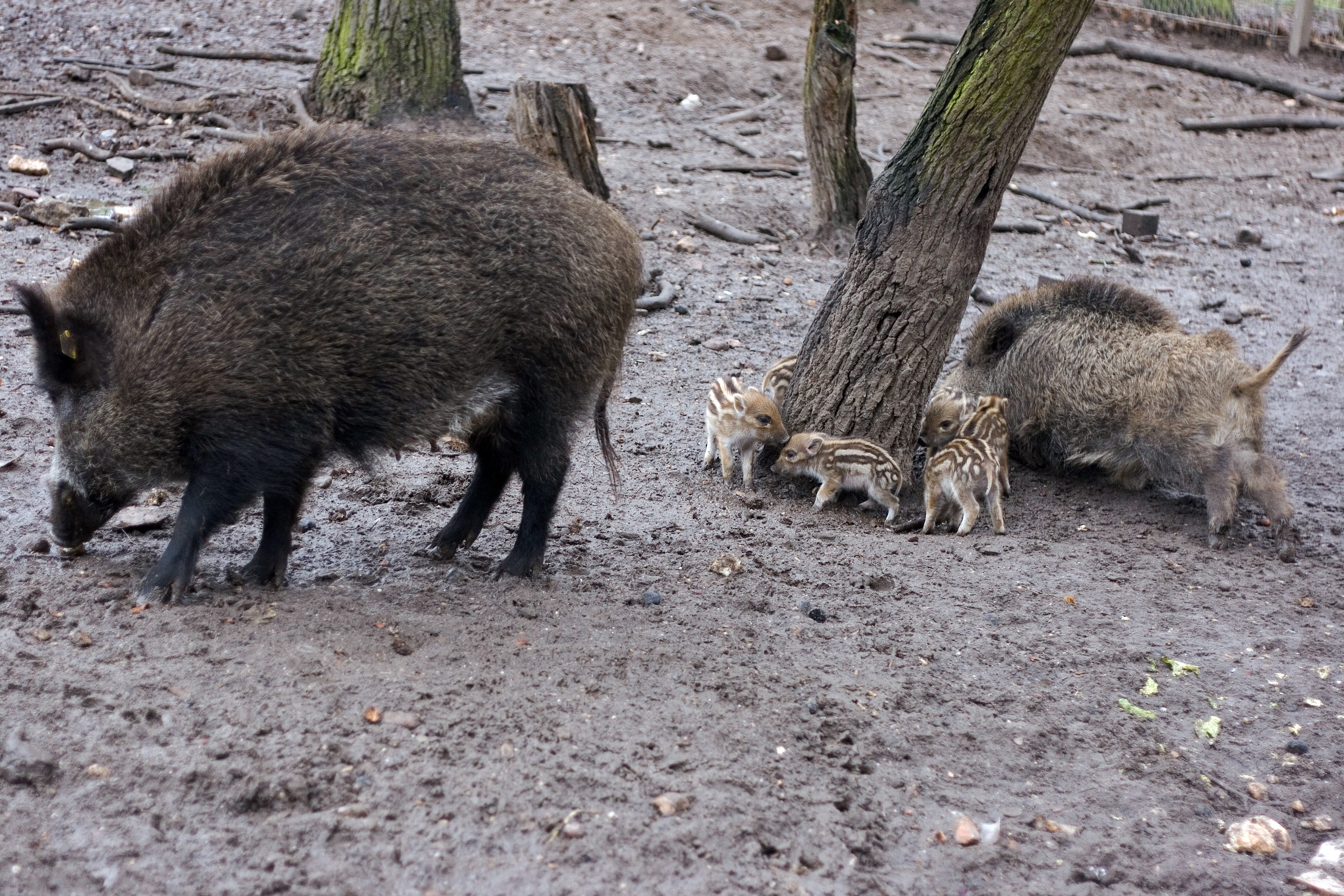
The massive culling of wild boar populations as the primary approach to limiting the further spread of African Swine Fever (ASF) is considered inhumane and ineffective by Eurogroup for Animals.

Successfully containing the spread of this disease requires an unbiased, scientifically grounded approach and innovative solutions.
Research shows that the focus must be on prevention and the strict application of biosecurity measures — for the benefit of animals, people, and biodiversity.
African Swine Fever (ASF) is a highly contagious and deadly viral disease that affects both domestic and wild pigs. However, it is viewed by some as a pretext for hunting large numbers of wild boar, which proponents claim will curb the spread of the disease. Naturally, there is more at stake than human whims, and humane alternatives to hunting are likely more effective, ethically sound, and scientifically justified.
The often fatal, rapidly spreading virus is transmitted primarily through direct contact with infected pigs, as well as through indirect contact with pigs, equipment, and feed. The disease causes immense suffering and significant economic losses. Originating in Lithuania, it had already spread to nine countries between 2014 and 2021 alone.
As a result, hundreds of thousands of wild boar are hunted across Europe every year in an effort to reduce their numbers and prevent the spread of the virus. Yet beyond the pain and suffering inflicted on the animals, science shows that hunting wild boar is ineffective at containing ASF. The virus occurs in both high- and low-density populations, making a reduction in population density unlikely to be effective.
Furthermore, recreational hunting could not realistically reduce the population by the 67% required to stabilize wild boar populations, and these would recover regardless. More hunting means far more births as well as suffering, and poses a biosecurity risk.
DG SANTE reports that despite widespread awareness campaigns targeting recreational hunters, biosecurity measures in recreational hunting are not always observed. As a result, direct contact with blood and indirect contact with contaminated equipment, tools, and clothing occur and must be taken seriously. The additional spread facilitated by current intensive agricultural practices should not be overlooked.
What are the alternatives?
- The human-caused spread of the virus must be addressed primarily through awareness campaigns and other methods that place animal welfare at the forefront. Behavioral changes and adherence to biosecurity measures are among the most important factors.
- The European Food Safety Authority (EFSA) highlights that adherence to biosecurity measures on farms and refraining from hunting activities that may contribute to spread are key to reducing the risk of ASF transmission.
- Among the promising measures for population control is the use of immunological contraception (GnRH GONACON), which has shown promising results in reducing the fertility of wild boars kept under experimental conditions with a single injection.
- Preliminary research is promising for an effective vaccine in the future.
Given that hunting does not represent an effective solution, but rather increases the risk and unquestionably causes suffering to animals, we call on the EU to invest in research to develop effective fertility control methods for wild boars and to find a safe and effective vaccine against the virus.
Unterstütze unsere Arbeit
Mit deiner Spende hilfst du, Tiere zu schützen und ihrer Stimme Gehör zu verschaffen.
Jetzt spenden →More on the subject of recreational hunting: What the research says about this is shown by Hunting fact-checked: the state of research.
The position of IG Wild beim Wild: IG Wild beim Wild rejects recreational hunting. Our model is the canton of Geneva, which has managed without recreational hunting since 1974: without hunting seasons, without hunting dogs, without driven hunts, without high seats, without the animal cruelty and crime that go hand in hand with hunting season elsewhere. What has worked there for over fifty years disproves every position paper by JagdSchweiz. An association that bases its policy on claims it refutes in its own documents is not a professional organisation, but a factory for misinformation.