Drought kills hundreds of animals in Kenya's wildlife reserves
The drought in Kenya is killing hundreds of animals in wildlife reserves. Climate change threatens the survival of entire wildlife populations.

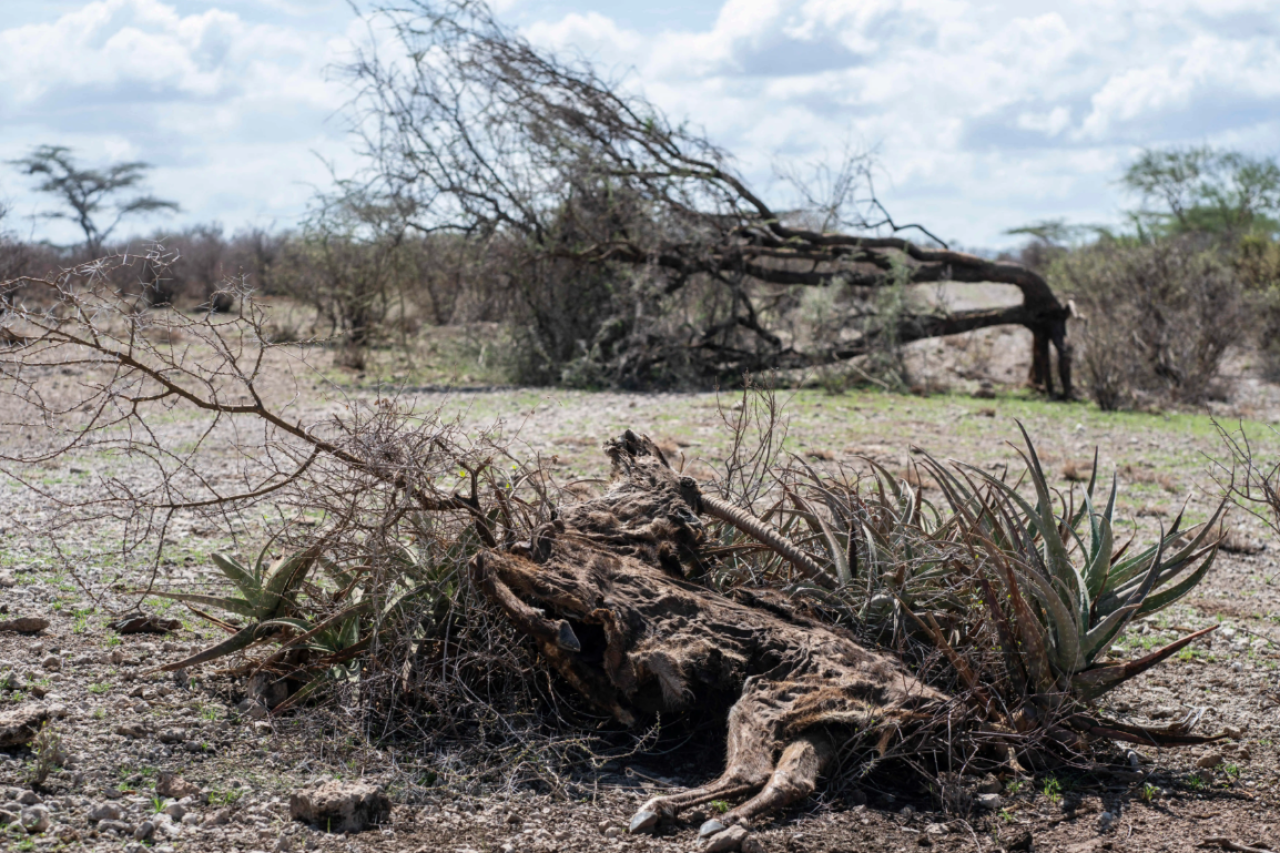
During the worst drought in East Africa in decades, hundreds of animals have died in Kenyan wildlife sanctuaries.

Hundreds of animals, including elephants and the endangered Grevy's zebras, have perished in Kenyan wildlife reserves during the worst drought in East Africa in decades, according to a report published on 4 November 2022.
The Kenya Wildlife Service and other organisations counted the deaths of 512 wildebeest, 381 zebras, 205 elephants, 51 buffalo, 49 Grevy’s zebras and 12 giraffes over the past nine months, according to the report.
In parts of Kenya, there has been little to no rainfall over a four-year period spanning the past two years, with severe consequences for people and animals, including livestock.
Elephants, for example, drink 240 litres of water per day, according to Jim Justus Nyamu, Executive Director of the Elephant Neighbours Center.
Some of the worst-affected ecosystems are located in some of Kenya's most visited national parks, reserves and conservation areas, including the Amboseli, Laikipia-Samburu and Tsavo regions, according to the report's authors.
They called for an urgent aerial wildlife count in Amboseli to gain a clearer picture of the drought's impact on wildlife, as well as the immediate provision of water and salt licks in the three most severely affected regions and an increase in hay and feed quantities for Grevy's zebras in the northern regions.
The Kenya Wildlife Service and the Kenyan government have since stepped up efforts to address the crisis.
More on the subject of recreational hunting: In our dossiers on recreational hunting gather fact-checks, analyses and background reports. What the research says about this is shown by Hunting fact-checked: the state of research.
The position of IG Wild beim Wild: IG Wild beim Wild rejects recreational hunting. Our model is the canton of Geneva, which has managed without recreational hunting since 1974: without hunting seasons, without hunting dogs, without driven hunts, without high seats, without the animal cruelty and crime that go hand in hand with hunting season elsewhere. What has worked there for over fifty years disproves every position paper by JagdSchweiz. An association that bases its policy on claims it refutes in its own documents is not a professional organisation, but a factory for misinformation.