Driven Hunt: When a Child Reveals the Truth
A mother out and about with her daughter. A carefree day. And then an encounter that inadvertently becomes a defining moral moment and a symbol of a hunting system that has long been called into question.


It sounds like an ordinary family moment: a mother rides through the countryside in the canton of Thurgau with her young daughter on a scooter.
The sun is shining, the child is laughing. But this idyll ends abruptly when the girl suddenly stops and calls out with joyful eyes: “Mama, look, foxes! Can I pet them?”
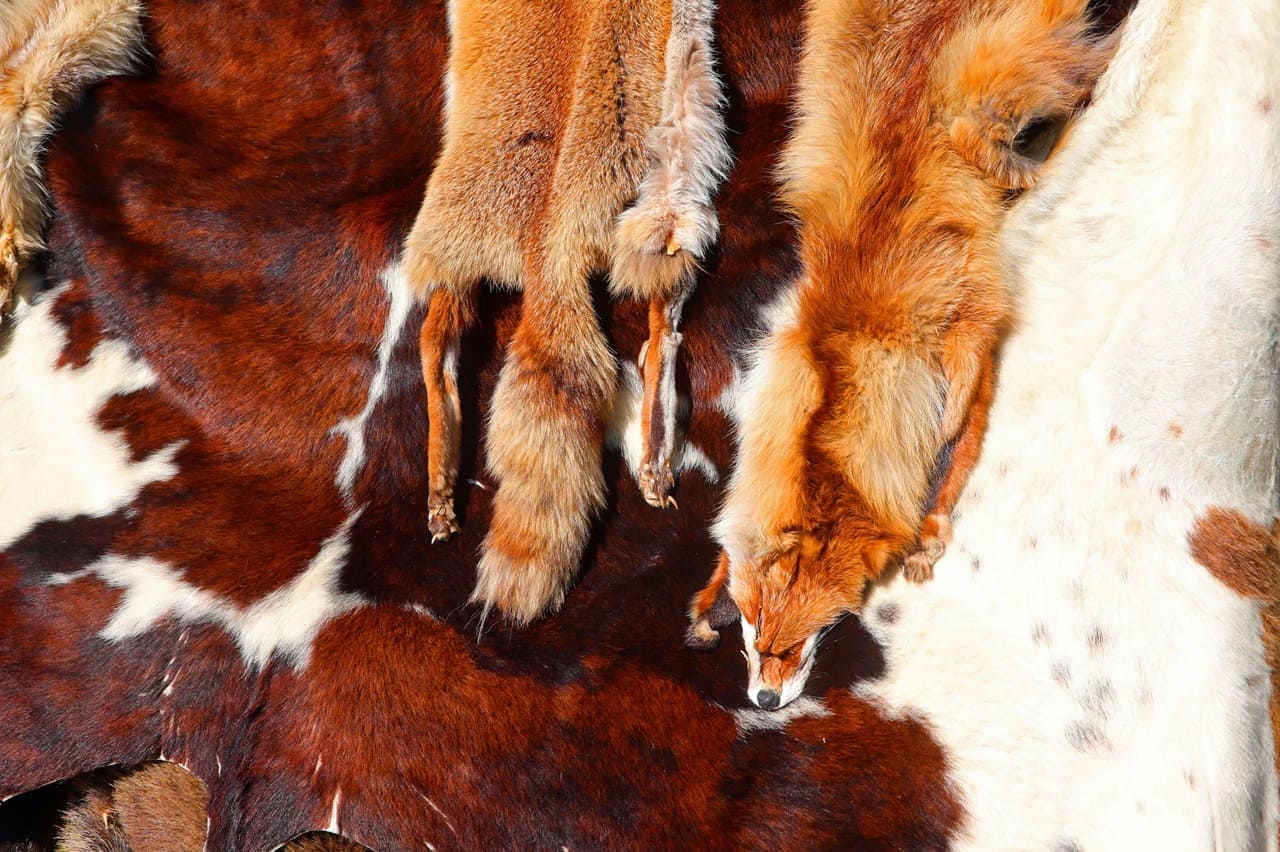
What the mother sees is the opposite of what the child expects: inside a crate lie several dead foxes. Covered in blood. Stacked up like rubbish. Next to them a sign: “Driven hunt.”
What for the hunting community is a “normal” sight shatters a child’s world. And with that begins a scene whose clarity mercilessly exposes what modern hunting policy chooses to suppress.
The question that lays everything bare: “Why did the people kill the foxes?”
The mother struggles for words. Because what do you tell a child?
- That foxes “must be regulated”? Even though it is scientifically demonstrable that they regulate themselves when left in peace.
- That they were “sick”? Even though the animals are visibly healthy — there is even a young fox among them.
- That recreational hunting is necessary to “prevent damage”? A myth that has long been debunked.
None of it holds up. None of it would a child ever believe. A child sees only one thing: an animal that wanted to live, and a human being who put an end to that life.
The uncomfortable truth behind the driven hunt
Those who are familiar with driven hunts know: the reality is far more brutal than the image of “ethical, fair-chase hunting” that hunting associations so persistently promote.
- Animals are driven out of the forest in a panic.
- Hunting dogs chase them through undergrowth, clearings, and across fields.
- Many foxes do not die immediately, but bleed out slowly, struck by pellets that tear their bodies apart.
- Social structures are torn apart, leading to more young foxes. An effect that refutes the myth of “population management” in and of itself.
It is a system that has little to do with ecology, only rhetorically with tradition, and nothing whatsoever to do with necessity.
Hunters’ arguments do not withstand scientific scrutiny
Modern wildlife research shows:
- The ecosystem regulates fox populations on its own, without human intervention.
- Recreational hunting does not reduce disease, but can actually promote it by placing pressure on the population.
- The claim that foxes endanger other species is not broadly substantiated. Habitat loss, agriculture, and human interference have a far greater impact.
And yet the shooting continues. Because it is permitted. Because it is tradition. Because it is a hobby.
A child as a moral authority
The girl’s reaction to the crate full of dead foxes is revealing:“When I grow up, I will tell the hunters to stop. I will put them in prison.”
Of course, this statement reflects childlike empathy. Yet it is morally clearer than any hunting policy report: anyone who causes suffering to other living beings without necessity is acting wrongly. Full stop.
Children recognize what many adults have unlearned: the capacity to regard life as worthy of protection, without ifs or buts.
The biggest question: Why do we still accept this at all?
The scene illustrates what is so often missing from the hunting debate: genuine empathy. While recreational hunters speak in data, hunting quotas, and territorial plans, children see only the obvious: a sentient being upon whom violence has been inflicted.
And perhaps it is precisely this perspective that we lack. No longer asking whether something is tradition, but whether it is right. No longer accepting that animals die because “it has always been this way.” But finally discussing how much suffering we could prevent if we treated wildlife differently.
Conclusion: An appeal that concerns us all
A crate of dead foxes by the roadside, a child trying to make sense of it, and a mother who cannot find an answer that does not hurt. This moment tells us more about recreational hunting in Switzerland than many political debates:
- It reveals the gulf between propaganda and reality.
- It shows how deeply violence against animals is entrenched in society.
- And it shows how clear the world could look if we were to view it again with childlike compassion.
Perhaps recreational hunting will only cease to be a hobby when we manage to take our children's perspective seriously. Because they intuitively know what we as adults prefer to forget: True humanity begins where we stop causing suffering.
More on the subject of recreational hunting: In our dossiers on the criticism of recreational hunting gather fact-checks, analyses and background reports. The scientific evidence is presented in the overview Studies on the Effects of Recreational Hunting.
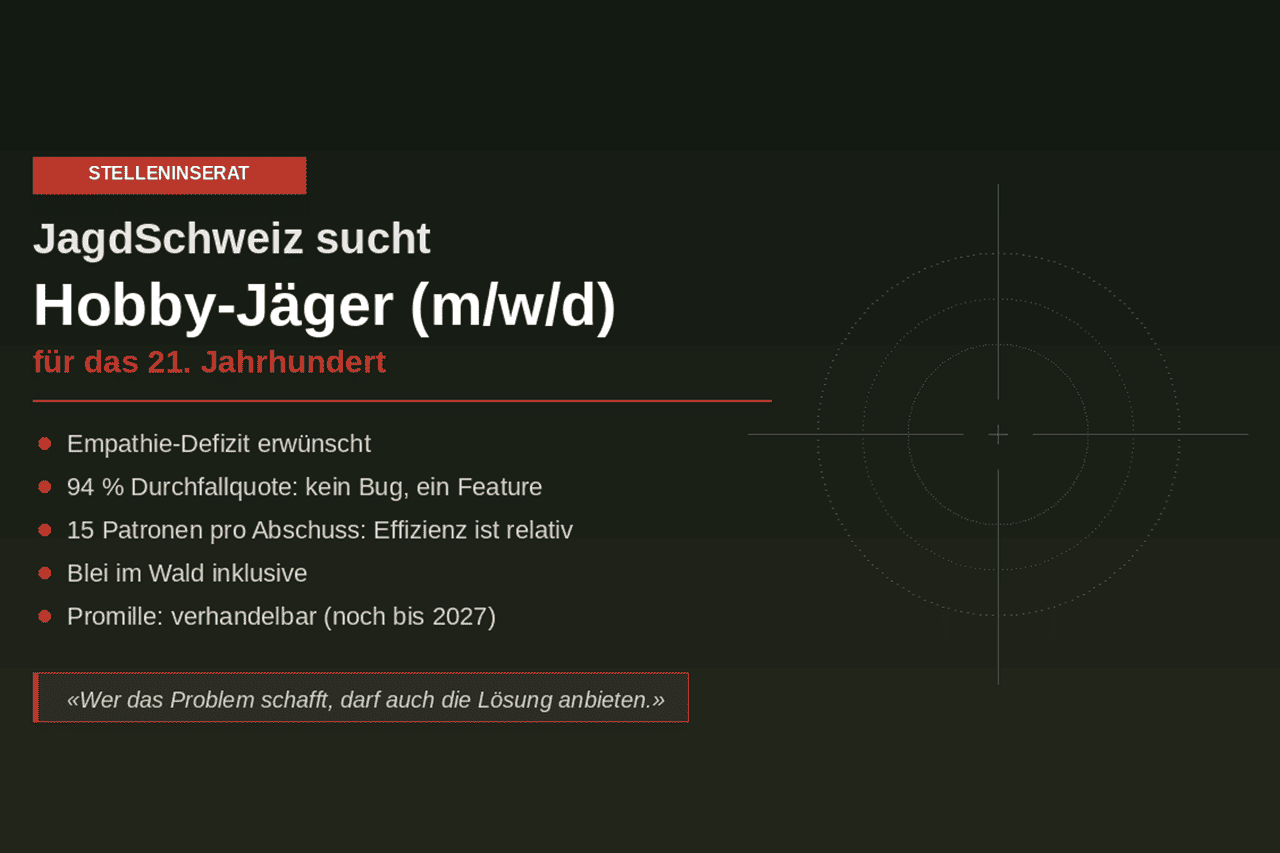
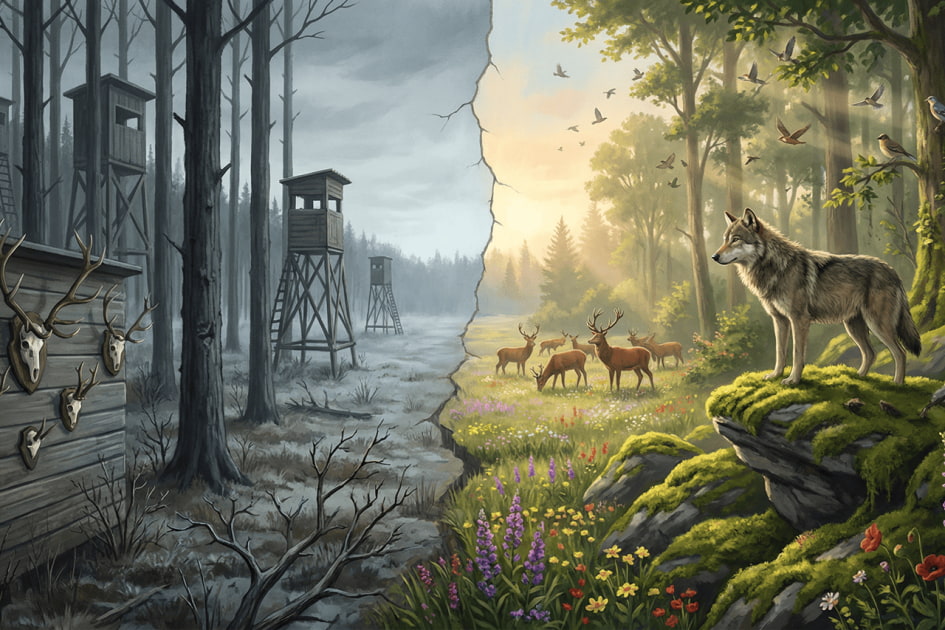
The position of IG Wild beim Wild: IG Wild beim Wild rejects recreational hunting. Our model is the canton of Geneva, which has managed without recreational hunting since 1974: without hunting seasons, without hunting dogs, without driven hunts, without high seats, without the animal cruelty and crime that go hand in hand with hunting season elsewhere. What has worked there for over fifty years disproves every position paper by JagdSchweiz. An association that bases its policy on claims it refutes in its own documents is not a professional organisation, but a factory for misinformation.
Support our work
With your donation you help protect animals and give voice to their cause.
Donate now →