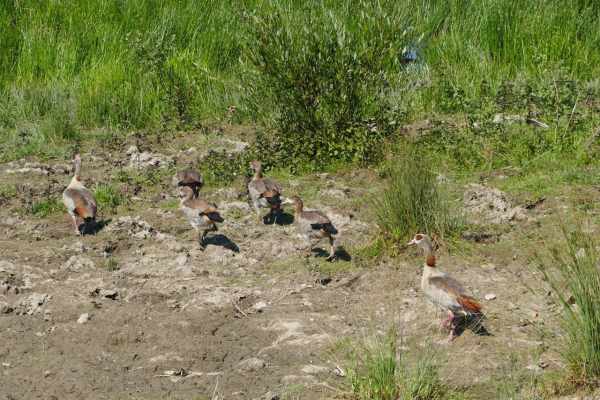
Dramatic Bird Decline in Germany
Warning from the Max Planck Institute for Behavioural Biology in Radolfzell: The new Red List of Breeding Birds in Germany shows that the decline of birds in Germany is continuing unchecked.


Warning from the Max Planck Institute for Behavioural Biology in Radolfzell: The new Red List of Breeding Birds in Germany shows that the decline of birds in Germany is continuing unchecked.
Agriculture, not predators
Birds of agricultural landscapes, as well as insect-eaters and migratory birds, are most at risk. This finding refutes the claim made by many hunters that predators such as foxes, martens, or cats are primarily responsible for the decline in species.
The fact that it is above all birds of agricultural landscapes, insect-eaters, and migratory birds that are affected shows that industrial agriculture is the primary cause of the rapid decline in bird populations. Germany therefore needs an immediate hunting ban on foxes and other predators.
Nadja Michler, Wildlife Policy Advisor at PETA
More than half of all breeding bird species endangered
More than half of the 259 permanently breeding bird species are endangered. 14 species have already become extinct in Germany, and six more are expected to be listed as extinct in the next Red List as well.
The link between species decline and agriculture
In Germany, 60 percent of the total agricultural area is used to grow feed for animals. 60 percent of all mammals on Earth are “livestock,” most of them cattle and pigs, 36 percent are humans, while only four percent are wild animals.
Hunting associations frequently argue that foxes threaten the populations of certain ground-nesting birds such as grey partridges or lapwings. However, experts identify the destruction of their habitats through the ongoing intensification of agriculture and the associated increased use of pesticides as the root cause of their decline.
More on the subject of recreational hunting: In the dossier The Role and Criticism of Recreational Hunters we shed light on the training, power and self-image of recreational hunters. What the research says about this is shown by Hunting fact-checked: the state of research.
The position of IG Wild beim Wild: IG Wild beim Wild rejects recreational hunting. Our model is the canton of Geneva, which has managed without recreational hunting since 1974: without hunting seasons, without hunting dogs, without driven hunts, without high seats, without the animal cruelty and crime that go hand in hand with hunting season elsewhere. What has worked there for over fifty years disproves every position paper by JagdSchweiz. An association that bases its policy on claims it refutes in its own documents is not a professional organisation, but a factory for misinformation.