
Hunter Lobby in Switzerland: How Influence Works
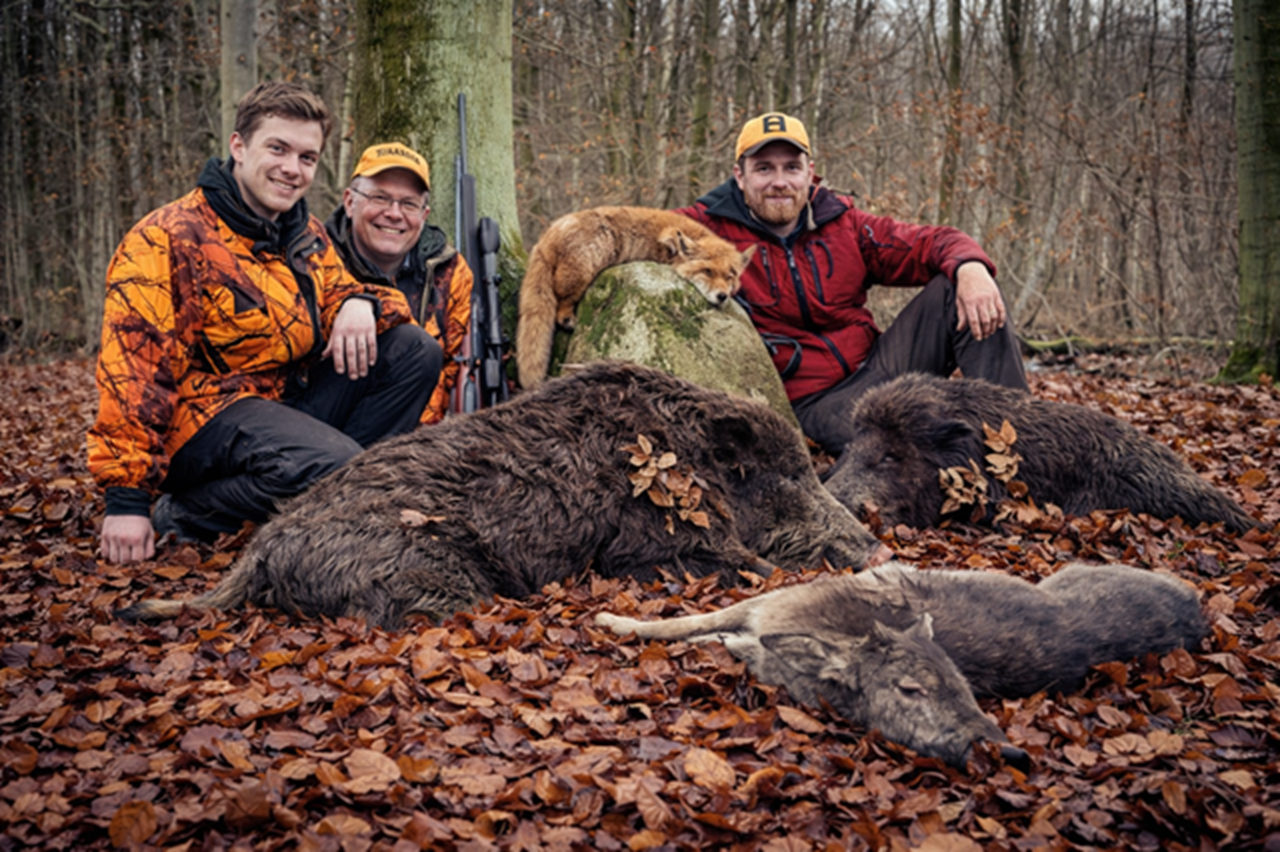
Recreational hunting in Switzerland is not just practice in the forest. It is politics. JagdSchweiz claims to represent over 30,000 hobby hunters, maintains 26 cantonal sections, has a parliamentary group in the Federal Assembly and according to its own statements annually finances over 100 million francs in activities that it directs "also in the interest of the state". Among other things, the hunting community finances hunting administrations in the cantons with this money – precisely those authorities that are supposed to control their culling.
This is the basic pattern of the hunter lobby: presence in structures that are actually supposed to exercise oversight. Influence that emerges before political decisions become official. Narratives that are formulated in such a way that they pass as expertise. And a data situation that is controlled by hunting-related actors who have no interest in uncomfortable findings. This dossier makes these mechanisms visible – step by step, level by level.
Complementary and in-depth: the dossier How hunting associations influence politics and the public with the European dimension via FACE, and the dossier Media and hunting topics on the linguistic level of this influence.
What awaits you here
- Lobbying begins with presence, not pressure: How informal networks, social anchoring and joint committees shape hunting policy decisions before they become official.
- Interpretive sovereignty as the most important lever: Why hunting language works politically, who benefits from it and why criticism is structurally harder to formulate.
- Data control as an instrument of power: Who determines what is documented, how it is evaluated and which figures become public – and why this is democratically problematic.
- The strategy of small steps:How night hunting, drone deployment, silencers and extended shooting seasons are being gradually liberalized – each sold as an 'efficiency gain'.
- Cantonal entanglements: Where oversight and interest are the same person:How the Swiss federal system embeds hobby hunting interests in enforcement structures.
- JagdSchweiz finances hunting administrations: A structural conflict:What it means when an interest organization co-finances the authorities that are supposed to control it.
- The voiceless: Who speaks for wild animals?Why the political system structurally fails to represent wildlife interests – and why this is ethically and democratically relevant.
- What would need to change:Concrete political demands for more transparency and independent oversight.
- Argumentarium:Responses to the most common counterarguments.
- Quicklinks:All relevant articles, studies and dossiers.
Lobbying begins with presence, not pressure
Anyone who imagines lobbying as a pressure campaign – loud initiatives, open resistance, external influence – underestimates how the hunters' lobby actually functions in Switzerland. Its most effective mechanism is not pressure. It is presence.
Recreational hunters are deeply embedded in local structures. People know each other, work together, sit on municipal councils, cantonal parliaments, fire brigade commissions, forestry commissions and hunting administrations. JagdSchweiz has 26 cantonal sections and thus comprehensive, institutionalized presence in all cantons. This embedding means: When hunting policy questions arise – shooting plans, hunting seasons, new technologies, wolf management –, recreational hunting representatives are already at the table. They don't need to be forced in. They are already there.
Many political processes are not 'conspiratorial' but simply social. Who sits at the table influences what is considered reasonable. Who is perceived as an 'experienced specialist' shapes initial questions and discussion frameworks. And who co-finances institutions has legitimacy and access that other stakeholders lack. JagdSchweiz states this itself: Recreational hunters finance 'also the hunting administrations in the cantons and thus the work of gamekeepers and hunting supervisors'. This is lobbying through system participation – inconspicuous, permanent, effective.
More on this: How hunting associations influence politics and the public and Hunting laws and control: Why self-supervision is not enough
Interpretive authority as the most important lever
Who determines the language determines the framework. This is not theory – it is the central influence mechanism of the hunters' lobby. Hunting associations have developed a conceptual inventory over decades and fed it into official communication, media language and political debates that makes hobby hunting appear as a naturally necessary activity.
'Stewardship' sounds caring. 'Regulation' sounds technical and necessary. 'Population management' sounds professional. 'Damage' by wild animals sounds objective, but ignores that it concerns conflicts of use between human interests and wildlife needs. 'Tradition' sounds culturally valuable and immunizes against criticism. These terms establish normative assumptions without naming them. Anyone who adopts them uncritically – in media reports, in official texts, in parliamentary debates – thereby adopts the worldview of the lobby that shaped them.
Those who criticize must argue more complexly: it involves animal sentience, ecological systems, conflicts of interest, framing analysis. This is more difficult to communicate in media and politics than 'stewardship and tradition'. The result is structural asymmetry in public impact: the lobby communicates simply, uniformly and emotionally positive. Their critics must explain what lies behind the simple message – and are quickly labeled as 'radical', 'anti-hunting' or 'out of touch with reality'. This label is not an argument. It is a defensive reaction meant to replace discussion.
More on this: Media and hunting topics: How language, images and 'experts' shape the debate and Hunter's tales
Data control as a power instrument
Democratic control requires transparency. Those who are to be controlled must not determine the basis of this control themselves. In Swiss recreational hunting, this is exactly what happens: hunting-affiliated actors significantly determine what is documented, how it is documented and which numbers become public.
Concrete example: Wounding shots are not systematically recorded. There is no uniform Swiss statistics on how many wild animals are wounded annually without being found. Animal welfare violations in hunting practice are not subject to uniform reporting requirements. Wildlife population estimates, on which shooting quotas are based, are often compiled with the participation of recreational hunting administrations. The effectiveness of alternative wildlife management measures is not documented in a format comparable to hunting statistics.
The result is a structural information asymmetry that is politically effective: JagdSchweiz can refer to statistical material that corresponds to its positions. Those who criticize often find no counter-numbers – not because reality would be better, but because independent surveys are lacking. When a system monitors itself, a credibility problem arises. This is not an accusation against individual persons. It is a structural weakness that would have to be eliminated politically.
More on this: Independent hunting supervision: External control instead of self-control (model motion) and Hunting myths: 12 claims you should critically examine
The strategy of small steps
Hunting laws in Switzerland are rarely completely rewritten. Often individual points are adjusted: technical facilitations, extended shooting seasons, new aids. Each change appears small in itself. Together they shift the boundary of what is considered normal and legitimate.
Concrete examples from the hunting law revision 2022/2025, which came into force on February 1, 2025: Silencers were deleted as a prohibited aid – they are thus implicitly permitted. Night hunting bans in forests were introduced, but cantonal exception regulations were simultaneously created that enable targeted night shots for 'damage prevention'. In the canton of Bern, hobby hunters have been allowed to hunt at night during defined full moon periods for years. In the canton of Zurich, the cantonal government decided on June 18, 2025 on a cantonal hunting ordinance amendment that brings further adjustments to hunting practice.
These steps are individually communicated as 'efficiency gains', 'practical adjustments' or 'bureaucracy reduction'. What they mean in total is rarely discussed: a creeping expansion of hunting scope of action while simultaneously restricting state control possibilities. This is the strategy of small steps – and it works because each individual measure appears too unspectacular to trigger public discussions.
More on this: Night hunting and hunting technology and Recreational hunting starts at the desk
Cantonal entanglements: Where supervision and interest are the same person
Switzerland has three hunting systems: territory hunting, license hunting, and state hunting. In territory cantons – including Zurich, Lucerne, Solothurn, St. Gallen, Bern – political municipalities lease hunting rights to hunting associations. These hunting associations are simultaneously users and stewards – they hunt, and they are responsible for the 'management' of wildlife populations. They are controlled by cantonal hunting administrations and hunting wardens.
The structural problem: In many cantons, hunting wardens are themselves hobby hunters. Cantonal hunting expert commissions are frequently staffed with individuals close to the recreational hunting milieu. Enforcement, consultation and interest representation lie in the same hands or in hands that are closely connected through social networks. This creates the same structural problem as a financial sector that regulates itself: it lacks the institutional distance that makes independent oversight possible. In the canton of Graubünden, where approximately 1,000 charges and fines are imposed annually against hobby hunters, we see what happens when control is not completely absent – but also how large the dark figure must be when even partial control produces these numbers.
More on this: High hunting in Graubünden: Control and consequences for hobby hunters and Hunters: Role, power, training and criticism
JagdSchweiz finances hunting administrations: A structural conflict
JagdSchweiz openly communicates that hobby hunters 'annually spend over 100 million francs on a task they also perform in the state's interest'. Specifically mentioned are the financing of hunting administrations in the cantons and the work of wildlife wardens and hunting supervisors.
This is a structural conflict of interest of fundamental significance: An interest organization that profits from killing wild animals and pays for it simultaneously finances the structures that are supposed to supervise this activity. This is like the pharmaceutical industry directly co-financing the drug surveillance authority – while presenting itself as a 'partner in the public interest'. In other regulated sectors, this conflict of interest would immediately be identified as a systemic weakness and addressed. In recreational hunting, it is considered a natural part of tradition.
Transparency International Switzerland has documented precisely this pattern for Swiss lobbying in general: covert influence, problematic entanglements, privileged access without adequate transparency. Recreational hunting is one of the clearest examples of this diagnosis – but it has almost never been identified as such in public discourse.
More on this: Hunting crisis in Europe: FACE fights for shots, Switzerland remains in the shadows and Sect: The green hobby hunters
The voiceless: Who speaks for wild animals?
The decisive question of recreational hunting policy is the one that is asked least often: Who speaks for wild animals? Wild animals have no voice. They are not members of associations, do not run for commissions and do not submit consultation responses. In a political system based on organized interests, they are structurally unrepresented.
This means: When wildlife interests are mediated in the political sphere, this happens either through animal protection organizations – which structurally have less access to authorities and media than JagdSchweiz – or through recreational hunting representatives themselves, who claim to act 'in the interest of wild animals'. This claim is a conflict of interest of the most obvious kind: The actor who kills simultaneously appears as spokesperson for nature. Those who kill 120,000 wild animals per year claim to manage their welfare.
This is not only ethically problematic – it is democratically problematic. A society that identifies biodiversity, animal welfare and ecosystem protection as shared values cannot have these values protected by an actor whose economic, social and emotional interests stand in direct contradiction to them. Wildlife needs independent representation in the political system: through wildlife research, through animal welfare organizations with institutionally equivalent access to commissions and authorities, and through political structures that systematically include wildlife interests – instead of structurally excluding them.
More on this: Introduction to hunting criticism and Hunting and biodiversity: Does recreational hunting really protect nature?
What would need to change
- Separation of interest representation and enforcement financing: Hunting associations must not co-finance hunting administrations. Supervision of recreational hunting must be fully financed from public funds, without financial dependence on the controlled interest group. Model proposal: Independent hunting supervision: External control instead of self-control
- Disclosure of all multiple roles in hunting policy committees: Anyone who is simultaneously an association official and member of a cantonal hunting expert commission must declare this role at every relevant meeting and recuse themselves in cases of substantial conflicts of interest.
- Independent collection of hunting data: Missed shots, animal welfare violations, wildlife population estimates and proof of effectiveness must be collected by independent institutions and published without the involvement of the recreational hunting lobby.
- Equal representation on cantonal hunting commissions: Alongside recreational hunting representatives, wildlife biologists, ethologists, animal welfare organizations and hunting-critical population representatives must be structurally represented on an equal basis in expert commissions. Model proposal: Model texts for hunting-critical proposals
- Transparency register for hunting policy lobbying: Following the model of the EU transparency register, it must be documented which persons and organizations influence hunting policy decisions with which resources.
- Review of the strategy of small steps: Every hunting law or ordinance amendment must undergo an independent impact assessment that systematically includes animal welfare, biodiversity and conflicts of interest.
Arguments
«Hunting associations represent democratically legitimized member interests.» Yes. 30,000 members are legitimate. But democratic legitimacy does not protect against conflicts of interest. And 30,000 members represent 0.3 percent of the population. When their interests are structurally more strongly anchored in the political system than the interests of the remaining 99.7 percent, that is a structural democratic problem – not proof of democratic health.
«Without hobby hunters the state would be lacking – they perform a public service.» This is the recreational hunting lobby's own narrative. A public service justifies resources, access and participation – but it also demands transparency, independent control and the willingness to allow the service to be questioned. Anyone who claims a public service for themselves must also accept public accountability.
«Hunting associations are small and cannot operate a large lobby.» JagdSchweiz coordinates 26 cantonal sections, sits on the board of FACE in Brussels, maintains a parliamentary group in the Federal Assembly and, according to its own statements, finances hunting administrations in the cantons. This is not a small lobby. This is a professionally organized, institutionally anchored interest organization with direct access to enforcement structures.
«Criticism of the hunter lobby is blanket anti-hunting hostility.» This dossier is not directed against individual hobby hunters. It analyzes structures: data control, multiple roles, enforcement financing, framing, parliamentary groups. These structures are documented, publicly accessible and a legitimate object of political analysis. Those who label structural criticism as «anti-hunting hostility» replace factual arguments with label defense.
Quicklinks
Articles on Wild beim Wild:
- How hunting associations influence politics and the public
- Media and hunting topics: How language, images and «experts» shape the debate
- Hunting myths: 12 claims you should critically examine
- Hunting crisis in Europe: FACE fights for shots, Switzerland remains in the shadows
- Template texts for hunting-critical initiatives in cantonal parliaments
- Hunter's tales
- Sect: The green hobby hunters
Related dossiers:
- Media and hunting topics
- How hunting associations influence politics and the public
- Hunter lobby in Switzerland: How influence works
- Recreational hunting as an event
- Recreational hunting starts at the desk
Our standard
Lobbying is natural in democracy. But lobbying that co-finances enforcement structures, conceals multiple roles, controls data and sells interest positions as neutral expertise is democratically problematic – regardless of which industry practices it. In recreational hunting, these mechanisms are particularly consequential because the decisions made affect the life and death of tens of thousands of wild animals annually.
IG Wild beim Wild makes these structures visible. Not to create outrage, but to establish comprehensibility. A democracy that takes wildlife protection and biodiversity seriously must know who influences how and with what goal the rules by which wild animals may live and die. Who speaks for wild animals? This question is the core. And the answer the current system provides is unsatisfactory.
Do you know commissions, administrative meetings, hunting regulation changes or political processes in which recreational hunting interests are dominant? Send us tips, documents or current cases: wildbeimwild.com/kontakt – we research publicly and with source transparency.
More on the topic of recreational hunting: In our hunting dossier we bundle fact-checks, analyses and background reports.