Wind farms dry out soils and alter the climate
A new study has found that wind farms have a “significant” impact on soil moisture and can exacerbate soil drying in grassland areas, affecting ecosystems.

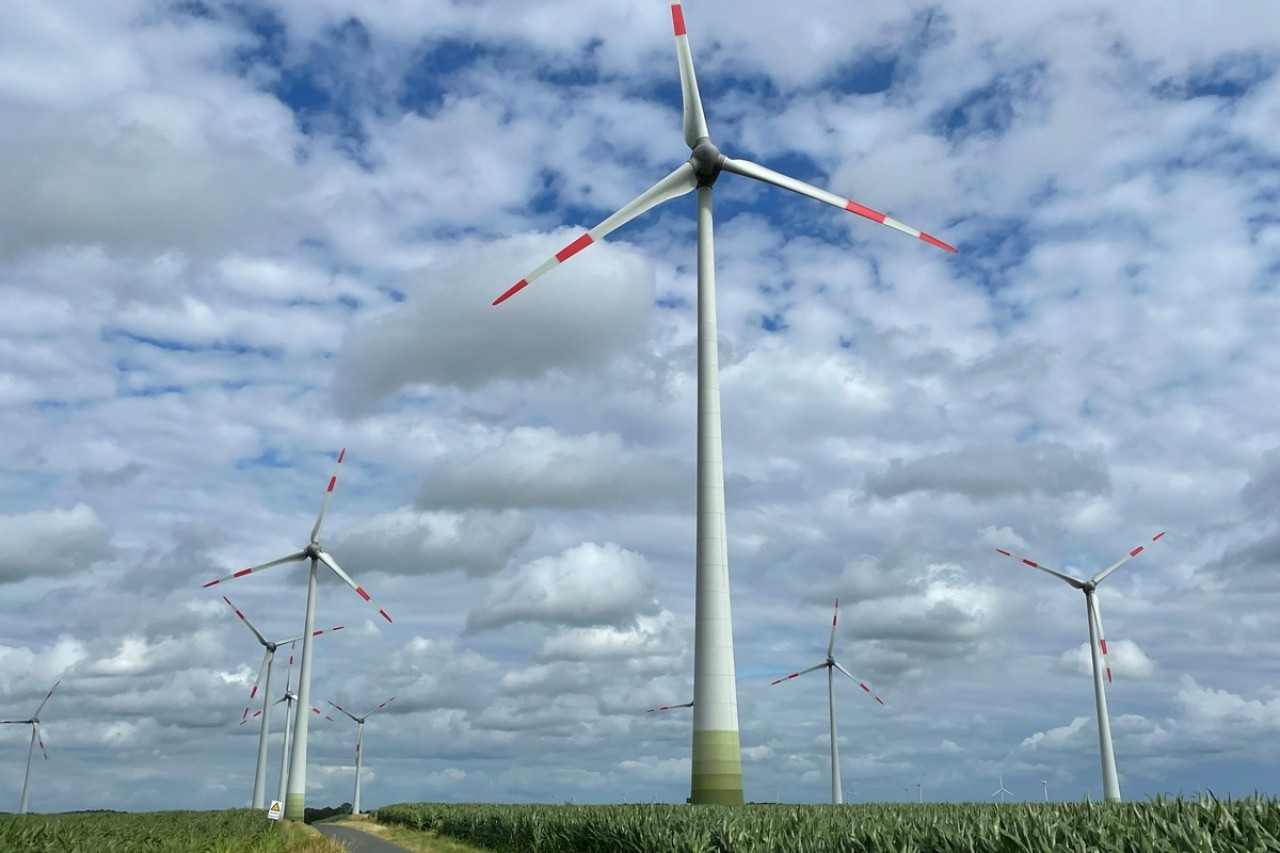
The study found that wind farms significantly reduce soil moisture within the wind farms as well as in the downwind and upwind directions.
The authors call for a better understanding of the environmental impacts of the enormous turbines when constructing wind farms: the long-term operation of wind turbines can affect the local climate.
Significant drying in grassland areas
The study focused on wind farms in the grasslands of China, and the researchers analysed changes in soil moisture across different wind directions and seasons, then assessed the effects of wind turbine operation on soil moisture.
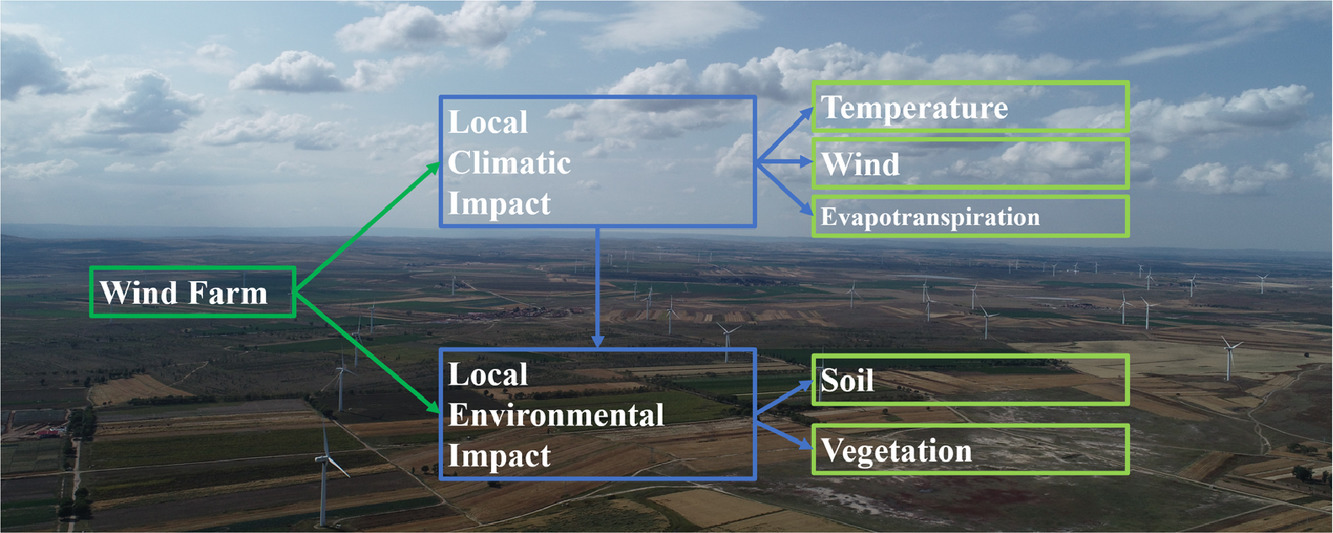
«Our research shows that the operation of wind turbines leads to significant soil drying, and this drought effect varies considerably depending on the season and wind direction,» wrote the research team led by Prof. Gang Wang from the School of Resources and Environmental Engineering at Ludong University in China.
The results show that soil moisture decreases most strongly within wind farms, and in summer and autumn the decline in soil moisture in the downwind direction is significantly greater than in the upwind direction, while in spring the opposite is the case.
They also stated that wind farms promote soil drying in grassland areas, which may have implications for grassland ecosystems.
22-year long-term study: biomass loss around wind farms
A study conducted over 22 years (The Influence of Wind Energy on the Production of Plant Biomass in China) observed the effects on the environment and vegetation at 2’404 wind farms and 108’361 wind turbines. A significant reduction in plant biomass production (PBP) was found due to the construction of wind farms within a range of 1–10 km. Furthermore, absorbed photosynthetically active radiation and gross primary productivity decline within a range of 1–7 km. The adverse effects intensify in summer and autumn and are more pronounced at lower elevations and in flatlands. The result is a reduction in CO₂ absorption by plants. More on theeffects on the environment and nature conservation.
We must therefore better understand the impact of wind farms on the environment before constructing them.
Global terrestrial wind stilling
Wind farms are also afflicted by an atmospheric wind stilling that they themselves have generated. The continuous decrease in atmospheric wind in the Northern Hemisphere is a widespread and now potentially global phenomenon. The phenomenon is also referred to as “global terrestrial stilling” (Global terrestrial stilling).
Prof. Pierre Ibisch, Professor of Nature Conservation, has measured temperatures several degrees higher at wind turbines in wind farms in the forest near Lieskau (Brandenburg).
Ibisch: “A particularly important edge effect in the context of the climate crisis is the high temperatures that develop on hot summer days on the gravelled access roads or base areas of wind turbines in forests. There, surface temperatures of 55 degrees Celsius and above are easily reached. This heat causes hot air to rise and draws moisture from the forest, leading to desiccation and increasing the risk of forest fires. When I think about forests, I do not think only about carbon or CO₂. A forest has many other functions: it builds soil and is highly relevant to the water cycle. It is an ecosystem that provides important services for us, especially during the climate crisis, such as cooling the landscape. And of course it also serves as a carbon store. But the forest does not exist primarily to solve the climate problem.”
An earlier study from 2002 showed that in a US region containing four of the world's largest wind farms, a rise in land surface temperature was recorded, which researchers attributed to the effects of the turbines.
The study, published in Nature Climate Change, used NASA satellite data to show that an area in west-central Texas covered by four large wind farms had warmed by 0.72 degrees Celsius per decade compared to nearby regions without wind farms.
The scientists explained that the effect is caused by the turbulence in turbine winds, which act like fans and draw warmer air down from higher altitudes at night, according to lead author Liming Zhou of the University of Albany, State University of New York.
It is foreseeable that wind energy, alongside solar energy, will prove to be “climate-damaging” and may produce the opposite of what is promised to us daily by the left-wing/green global climate saviours.
Further articles
- Wildlife in Switzerland is contaminated with plastic
- Environmental impacts of wind turbines: The dangers of PFAS for wildlife
- Study on the influence of wind turbines on the weather
- Offshore wind farms could pose significant risks to the ecosystem, the economy and human health
- The effects of wind farms on soil moisture and the local climate
- Wind turbines cause exactly what they were supposed to prevent
- Solar module waste: The disposal problem
- The impact of wind turbines on wildlife and the debate over clean energy
- “Two new large nuclear power plants are sufficient for Switzerland”
- Wind energy and marine fauna: No harmonious coexistence
- Scandalous secret contracts between wind energy promoters and Bernese municipalities