Rösti's Department: No Limit for Highly Toxic Insecticide
Poison for Europe's water tower, for biodiversity and soil fertility, and for our food security.

No limit value is to be introduced for the highly toxic insecticide deltamethrin, so that farmers can continue to use it.
The department of Albert Rösti has adopted a corresponding recommendation from the farmers' association, reports SRF.
"If this active substance is removed, we will have no protection there anymore. We are then essentially facing nothing," says David Brugger, head of plant protection at the Swiss Farmers' Union.
Poison for Europe's Water Tower
This statement shows how firmly our food production is in the hands of Syngenta and Bayer. This is poison for Europe's water tower, for biodiversity, soil fertility and food security. Consider this: since 2005, 218 active substances for pesticides have been banned due to health and environmental damage.
Our farmers must no longer be made dependent on toxic and environmentally harmful pesticide chemistry. They must be retrained in sustainable farming systems, such as mixed cropping, agroforestry and regenerative agriculture. These increase soil fertility and biodiversity, thereby boosting yields and replacing pesticides with natural plant protection. This also ensures clean drinking water.
Where vast, monotonously planted areas predominate, the diversity and quantity of beneficial organisms are significantly reduced and agriculture becomes dependent on pesticides. And this ultimately has a negative impact on agricultural yields as well. More on environmental and nature conservation.

People's Initiative for Secure Food
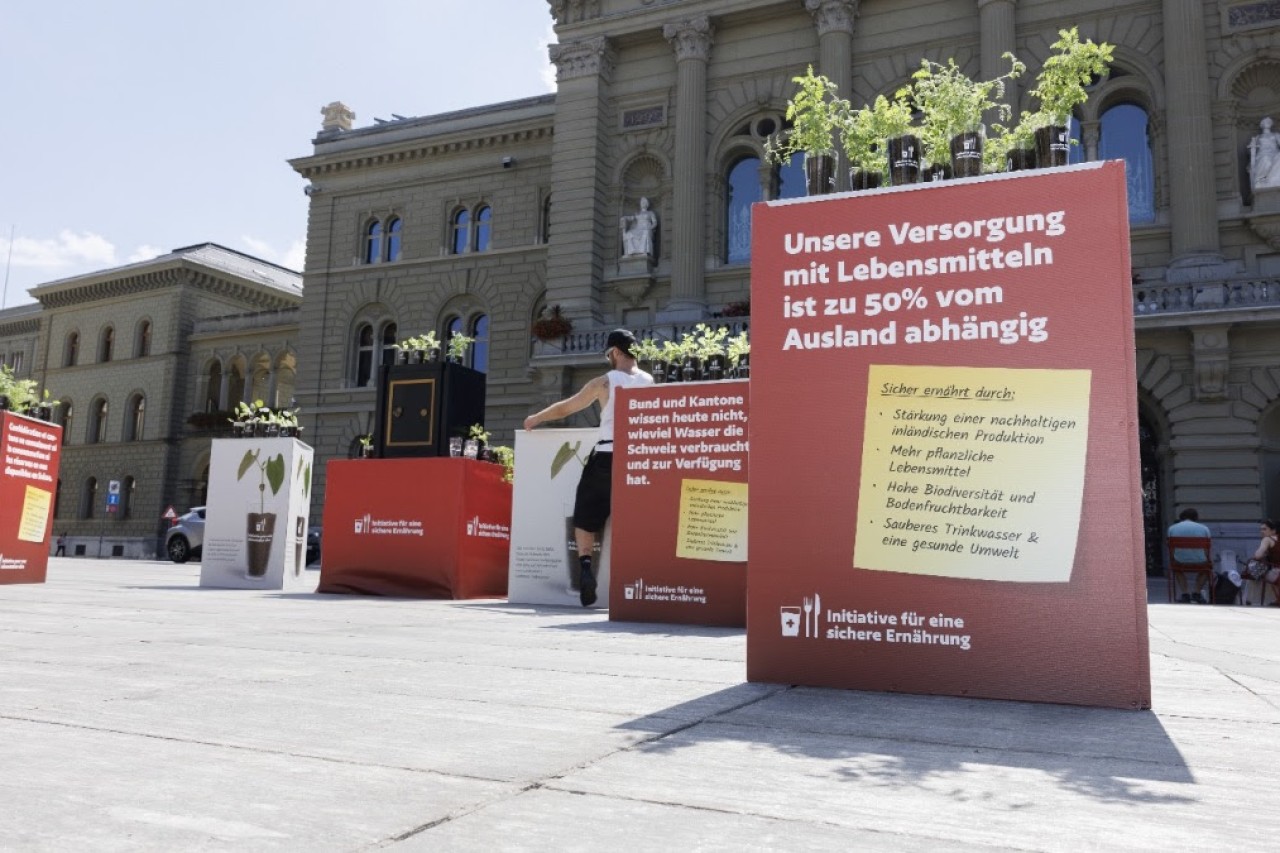
With the people's initiative «For safe nutrition – by strengthening sustainable domestic production, more plant-based foods and clean drinking water» we demand the safeguarding of biodiversity and soil fertility.
These “free services” of nature replace pesticides, ensure sustainable agriculture and thus production security for farmers – and a secure supply of food and clean drinking water for the Swiss population.
To this end, subsidies, the promotion of research, advisory services and education, as well as other state incentives should support the transition towards sustainable agriculture and align the food and agricultural sector with the production and consumption of more plant-based foods .