Two years after the start of the COVID-19 pandemic, the way wild animals are handled in China and Southeast Asia continues to harbor the danger of a new viral outbreak.
The risk lies in overcrowded markets, poor hygiene during transport, at breeding facilities, and at slaughter.
«A Time Bomb»
«It is only a matter of time before something like this happens again», said a European diplomat and health expert based in Beijing.«This is a time bomb.» The warnings are supported by new scientific studies on the wildlife trade.
Foreign and Chinese researchers in China examined 1,725 wild animals from five mammal groups. In the process, 45 previously unknown viruses were discovered, including 18 «potentially highly dangerous to humans» pathogens, according to the study, which is currently under peer review.
The study illustrates why traded wild animals and live animal markets are a problem and must eventually lead to a pandemic, said co-author Edward Holmes, Professor of Infectious Diseases at the University of Sydney.
Difficult to Regulate
The masked palm civet (Paguma larvata), a tree-dwelling member of the civet family that had already been linked to the outbreak of the first SARS virus in 2002/03, showed the highest number of potentially dangerous pathogens, the scientists found. The transmission of an alpha-coronavirus from bats — suspected to be the origin of SARS-CoV-2 — to a masked palm civet was also discovered.
«Breeding and trading wild animals such as masked palm civets is absolutely dangerous», said participating Professor Shuo Su of the Nanjing Agricultural University. The problem must be addressed. «Otherwise, new pathogens may emerge in the population in the future.»
«Cronyism»
China has already banned the breeding of masked palm civets and other animals. Attention must nonetheless also turn to Southeast Asia, where there is far more wildlife trade — «legal and illegal».
The Chinese side had begun to regulate the industry more strictly, confirmed the European health expert in Beijing, who wished to remain anonymous. But the problem in China was always implementation: «Deep in the provinces, and the further you get from the cities, there are things happening that shouldn't be happening.» With the widespread «cronyism» in China, it was also difficult to crack down properly.
Covid-19 origins at the Huanan Market?
Where exactly the virus behind Covid-19 came from may never be fully determined. But what is certain is that the first mass spread can be traced back to the Huanan Market in the central Chinese city of Wuhan.
Health authorities discovered many traces of the coronavirus particularly at the wildlife stalls. Of 585 samples, 33 tested positive, 93 percent of which came from the western part of the market, where wild animals were sold, as the state agency Xinhua reported in January 2020. «It suggests that the virus originated from wild animals sold at the Huanan Market.»
An important economic sector
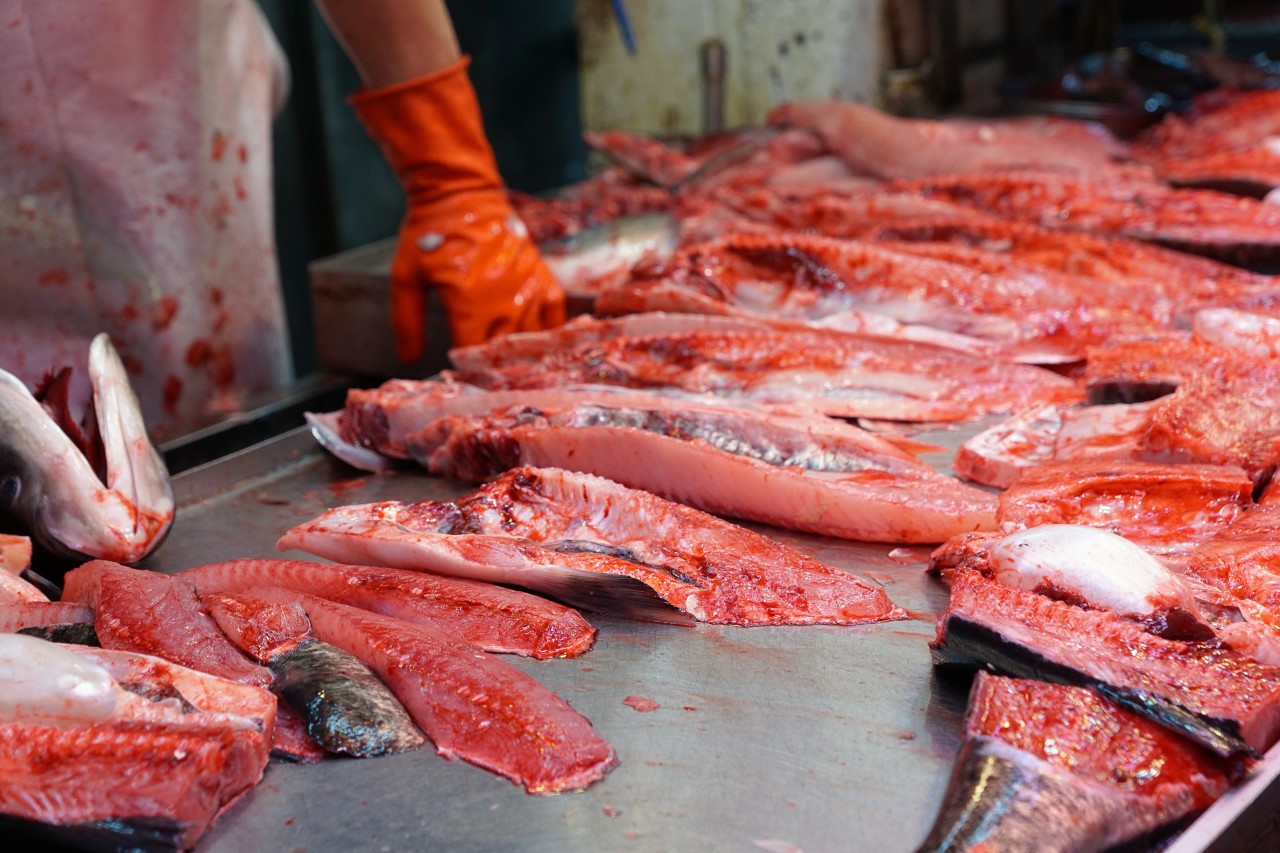
Huanan is a typical example of such markets (wet markets) with fresh goods and animals in cages, the researchers of the study explain: «Poor hygienic conditions and close contact between animals and humans, as well as a wide mix of species within the live animal market and the restaurants it supplies, make it an ideal breeding ground for emerging infectious diseases.»
The trade in wild animals had expanded considerably in China over the two preceding decades. In 2016, the sector generated revenue of 520 billion yuan, equivalent today to 81 billion francs. More than 14 million people found employment, mostly unskilled workers operating in family businesses. The industry has lifted many people out of poverty.
Wild animals are bred in China for consumption, fur, medicine, and science — including bears, foxes, badgers, mink, pangolins, porcupines, macaques, ferrets, squirrels, raccoons, deer, raccoon dogs, and more.
Problematic fur farming
Following the outbreak of Covid-19, trade was restricted in 2020 and the consumption of wild animals was banned. Many farms were closed, with operators generally receiving compensation. However, breeding for fur, science, medicine, and zoos was permitted to continue. Even within China, this drew criticism from scientists who demanded far-reaching bans.
Fur farming accounts for the largest share of the wild animal trade. The risk is considerable that viruses could be transmitted from humans to animals and back again, mutating in the process — as occurred on mink farms in Denmark. «The breeding and slaughtering of wild animals, regardless of purpose, carries the risk of zoonotic diseases», warned an Oxford study.
However, attempts to adopt a global policy within the framework of the United Nations failed. At the very least, animals caught in the wild should under no circumstances be traded at markets or brought there at all.
The aim of the plan was to ensure that only animals from regulated and monitored breeding operations would be sold or processed there. However, the chief economist of the UN Food and Agriculture Organization (FAO) blocked the initiative — with the backing of Chinese FAO Director-General Qu Dongyu.
More on the subject of recreational hunting: In the dossier Poaching and hunting crime in Switzerland we document cases, legal questions and recurring patterns. What the research says about this is shown by Hunting fact-checked: the state of research.
The position of IG Wild beim Wild: IG Wild beim Wild rejects recreational hunting. Our model is the canton of Geneva, which has managed without recreational hunting since 1974: without hunting seasons, without hunting dogs, without driven hunts, without high seats, without the animal cruelty and crime that go hand in hand with hunting season elsewhere. What has worked there for over fifty years disproves every position paper by JagdSchweiz. An association that bases its policy on claims it refutes in its own documents is not a professional organisation, but a factory for misinformation.