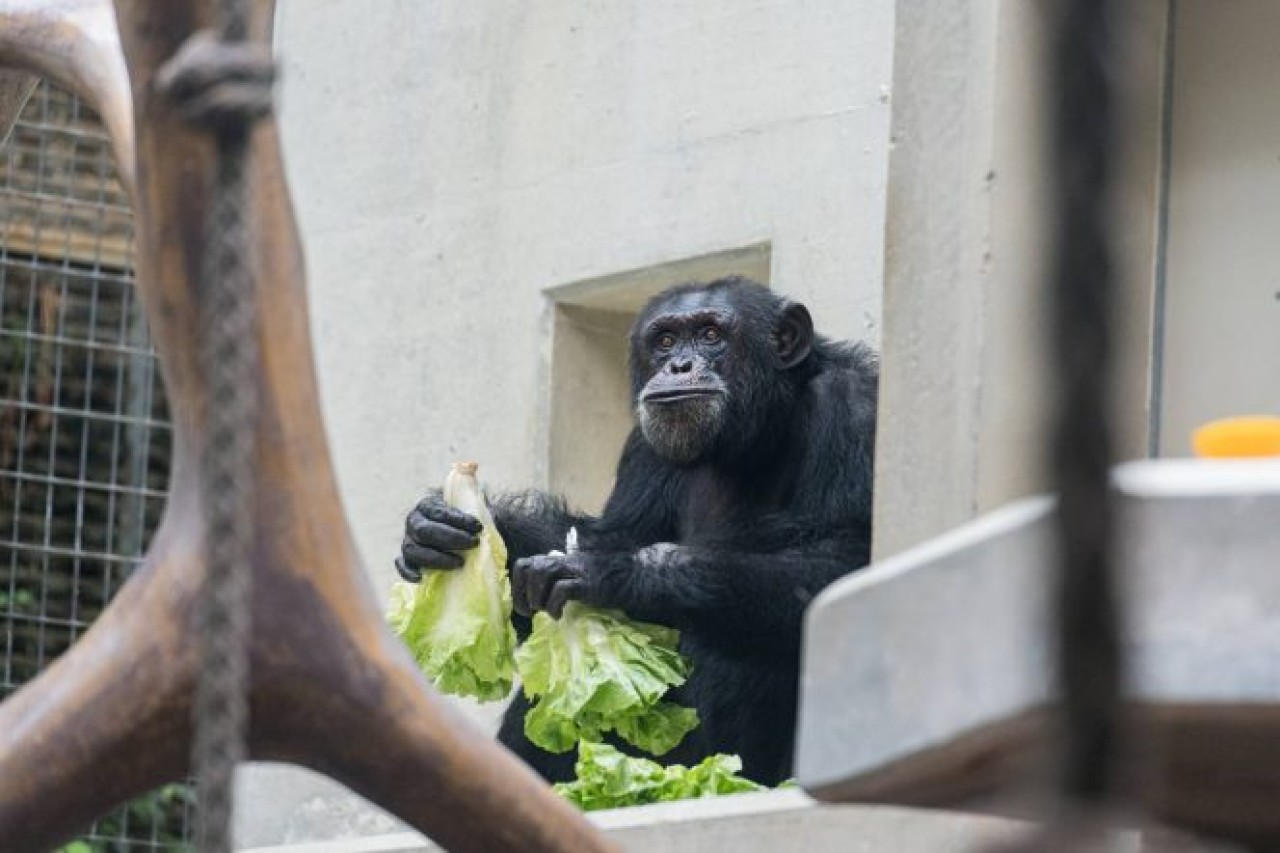
In mid-December, the chimpanzee Tatu died unexpectedly at Basel Zoo.
When he was found in the morning, his body showed bite wounds. A post-mortem examination has now provided definitive clarity about the cause of death: the newcomer was killed by his fellow chimpanzees through bites and blows.
Pointless breeding programmes at the animals' expense
The 30-year-old ape had only been transferred from Osnabrück Zoo to Basel in October. PETA criticises the fact that zoological institutions repeatedly exchange sensitive great apes with one another for costly and pointless breeding programmes, accepting deaths in the process. As far back as 2013, the female chimpanzee Zamana also died at Osnabrück Zoo shortly after a transfer, from cardiovascular failure. The animal rights organisation is calling for a general ban on the breeding and importation of great apes, so that the keeping of these animals in captivity is phased out in the medium term.
The keeping and breeding of chimpanzees serves only the interests of zoos, which use them to attract visitors. Meanwhile, the animals suffer and die. Nor can there be any talk of species conservation, since it is virtually impossible to release great apes born in captivity back into the wild.
Dr. Yvonne Würz, specialist adviser on animals in the entertainment industry at PETA
Background information
Through the worldwide transfer of chimpanzees between zoos, the sensitive animals are repeatedly separated from their families and social groups and placed in an entirely new environment. This can have devastating consequences for the physical and psychological condition of the individual animal. Conflicts are also inevitable in such relocations, as apes in captivity have no means of escape when confrontations arise. Since chimpanzees born in captivity cannot be rewilded due to their conditioned behaviour, the breeding and transfers funded by taxpayers' money contribute nothing to the protection of wild populations. Only the preservation of their natural habitats can secure its survival in the long term. Instead of funding zoo keeping with large sums of money, PETA calls for resources to be used to preserve the animals' natural habitats in order to permanently ensure their continued existence.
Part of PETA's motto is: Animals are not here for our entertainment or to be exploited by us in any other way. The needs of chimpanzees are so complex that no zoological facility can provide them with a species-appropriate habitat. Scientific studies indicate that great apes in zoos frequently suffer from severe behavioral disorders, even in comparatively large zoo enclosures that may look acceptable to humans. In the wild, great apes live in areas spanning many dozens of square kilometers. PETA therefore calls for a general ban on the breeding and importation of great apes, in order to phase out the keeping of these animals in zoos and wildlife parks in the medium term. The organization advocates against speciesism, a worldview that classifies humans as superior to all other living beings.