Cannabis (CBD) for Animals
More and more veterinarians are using CBD products for dogs and cats. Cannabidiol shows promising effects against pain, anxiety, and seizures.

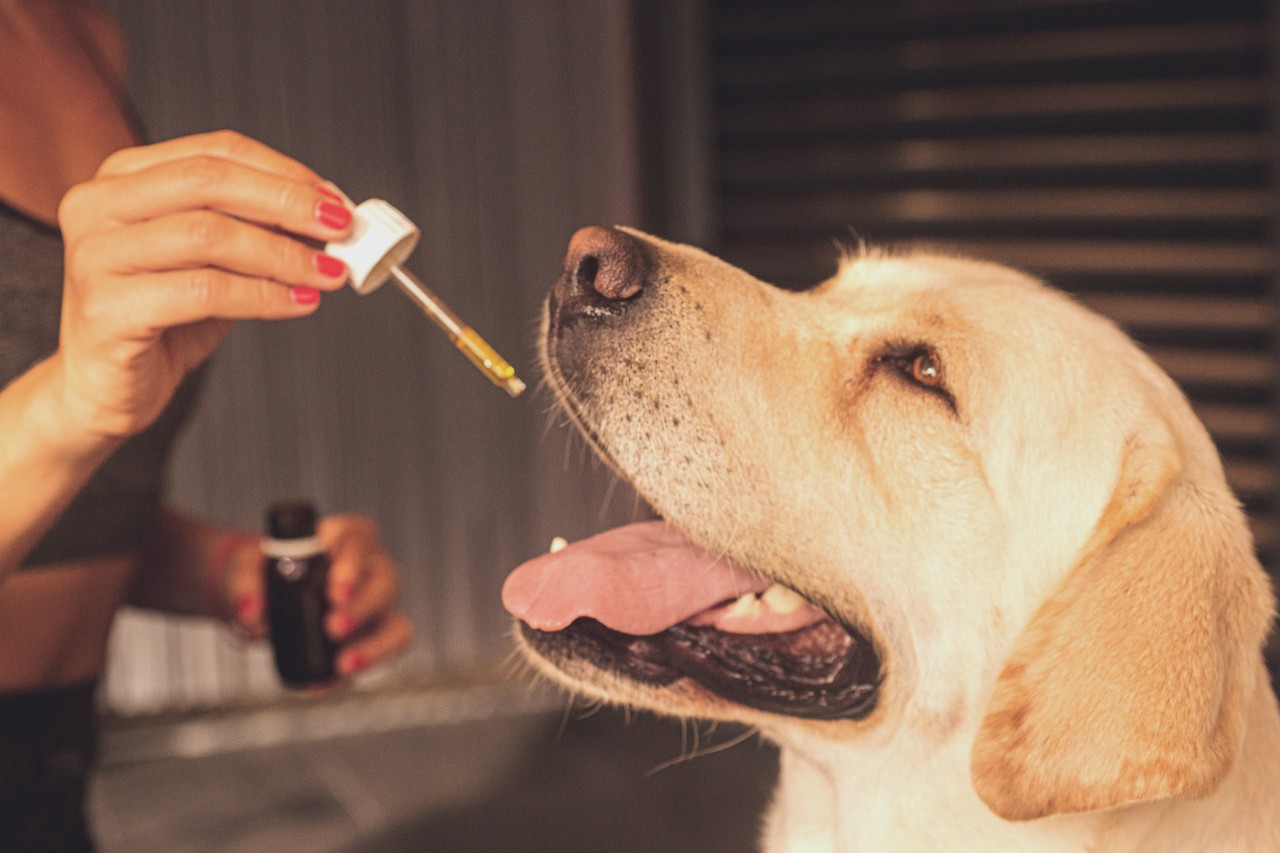
A pet owner came home from work to find that her 14-year-old female dog was having difficulty standing up.
She dragged her leg along in obvious pain. It turned out to be bone cancer.
She gave the dog the pain medication prescribed by the veterinarian, but it wasn't enough. Then an idea came to her: if products containing CBD (cannabidiol), derived from cannabis, are used to treat pain in humans, they might perhaps help her dog too. She mixed drops of hemp-based oils she had found at her local health food store into the dog's food. After several attempts, she found a dosage that worked.
With the relaxation of cannabis laws, more and more pet owners and veterinarians are using CBD-containing products to relieve pain, reduce anxiety, ease gastrointestinal problems, and reduce seizures in dogs and cats. At the same time, companies are marketing a range of products containing CBD — not to be confused with THC, the psychoactive component of cannabis that causes a high. Oils, tinctures, treats, and even hemp-infused peanut butter for pets are available in shops, leaving many owners wondering what is genuine and what is merely hype.
Can CBD help pets? The short answer is: yes, say a growing number of veterinarians. They have seen dogs with chronic arthritis pain that found no relief from anti-inflammatory medications walk better within just a few days of taking CBD. Not every animal responds equally well to it. It is not a cure-all. But cannabis is a remarkable option.
A survey in the United States found that half of the participating pet owners had used CBD products and the majority were satisfied. CBD works, it is safe — that was the general consensus — and it is regarded as a breakthrough.
Pet owners should, however, consult their veterinarian before using CBD or any other over-the-counter product. CBD is sometimes mistakenly used not to treat cancer pain, but as a cancer treatment itself, which it is not. Administering CBD to pets too quickly for pain relief could mask the underlying problem.
Whether your veterinarian will discuss CBD with you may depend on where you live. A federal law from 2018 allows stores in the US to sell hemp products containing CBD and less than 0.3% THC, but in some states where medical or recreational use of marijuana is not permitted, sales remain restricted. In some states, veterinarians can even be penalized for discussing CBD products with their clients.
Fortunately, this is beginning to change. The California Veterinary Board once attempted to prevent veterinarians from discussing CBD at all, but now allows them to discuss it as a treatment option. The Colorado Veterinary Board goes even further, allowing veterinarians to recommend specific products and dosages, while a recently enacted law in Nevada permits veterinarians to both recommend and administer hemp and cannabidiol products.
Currently, CBD products for pets are sold as over-the-counter dietary supplements, without approval or regulation by the Food and Drug Administration's Center for Veterinary Medicine. Quality can vary. Unless pet owners look at laboratory test results, they cannot know how much CBD a product actually contains. Some contain none at all. A study by Leafreport.com, an industry website, from 2021 found that more than half of CBD products were inaccurately labeled; most contained more CBD than stated.
More on the subject of recreational hunting: What the research says about this is shown by Hunting fact-checked: the state of research.
The position of IG Wild beim Wild: IG Wild beim Wild rejects recreational hunting. Our model is the canton of Geneva, which has managed without recreational hunting since 1974: without hunting seasons, without hunting dogs, without driven hunts, without high seats, without the animal cruelty and crime that go hand in hand with hunting season elsewhere. What has worked there for over fifty years disproves every position paper by JagdSchweiz. An association that bases its policy on claims it refutes in its own documents is not a professional organisation, but a factory for misinformation.