Borneo: Orangutan Forest School Opens
For over a year, VIER PFOTEN has been working together with local partner organization Jejak Pulang and the Indonesian government to establish a new rehabilitation project for orangutans in Borneo. Now the time has finally come: the new Orangutan Forest School in East Kalimantan has opened and the first school year can begin. Eight orphaned orangutans between the ages of eleven months and nine


For over a year, VIER PFOTEN has been working together with local partner organization Jejak Pulang and the Indonesian government to establish a new rehabilitation project for orangutans in Borneo.
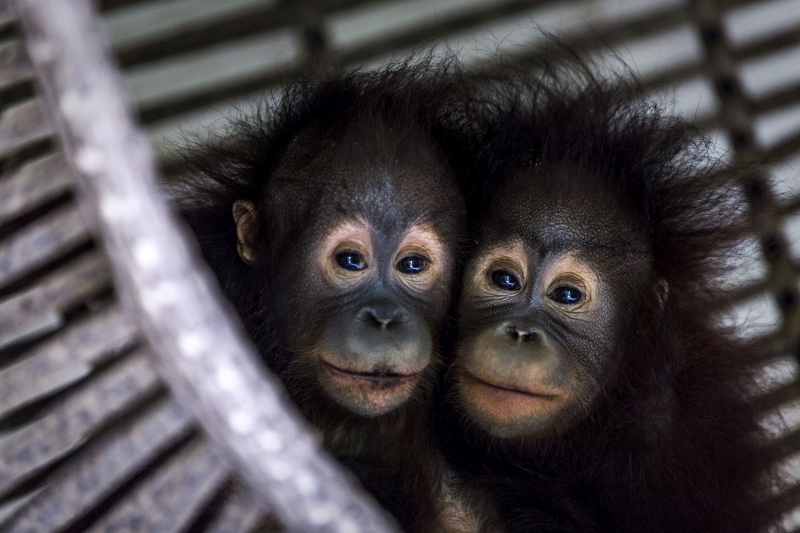
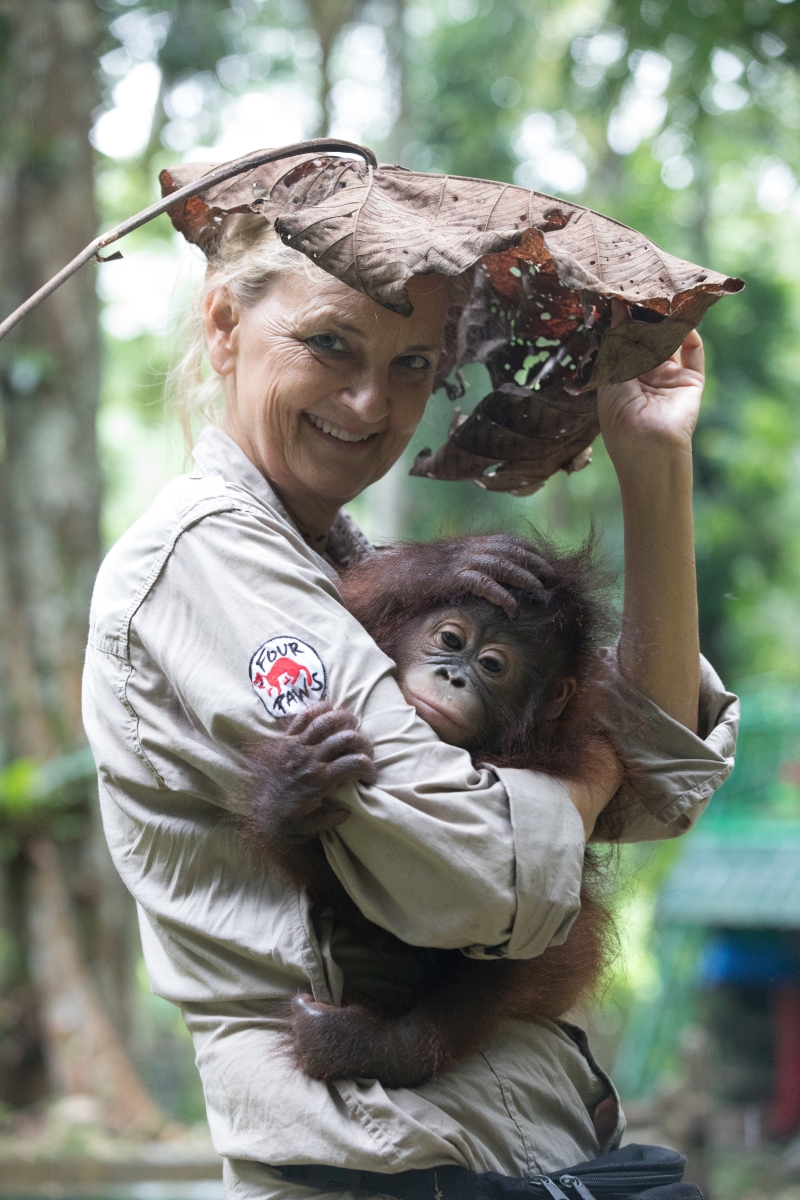
Now the time has finally come: the new Orangutan Forest School in East Kalimantan has opened and the first school year can begin. Eight orphaned orangutans between the ages of eleven months and nine years will be the first pupils to receive intensive care and preparation for release into the rainforest at the 100-hectare forest school, under the guidance of experienced primatologist Dr. Signe Preuschoft and an Indonesian team of 15 animal keepers, one biologist, and two veterinarians.
VIER PFOTEN has so far taken in eight orphaned orangutans. All of them had to witness their mothers being brutally killed. “The goal of the project is to train and rehabilitate these orangutans so that in a few years, when they have reached the right age, they can return to a natural forest and live there in complete freedom and independence,” explains Dr. Signe Preuschoft.
The First Day at the FOREST SCHOOL
Building the project in the middle of Borneo’s rainforest is a major logistical challenge, and the forest school’s infrastructure is still taking shape. However, the orphaned orangutans need to spend as much time as possible in their natural environment — the forest — as early as possible. For this reason, an initial group of five orphaned orangutans travels by “school bus” each day from their current sleeping enclosures to the forest school. There, they learn from their human surrogate mothers the skills that their biological mothers could no longer teach them. The curriculum includes, for example, climbing, foraging, and building a sleeping nest. Next month, they will move into their new sleeping quarters above the river adjacent to the forest school.
The Eight Forest Students
What makes this project special: Dr. Preuschoft and her team provide tailored support to each animal based on its stage of development, allowing it to learn at its own individual pace. As a result, not all of the orangutans are in the same year group. Baby Gonda, who came to the animal welfare workers at eight months old, first had to slowly learn how orangutans move in the forest. «Gonda has already gained muscle strength», reports Dr. Preuschoft. «He can now hang upside down and hold onto a branch with just his legs. His friend Tegar, who is four months older, is already much more agile. He bends small saplings together, reaches for the next branch, shifts his centre of gravity towards it, and then manoeuvres himself across — just like a real orangutan does. Gonda still has a lot of practising to do before he can do the same.» Three-and-a-half-year-old Cantik and five-year-old Eska, on the other hand, are already practising playing tag in the treetops — which also requires an orangutan to take into account how their partner’s weight affects the swinging of the branches. The two newest arrivals, eleven-month-old Gerhana and eighteen-month-old Kartini, are still being cared for by their human surrogate mothers while simultaneously being socialised with the other babies in the nursery. Seven-year-old Amalia and nine-year-old Robin currently still live in enclosures. Dr. Preuschoft and her team will closely observe their behaviour and abilities over the coming months and then decide whether and when they will be able to attend the forest school.
Graduating from Forest School — What Comes Next?
During their rehabilitation, the orangutans pass through several stages of training (see diagram). As babies, they first live in the loving care of their human surrogate mothers in the baby house and attend the nursery. From their second year of life, the toddlers attend the forest school. As their competence grows, the orangutans become more adventurous and independent. That is when the time comes for them to attend what is known as the forest academy. The VIER PFOTEN team decides on an individual basis when — and whether — an orangutan is truly ready to be released into the wild on its own. «Generally, orangutans enter a phase around the age of 9 where they increasingly want to go their own way," says Dr. Preuschoft. "We then bring them to the release region, the forest academy. There they remain under supervision and protection at all times, but they are already in an environment where they can give free rein to their urge to explore and their desire for independence. If everything goes smoothly there, they are then allowed to enjoy a life in the wild.»
Orangutan Project in Borneo
FOUR PAWS has been committed to rehabilitating traumatized orangutan orphans in Borneo for over ten years. Following a restructuring of on-site activities, the new forest school funded by FOUR PAWS is a cooperative project between FOUR PAWS, the local partner organization Jejak Pulang, and the Indonesian Ministry of Environment and Forestry. In addition to further expanding the infrastructure, a quarantine station and a baby tree house for very young orangutan orphans are planned.
Over the last four decades, rainforest on Borneo has been destroyed on a massive scale. Tens of thousands of orangutans have fallen victim to the palm oil, tropical timber, and coal industries. Between two and three thousand orangutans are killed every year because they are regarded as crop raiders in oil palm plantations, but also for their meat. Defenseless orphans whose mothers were deliberately killed end up as pets. The Borneo orangutans are among the critically endangered species.

More on the subject of recreational hunting: What the research says about this is shown by Hunting fact-checked: the state of research.
The position of IG Wild beim Wild: IG Wild beim Wild rejects recreational hunting. Our model is the canton of Geneva, which has managed without recreational hunting since 1974: without hunting seasons, without hunting dogs, without driven hunts, without high seats, without the animal cruelty and crime that go hand in hand with hunting season elsewhere. What has worked there for over fifty years disproves every position paper by JagdSchweiz. An association that bases its policy on claims it refutes in its own documents is not a professional organisation, but a factory for misinformation.