Are cats really domesticated?
Cats are considered domesticated, but researchers have their doubts. Genetic studies show that cats have barely changed.


Cat species have had a wild journey through time. One living species is domesticated, all others are not. Some species have long been extinct, while others live on our planet today and need protection from human development. They roam the internet, windowsills, and wild landscapes from Africa across Europe to Asia and the Americas. They hunt in the jungle or among houseplants. They are a large group of fascinating creatures that enchant, confuse, and frighten in equal measure, depending on their size and ferocity.
The world’s most popular pet is the domestic cat. Known for their elusive personalities, more than 600 million cats live among humans worldwide. According to Cornell University, nearly three quarters of US households own pets. While some species, such as the North American lynx, are rarely spotted, it is almost impossible to avoid domestic cats (or feral cats) when living in a built-up area.
Today we will explore these categories — from wildcats and tabby cats to feral and domestic cats — to understand the differences between each group and to better comprehend the evolutionary process of domestication that takes place when certain species come into close contact with Homo sapiens over generations.
These stories and biological examples span the entire globe — from the ancient Fertile Crescent to the high-rise apartments of New York City, cats are sneezing, meowing, purring animals that are widespread in our society and may have shaped us just as much as we have shaped them, writes earth.com.
The Evolution of Cats
The evolution of cats on planet Earth is a story told through fossil records and our own inherited imagination – and it is unfolding today in our own homes and in ecosystems around the world.
Felidae is a family of mammals in the order Carnivora – these are the cats, large and small. Members of this family are also known as felids, and people also use the term cat to describe these creatures. They are terrestrial carnivores with various coat patterns, muscular body shapes, and varying claw and tooth sizes.
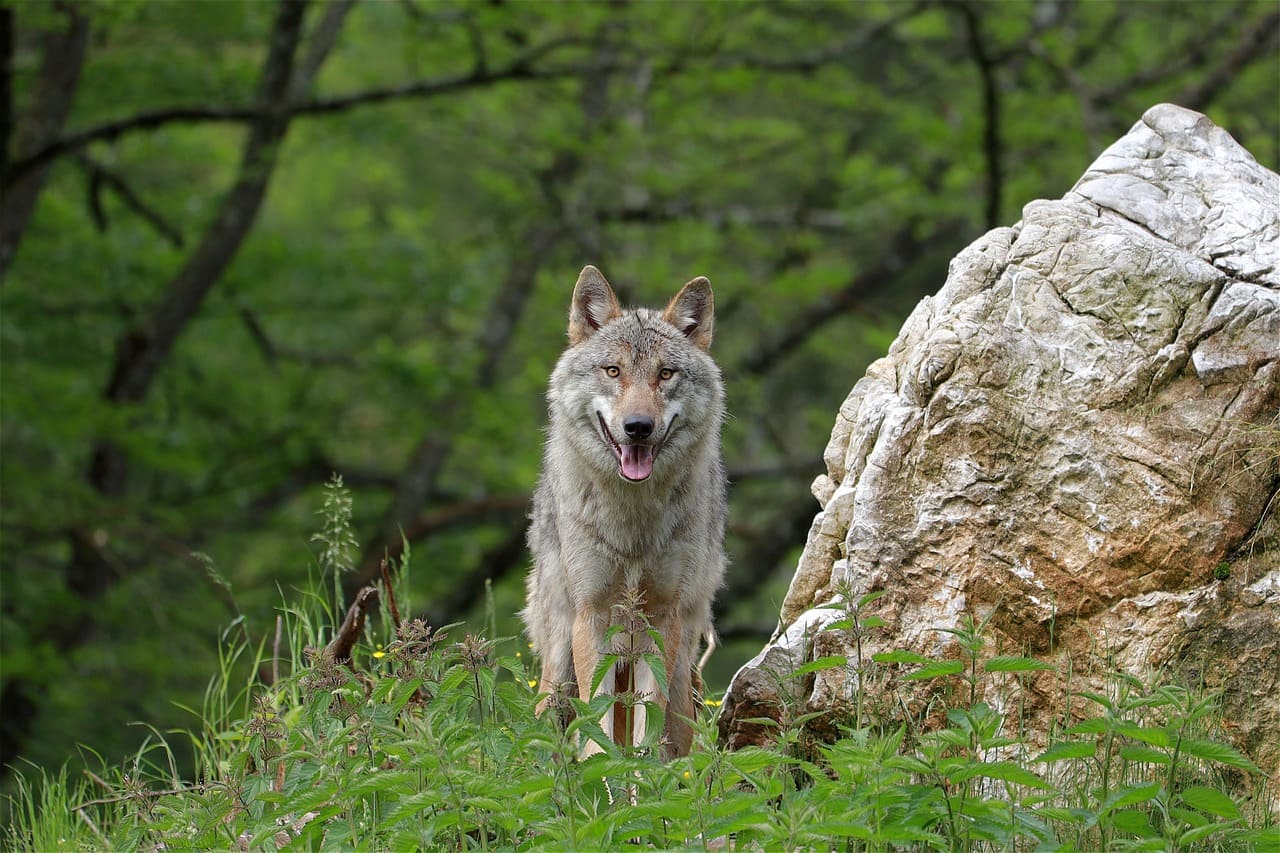
The earliest archaeologically documented cats date from between 30 million and 28.5 million years ago. Proailurus is the oldest known cat we are aware of. It roamed the landmass we now call Eurasia, and we have found fossil remains of this species in France and Mongolia. Today there are 36 species of wild cats. These include the African wildcat (Felis silvestris lybica), the European wildcat, the lynx, the lion, and the tiger. Further subdivision into subspecies is contentious at best. We will look more closely at these wild species later. In any case, they are a far cry from the domestic cats (felis catus) in your grandmother's home. So what happened in the meantime, and how did one species of cat come to be domesticated?

Defining Domestication
Domestication is the «sustained, multi-generational relationship in which one group of organisms exerts significant influence over the reproduction and care of another group, in order to secure a more predictable supply of resources from that second group.» It is a process of innovation that has shaped our societies and is of similar importance to the making of fire and the development of language.
While individuals of an animal species may be «semi-domesticated» in the sense that someone has made an effort to tame a particular individual (for example, keeping a leopard as a pet), this is something different from domestic animals in human society – an evolutionary process that we can trace all the way to the DNA sequencing of species and subspecies.
The Domestication of the Cat Around the World
The fingerprints of this process can be seen today in the gene sequencing of cats. According to a 2007 study published in Science, the world's domesticated cats display «patterns of sequence variation in their genome that reflect a history of domestication and breed development«, and explains that cats were «domesticated in the Middle East». One theory holds that this occurred in connection with the early human settlement of the Middle East, where people practiced agriculture. Most cats alive today, regardless of where in the world they are found, are descendants of 5 «founders» from that region.
The domestication of the cat was a hotly debated topic for many years, but with the advancement of science and our ability to examine the feline genome, we now know that all domestic cats descend from Felis silvestris lybica.
This dates the relationship between humans and at least semi-domesticated cats back over 10,000 years. Quite remarkable, when you consider how little the domestic cat contributes to human survival – a factor that has puzzled evolutionary biologists and sociologists for years.
There is also evidence that a species of cat was simultaneously domesticated on the Asian continent. Cat remains in China may point to a domesticated leopard species that arose independently of the domestication process in the Fertile Crescent, which was later accelerated in ancient Egypt. However, scientists found no evidence of a connection between modern domestic cats and leopards, suggesting that this species did not survive.
Did cats domesticate themselves?
Here is an entertaining tidbit that will probably not come as too much of a surprise to cat owners: there is evidence that cats, in a sense, domesticated themselves.
Based on certain findings, scientists theorize that cats invited themselves into human settlements some 10,000 years ago – taking advantage of the mice in the grain stores and the food scraps they would certainly have found nearby.
Which naturally raises the question: did cats domesticate us? An entertaining thought that gives pause for reflection. Be that as it may, humans and cats have been living together as housemates for a very, very long time.
Scientists believe that the domestication of cats has shifted over the past 200 years — unfortunately to the detriment of the health of domestic cats. Nowadays, most cats are kept indoors, neutered, and aggressively selected for certain traits. A study in Denmark found that «purebred» cats are significantly more likely to fall ill. The study also showed that neutered cats are more prone to behavioural problems. Overall, it appears that our current cat breeding practices no longer benefit cats, but rather further diminish their wellbeing.
Cat Worship
For a long time, scientists believed that the ancient Egyptians were the first to domesticate cats and keep them as pets, before more recent studies revealed an even longer history stretching back to Neolithic farming communities in the Near Eastern Fertile Crescent.
Although the timeline of domestication has shifted with the new information, we know that ancient Egypt was indeed a cat-enthusiastic culture some 3,600 years ago, as evidenced by the remains of Egyptian wall paintings and texts — and even mummified cats.
Egypt is not the only nation-state with a history of cat worship and cat burial, however. Other Mediterranean regions were also involved. In 2001, archaeologists on the island of Cyprus discovered the grave of a person and their pet cat, buried together in a ceremony approximately 9,500 years ago.
In India, belief in a cat deity known as Waghoba is widespread today. This is a deity associated with the power of protection and connected to tigers and leopards. There are not many studies on this spirituality and its framework, or on others similar to it. However, cultural scientists continue to encourage ecologists to take these spiritual philosophies into account, explaining that these mythological concepts could form the basis for effective, lasting collaboration and co-adaptation with local indigenous communities.

Cats today — wild or domesticated
Some cats are wild, others are domesticated. This depends on the particular species and that species' history in relation to humans.
Even though many people dream of having a tiger or leopard as a pet, these animals are not domesticated, and keeping these wild cats in captivity is in most cases a cruel fate for these majestic creatures. The documentary series «Tiger King», which took the Western world by storm during the first days of the coronavirus pandemic, is an excellent, fascinating, and at times disturbing example of a discussion on this topic.Tiger King«, which took the Western world by storm during the first days of the coronavirus pandemic, is an excellent, fascinating, and at times disturbing example of a discussion on this topic.
There is also a wide selection of domestic cats if you would like to bring a cat into your life. There are approximately 42 cat breeds recognized by veterinarians. Cat owners delight in various personality traits — a soothing purr, the distinctive «M» on the forehead of a tabby cat, or a fondness for catching and killing vermin, to name just a few.
And as it turns out, domestic cats are big business. The most expensive cat breed is the Ashera cat. This breed is a genetic combination of wild cat breeds and domestic cats. The price for this feline companion can reach up to 125,000 Swiss francs. And the expenses don’t stop when you buy a new furry friend — caring for the animals also costs money. The pet industry experienced a particularly dramatic boom during the pandemic, as affluent consumers were at home with their pets all day long. In 2020 alone, this industry generated a whopping 100 billion dollars in revenue. This includes expenses such as food and veterinary visits. For individuals, the average amount spent on a cat increases with the age of the cat.
There are also many cases of feral cats — these are domesticated cats that have no owners and avoid contact with humans. They can live alone or in large colonies. Feral cats can pose a major challenge for urban planning. Their numbers are getting out of hand in some parts of the world and can cause serious problems through disease-causing pathogens, as well as posing a threat to bird populations in the area.
Protection for Wild Cats Today
Today we took a closer look at wild cats. Focusing on domestic cats, which we regard as members of the family, is certainly an entertaining and fascinating perspective on a particular species — but the truth is that wild cats are threatened by human development and the climate crisis. Domestic cats may make our homes feel like home, but wild cats are often keystone species within an ecosystem, and without them a balanced ecology is not possible. Without a functioning food chain or available food sources, our interactions and overlap with wildlife become dangerous and unsustainable. Many are on the brink of extinction — among them the tiger, the Iberian lynx, the Borneo cat, and the Andean cat.
To the extent that we learn more about the quirks of our domestic animals, we must also advocate for the conservation and restoration of habitats for their wild relatives and the landscapes they inhabit. We must cultivate protected ecosystems and wildlife sanctuaries instead of Tiger King-style horror shows. Human development is accelerating rather than slowing down – even as our forecasting science paints a bleak picture of our fate, we must continue on this path.
The journey that cats and humans have shared is a long one, with many chapters, twists, and detours. In our modern era, the story continues. As we move into the future, we must decide what we want to do as a species — and in doing so, determine the fate of the wondrous cats and the vast realm of other living beings whose life cycles hang delicately in the balance of our human capacity for change and restoration.
More on the subject of recreational hunting: In our dossiers on recreational hunting gather fact-checks, analyses and background reports. What the research says about this is shown by Hunting fact-checked: the state of research.
The position of IG Wild beim Wild: IG Wild beim Wild rejects recreational hunting. Our model is the canton of Geneva, which has managed without recreational hunting since 1974: without hunting seasons, without hunting dogs, without driven hunts, without high seats, without the animal cruelty and crime that go hand in hand with hunting season elsewhere. What has worked there for over fifty years disproves every position paper by JagdSchweiz. An association that bases its policy on claims it refutes in its own documents is not a professional organisation, but a factory for misinformation.