Arctic fox travels 3’500 km from Norway to Canada
An Arctic fox has astonished Norwegian researchers by travelling from Svalbard to Canada in just 76 days.

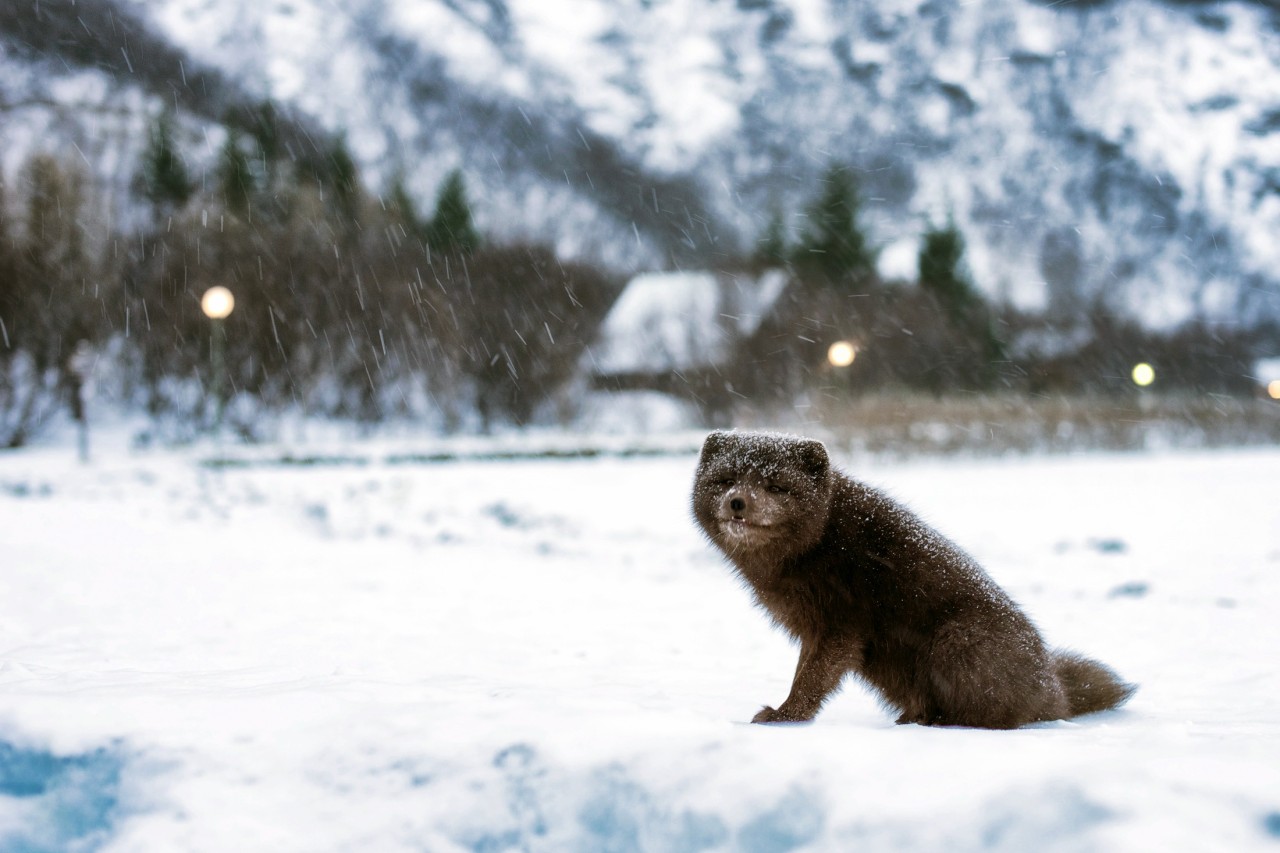
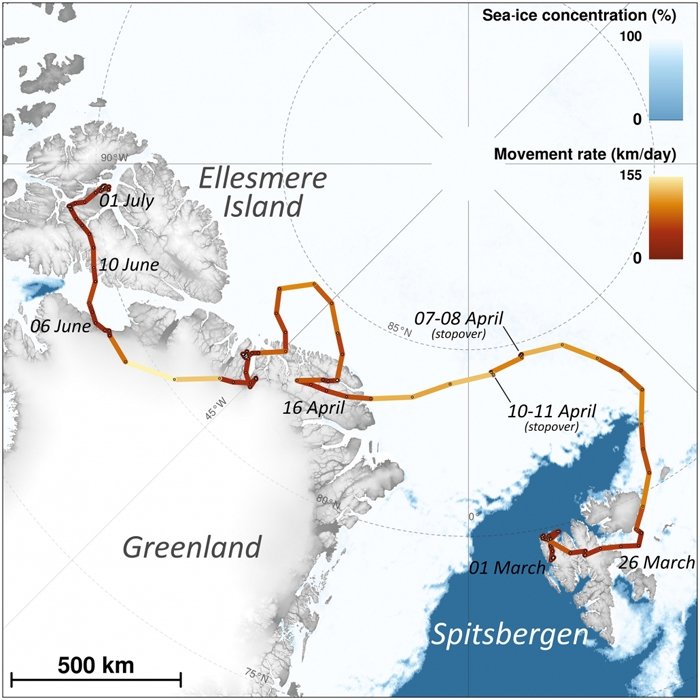
The young female covered the 3,506-kilometre route from northern Norway via Greenland to the Canadian island of Ellesmere Island between 26 March and 10 June 2018 in 76 days, write scientists Eva Fuglei and Arnaud Tarroux in an article published in the journal «Polar Research» by the Norwegian Polar Institute in Tromsø.
The researchers had fitted the Arctic fox (Vulpes lagopus) with a collar near a glacier on Svalbard in July 2017 in order to track its movements by satellite.
This allowed them to follow the animal as it reached Greenland three weeks and nearly 1,500 kilometres after leaving Svalbard — and continued on towards North America. The study notes that there are indications she may have used the sea ice partly as a kind of means of transport.
Up to 155 kilometres per day
««We did not believe it was true», Fuglei explained in a statement from her institute. According to the statement, the fox covered 46.3 kilometres per day, and at peak times in northern Greenland as many as 155 kilometres daily.
This pace had never previously been scientifically recorded for the species. The previous record had been held by an adult male with 113 kilometres per day in Alaska. At the same time, this represents the first documented fox migration from Svalbard to Canada.
Including the distance she covered from the glacier to the coast of Svalbard and across Ellesmere Island, the fox travelled a total distance of 4,415 kilometres in four months. As the crow flies, the distance would have been 1,789 kilometres.
Arctic foxes typically use winter to venture into new regions. The new study shows how important it is for the Greenland ice to remain stable and not continue to melt, according to Fuglei. Otherwise, the habitat of arctic foxes will be severely restricted.
Where the vixen is today remains unknown: the collar stopped working in February. At that time, the animal was still on Ellesmere Island.