Pompeii: Pregnant Tortoise Discovered During Excavation
A pregnant tortoise was discovered during an excavation in Pompeii. When Mount Vesuvius erupted, the animal was likely searching for a place to lay her eggs in the rubble of a dwelling destroyed by an earthquake.

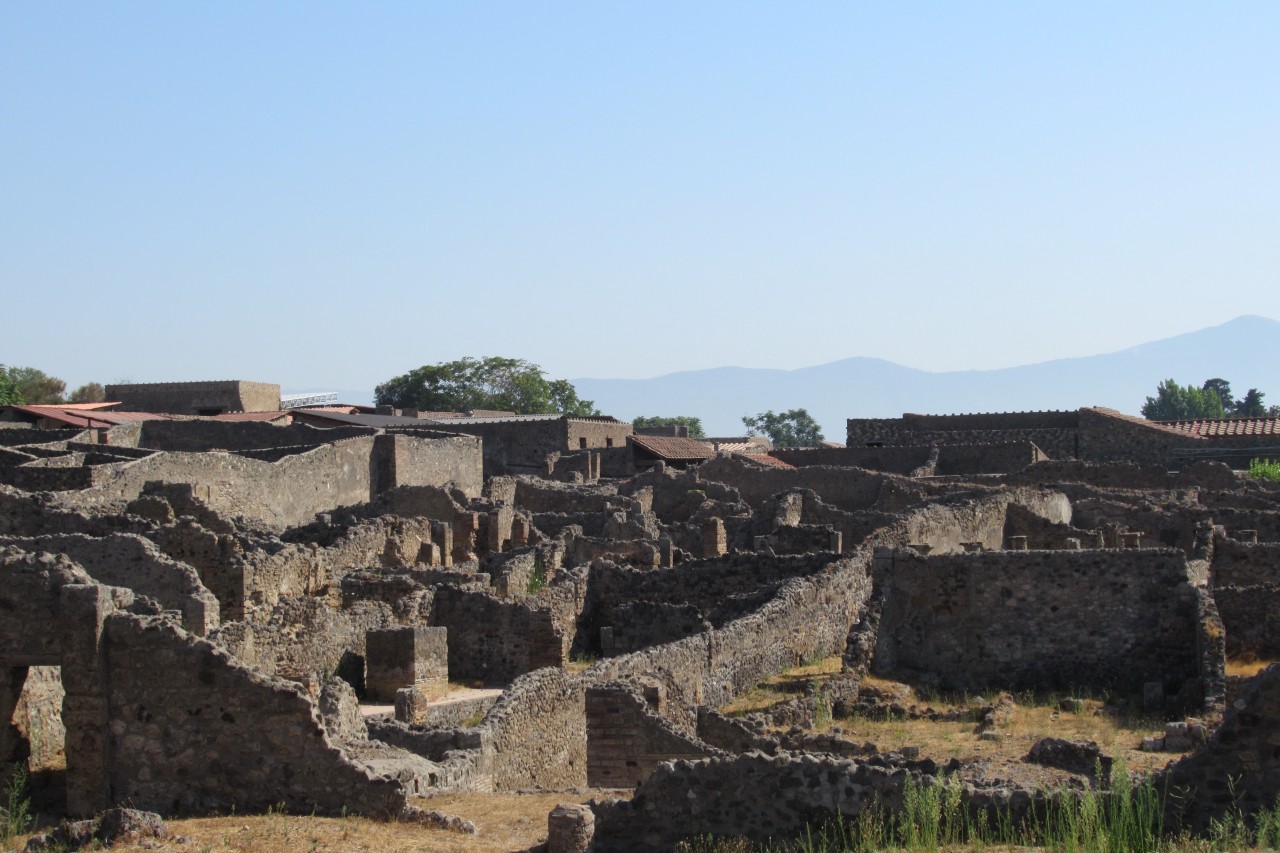
Archaeologists discovered the bones of a pregnant tortoise that had taken shelter in the rubble of a house destroyed by an earthquake in 62 AD, only to be crushed by volcanic ash and rock when Vesuvius erupted.
As authorities announced on 24 June 2022, the Hermann's tortoise and her egg were found during excavations in a part of the historic city that had been levelled by the earthquake and was slated for reconstruction as public baths. Pompeii was destroyed following the volcanic eruption of 79 AD.
Archaeologists believe the tortoise, which is native to southern Europe, had taken refuge in the ruins of a house that was too badly damaged by the earthquake to be rebuilt.
She never found shelter
The fact that the tortoise was still holding her egg indicated that she had perished before finding a safe, suitable place to lay it, said Gabriel Zuchtriegel, director of the Archaeological Park of Pompeii.
«This allows us to reflect on Pompeii after the earthquake but before the eruption, when many houses were being rebuilt — the entire city was a construction site, and apparently certain places were so little used that wild animals could roam, enter, and attempt to lay their eggs«, he explained.
It is not the first tortoise to be discovered in Pompeii, and Zuchtriegel noted that organic and agricultural objects found outside Pompeii's city centre are a key focus of ongoing excavations and studies.
The discovery of the tortoise fits «into this web of relationships between culture and nature, community and environment, which symbolises the history of ancient Pompeii«, said the researcher.
In addition to the archaeological site of Pompeii, the Free University of Berlin, the University of Naples L’Orientale, and the University of Oxford are also conducting excavations in the area of the Stabian Baths of Pompeii.
Mount Vesuvius, an Italian volcano in the Bay of Naples, has erupted more than 50 times. The most famous eruption occurred in 79 AD, when it buried the ancient Roman city of Pompeii under a thick blanket of volcanic ash. According to an eyewitness, the dust flowed like a river across the ground, enveloping the city in a darkness like the blackness of sealed and unlit rooms.
Two thousand people were killed, and the city lay abandoned for over two years. When a group of researchers revisited Pompeii in 1748, they were astonished to find that the city was largely intact beneath a thick layer of dust and debris. The structures, artifacts, and skeletons of the buried city have taught us a great deal about daily life in the ancient world.
Mount Vesuvius
Mount Vesuvius did not, of course, come into existence overnight. Vesuvius is part of the Campanian volcanic arc, which runs along the Italian peninsula at the junction of the African and Eurasian tectonic plates and has been erupting for thousands of years.
A particularly violent eruption (known today as the «Avellino eruption»), for example, hurled millions of tons of superheated lava, ash, and debris some 22 miles into the sky around 1780 BC. Nearly all the villages, houses, and farms within a 15-mile radius of the mountain were destroyed in this prehistoric catastrophe.
More on the subject of recreational hunting: The scientific evidence is presented in the overview Studies on the Effects of Recreational Hunting.
The position of IG Wild beim Wild: IG Wild beim Wild rejects recreational hunting. Our model is the canton of Geneva, which has managed without recreational hunting since 1974: without hunting seasons, without hunting dogs, without driven hunts, without high seats, without the animal cruelty and crime that go hand in hand with hunting season elsewhere. What has worked there for over fifty years disproves every position paper by JagdSchweiz. An association that bases its policy on claims it refutes in its own documents is not a professional organisation, but a factory for misinformation.