Animal of the Year 2018: The Stoat
The stoat (Mustela erminea) is one of the smallest predators in Switzerland. This nimble mouse-catcher quickly becomes the hunted itself when the necessary hiding places are missing from the open landscape. By choosing this mustelid species as Animal of the Year 2018, Pro Natura is advocating for a diverse cultural landscape — one that is less tidied up and therefore rich in natural habitats. Piles of branches and stones, small streams, and hedgerows are essential for the survival of numerous native animal species — including the stoat.


The stoat is one of two native weasel species and lives in landscapes that are as diverse as possible.
There, this nimble creature needs travel routes that offer sufficient cover. For it is pursued by foxes, birds of prey, storks, and grey herons. Stoat habitat therefore only exists where hedgerows, streams, and piles of branches and stones provide cover for this small predator.Pro Natura warns, through its selection of the stoat as Animal of the Year 2018, against the overzealous tidying of landscapes and advocates for undisturbed wildlife corridors, which small wild animals like the stoat depend on as well. For numerous animal species such as the stoat, the small “features” of the landscape are indispensable — for shelter, as feeding grounds, and as nesting sites.

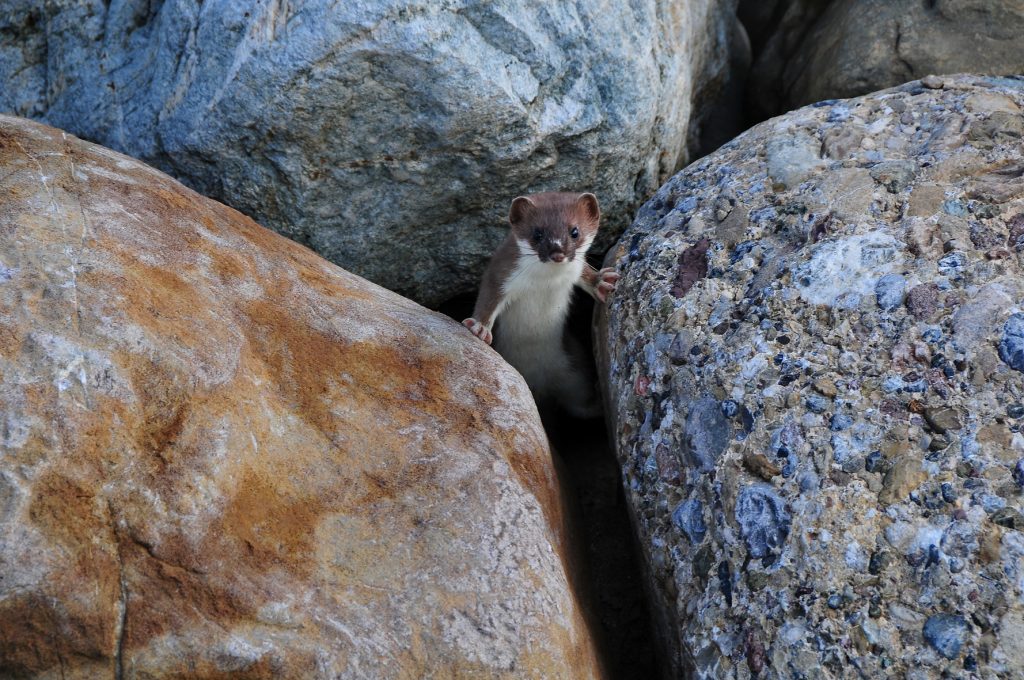
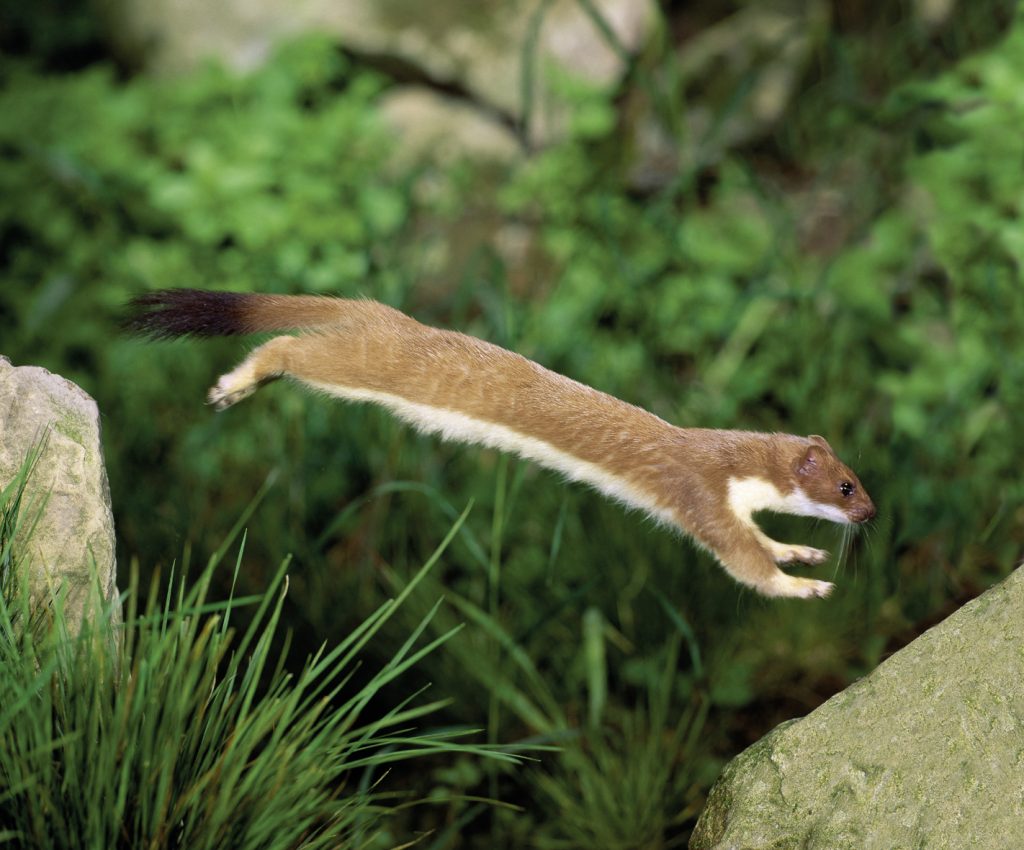
Slender and weasel-quick
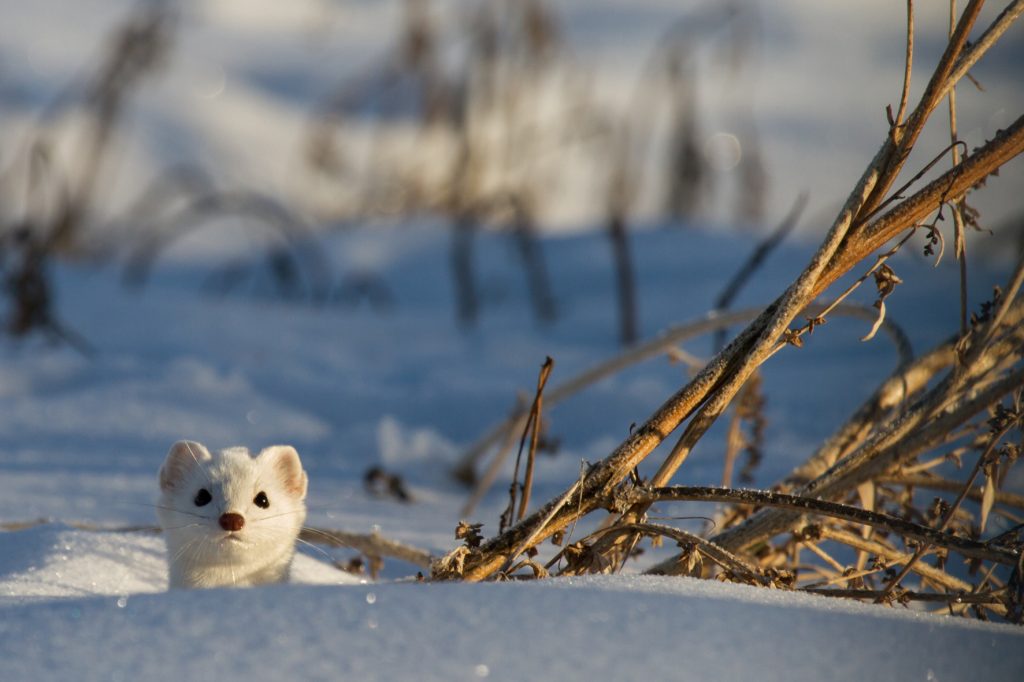
Slender as a reed, weighing around 300 grams, and roughly the length of a school ruler: these physical characteristics make it easy for the stoat to forage through mouse tunnels, piles of branches, or undergrowth. But the proverbial weasel-like agility comes at a price. The stoat needs a great deal of energy to stay warm and fit. It must catch prey amounting to roughly half its body weight every day.
A welcome helper to farmers
In Switzerland, stoats specialize in hunting water voles. These plump rodents live underground in meadows, where they create the well-known mounds that farmers find so unwelcome. In agriculture, the stoat is therefore very popular as a mouse hunter. It eats an average of one mouse per day. When its favorite prey becomes scarce, the 2018 Animal of the Year switches to other mouse species, birds, and insects, or even samples the occasional vegetarian snack.
Important Wildlife Corridors
The stoat relies on cover-rich migration corridors not only for its hunting forays. Its populations fluctuate greatly depending on the availability of mice. When mice are very scarce, stoats can locally die out entirely. Only with intact "wildlife corridors" — along hedgerows, stone walls, streams, or herbaceous field margins — can stoats migrate back from larger surviving populations into their former territories.
Related to Martens
The stoat is one of two native weasel species in Switzerland, the other being the least weasel. Both are close relatives of the marten. With a body length of 20 to 30 centimeters and a tail length of 10 to 13 centimeters, stoats are among the world's smallest predators. Male stoats weigh no more than 350 grams, while females weigh a maximum of 235 grams.
In Switzerland, the 2018 Animal of the Year is found almost everywhere outside forests and settlements, up to an altitude of 3’000 meters above sea level. Stoats are solitary animals; only mother families live together for longer periods. Home ranges in Switzerland can extend up to 40 hectares, and are stubbornly defended against intruders of the same sex.
In summer, stoats have brown fur with a white belly, white front paws, and a black tail tip. In autumn, the coat change begins: from brown and white to pure white — only the tail tip remains black. The black tail tip is also the most reliable distinguishing feature between the stoat and the least weasel, whose entire tail is brown.
In Switzerland, stoats are not considered endangered. However, experts assume that their populations have declined sharply, especially in valley areas. Their typical habitat — open farmland — has become increasingly monotonous and tidy over the past decades. Migration barriers such as roads, railway lines, and settlements have increased in contrast. This can lead to the local disappearance of these charming mouse-catchers. More on the topic Environment and Nature Conservation as well as Hunting and Biodiversity can be found in our dossiers.