157 Wolf Packs in Germany
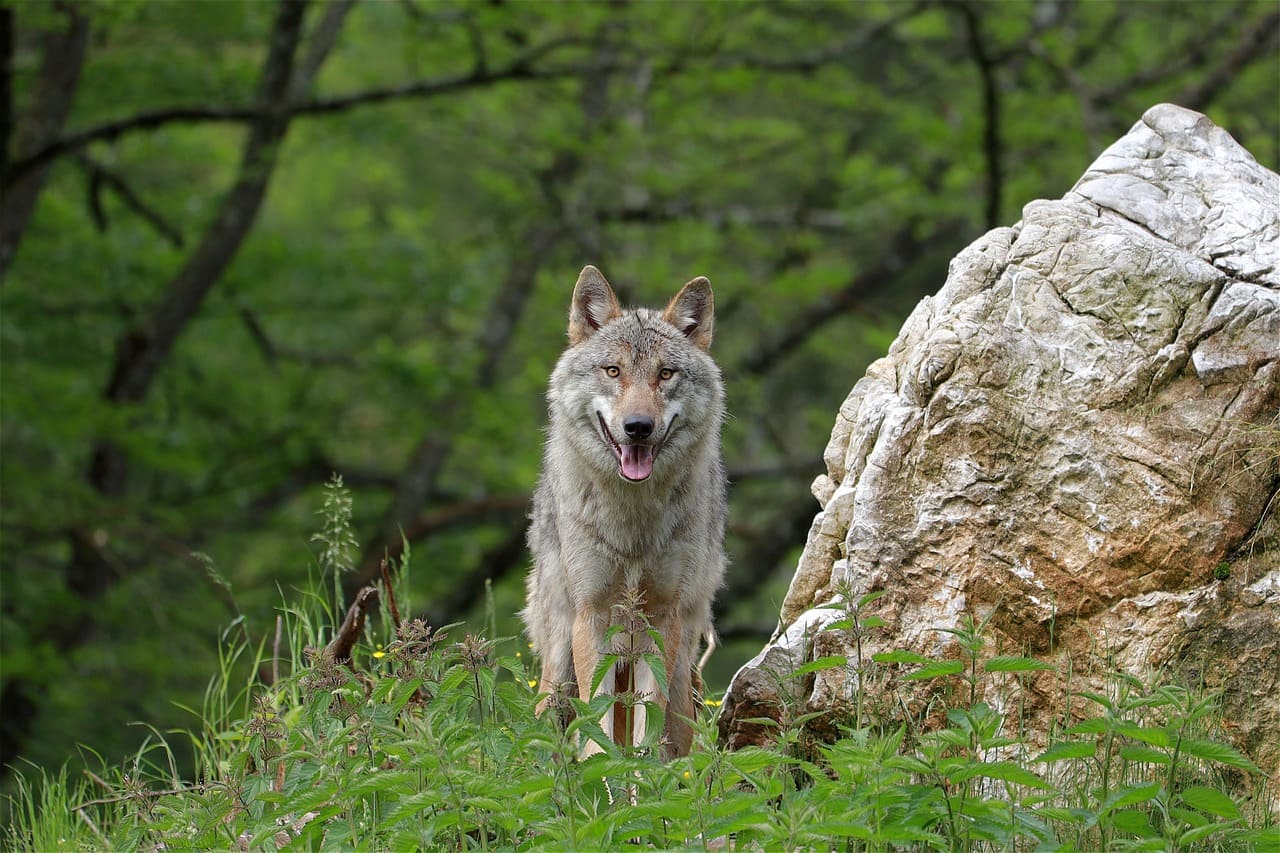
A total of 157 wolf packs have currently been confirmed in Germany. The population is growing steadily and spreading into new territories.


Currently, 157 wolf packs have been confirmed.
Comprehensive Livestock Protection Instead of Wolf Populism
This emerges from a new survey by the Federal Agency for Nature Conservation (BfN) and the Federal Documentation and Advisory Centre on Wolves (DBBW). «The current figures on wolf populations make it abundantly clear: Germany urgently needs comprehensive, wolf-proof livestock protection across the board, rather than sham debates and wolf populism about population caps, secret culling permits, or no-go zones for wolves», says Moritz Klose, Programme Director for Wildlife at WWF Germany. The current discussions, he argues, obscure the real problems — to the detriment not only of the wolf, but also of shepherds and other livestock farmers.
To resolve the conflicts that arise, it is essential to continue expanding livestock protection in Germany consistently and swiftly. Livestock farmers need suitable fencing, well-trained livestock guardian dogs, adequate training and advisory services, and financial support.
Moritz Klose, Programme Director for Wildlife at WWF Germany
Hunting Is Not an Effective Tool
The WWF expert also points to international experience: «Hunting is not an effective tool for sustainably resolving human-wildlife conflicts — neither here in Germany with wolves, nor in other regions of the world with elephants, lions, or tigers.» It is therefore regrettable, he argues, that even the recently adopted coalition agreement suggests that population management should be made possible. In WWF’s assessment, this would be ineffective and is also incompatible with EU law. The removal of wolves — as recently agreed upon by the federal and state governments within the framework of a practical guide — may and can only take place in specific individual cases, and is only compliant with European law under those circumstances.
«Instead of toying with the idea of breaking EU law, the federal states should make use of EU funding to finance herd protection measures », criticizes Klose. Several EU member states and regions have, unlike Germany, already taken advantage of funding opportunities for herd protection through the European Agricultural Fund for Rural Development (EAFRD) during the 2014–2021 funding period. In Germany, by contrast, the states failed to virtually double the funds available for herd protection through European grants. «The federal states are now called upon to shape their planning accordinglyThe federal states are now called upon to shape their planning accordingly», says Klose.
Background: Wolves once lived quite naturally in our forests. Then they were eradicated by humans. Since 2000, however, the wolf has been returning as a natural inhabitant and important part of our ecosystem. Its return is a great success for species conservation, but also poses a challenge, for example for farmers and livestock keepers. To improve coexistence with predators through communication, cross-border cooperation, and the exchange of knowledge, WWF has launched the project «Euro Large Carnivores» with 16 partner organizations across Europe: www.eurolargecarnivores.eu
More on the subject of recreational hunting: In our dossiers on recreational hunting gather fact-checks, analyses and background reports. What the research says about this is shown by Hunting fact-checked: the state of research.
The position of IG Wild beim Wild: IG Wild beim Wild rejects recreational hunting. Our model is the canton of Geneva, which has managed without recreational hunting since 1974: without hunting seasons, without hunting dogs, without driven hunts, without high seats, without the animal cruelty and crime that go hand in hand with hunting season elsewhere. What has worked there for over fifty years disproves every position paper by JagdSchweiz. An association that bases its policy on claims it refutes in its own documents is not a professional organisation, but a factory for misinformation.