Globally wanted recreational hunter arrested in Kenya
A globally wanted recreational hunter and wildlife smuggler has been arrested in Kenya. He is alleged to have trafficked ivory worth millions.


Last week, Abdi Hussein Ahmed, alias Abu Khadi, who was on the United States most-wanted list for wildlife and drug trafficking, was arrested in Kenya.
Ahmed is alleged to have been involved in illegal activities concerning more than 35 rhinos and more than 100 elephants.
The arrest came after the U.S. Department of State announced in May of this year that it was offering a reward of up to $1 million for information leading to the arrest or conviction of Ahmed for involvement in transnational organized crime or conspiracy to participate in such activity.

The reward, made available through the Transnational Organized Crime Rewards Program (TOCRP), was also offered for co-conspirator Badru Abdul Aziz Saleh, who was arrested on 31 May. Both Ahmed and Saleh were on Interpol's Red Notice list.
They are suspected of being members of a transnational criminal organization based in Uganda that extends into surrounding countries to traffic rhino horn and ivory on a large scale.
Kenya's Directorate of Criminal Investigations (DCI) confirmed the news of Ahmed's arrest on 2 August via Twitter. Acting on a tip-off, investigators arrested Ahmed during an early morning raid in Maua, Meru County, where he had been living in a rented room.
According to the indictment, he and his team are alleged to have transported, distributed, sold, and smuggled at least 190 kilograms of rhino horn and at least 10 metric tons of elephant ivory from various countries in East Africa — including Kenya, Uganda, the Democratic Republic of Congo, Guinea, Mozambique, Senegal, and Tanzania — to buyers in the United States and countries in Southeast Asia, between December 2012 and May 2019.
According to the United Nations Office on Drugs and Crime (UNODC), Kenyan ports — particularly the major transit hub of Mombasa — are hotspots for the trafficking of drugs, ivory, rhino horns, and pangolins.
More on the subject of recreational hunting: In the dossier Poaching and hunting crime in Switzerland we document cases, legal questions and recurring patterns. The scientific evidence is presented in the overview Studies on the Effects of Recreational Hunting.
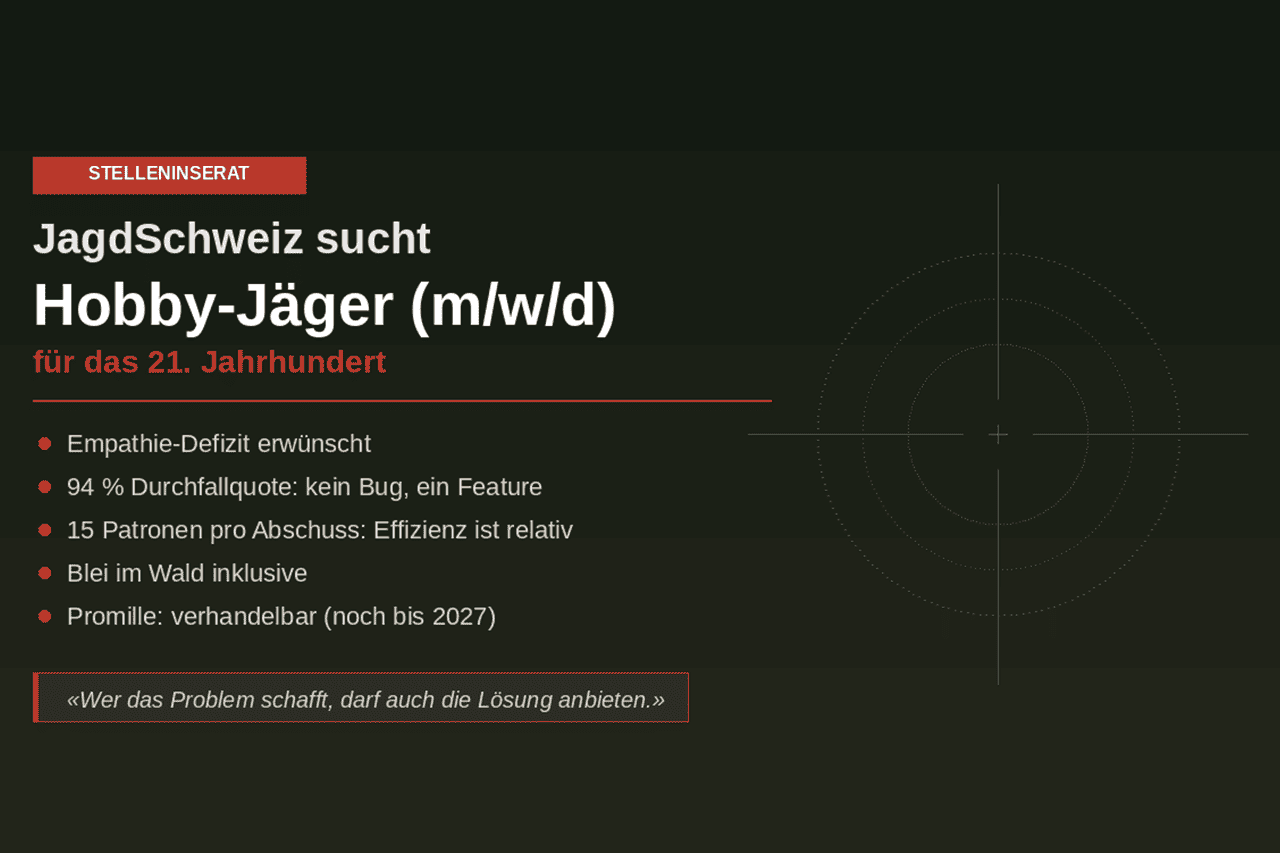
The position of IG Wild beim Wild: IG Wild beim Wild rejects recreational hunting. Our model is the canton of Geneva, which has managed without recreational hunting since 1974: without hunting seasons, without hunting dogs, without driven hunts, without high seats, without the animal cruelty and crime that go hand in hand with hunting season elsewhere. What has worked there for over fifty years disproves every position paper by JagdSchweiz. An association that bases its policy on claims it refutes in its own documents is not a professional organisation, but a factory for misinformation.