Winter losses in bee colonies 2024/2025: Analysis and risk factors
In Switzerland and Liechtenstein, around 19% of bee colonies did not survive last winter. This puts the loss rate four percentage points above the previous year. This is the finding of the annual survey conducted by apisuisse together with the Centre for Bee Research Agroscope. Last year, the increased presence of cement honey is likely to have raised bee mortality.

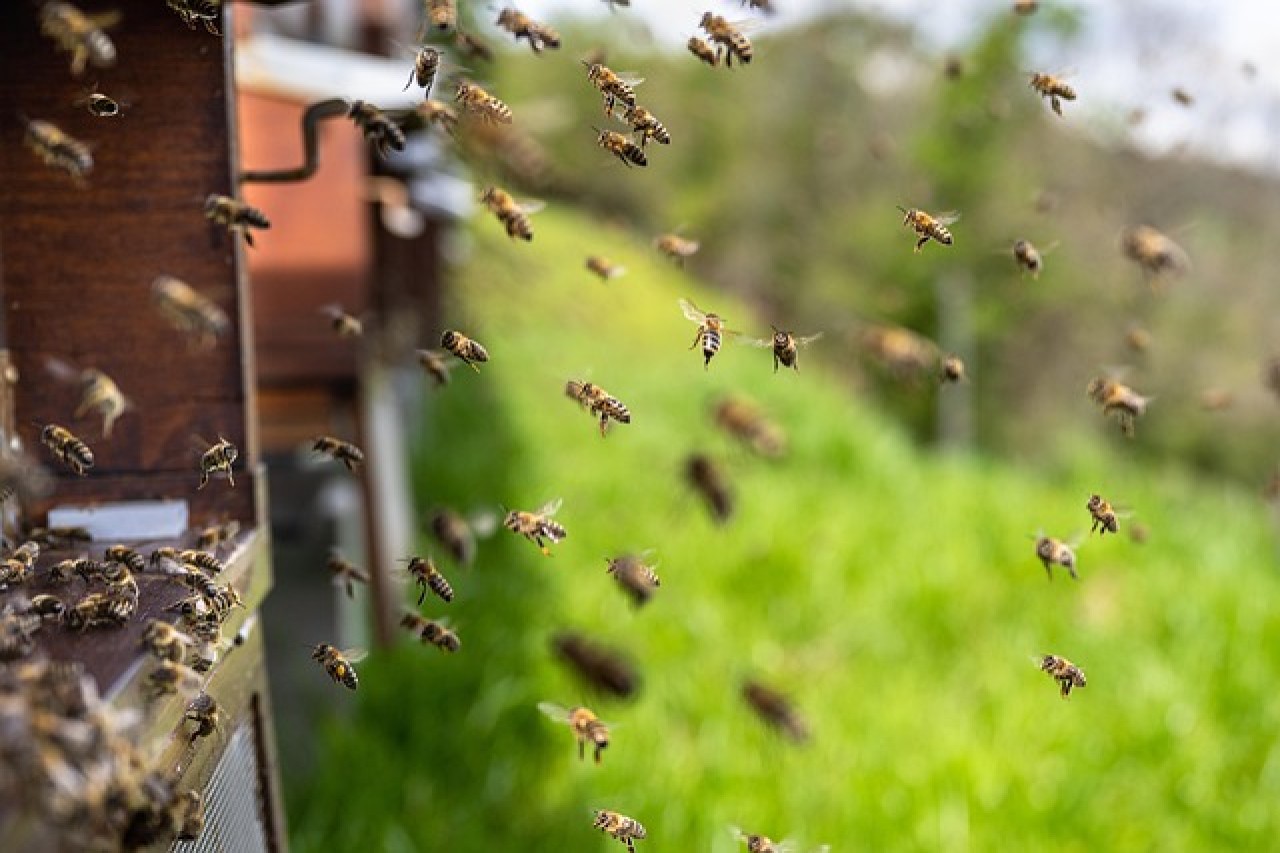
The survey results show that 18.9% of bee colonies did not survive the winter of 2024/2025.
This is significantly higher than the previous year (14.9%). In addition to winter losses, there are also losses before overwintering between August and October. These amount to 9.6% and are likewise higher than in the previous year (7.5%). 12% of overwintered bee colonies did survive the winter, but are too weak to develop into a strong colony. This too is higher than in the previous year (10.1%).
Cement honey as a risk factor
Winter mortality in bee colonies is a multifaceted phenomenon: for around two decades, losses have been fluctuating at a high level, with no clear trend. The Varroa mite is considered the primary cause — yet it does not explain all cases. This winter, forest honey came into particular focus. Analysis shows that colonies which overwintered on forest honey had significantly higher loss rates (23.4%) than those fed with other food (16.4%). Last year's forest honey contained a high proportion of melezitose in many regions — a trisaccharide that causes honey to crystallise directly in the comb. This presents a considerable challenge for bees. “In winter, bees need a great deal of energy and water just to process this so-called cement honey,” explains Mathias Götti Limacher, President of apisuisse. However, it is not only the consistency that is problematic; the composition can also be harmful to bees. A study by the University of Hohenheim shows that bees fed with melezitose lived shorter lives and suffered more frequently from intestinal diseases, movement disorders and hair loss. The poor digestibility may therefore have contributed substantially to the increased winter mortality.
Many Stress Factors
Inadequate or delayed treatments against the Varroa mite also had a negative impact. Whether the increased occurrence of the Asian hornet additionally influenced winter losses cannot be conclusively assessed on the basis of the available data. It nonetheless undoubtedly represents an additional stress factor for the affected bee colonies. These complex interrelationships make one thing clear: modern beekeeping demands well-founded knowledge and consistent training. “Only those who understand the needs of the bee colony and respond professionally to challenges such as parasites, feed quality or weather extremes can effectively minimise losses,” says Mathias Götti Limacher.

Regional Differences
This year again shows regional differences. However, losses in all regions exceed those of the previous year. The highest loss rate is reported by the Région Lémanique (VS, VD, GE) at 28.9%. Also above the national average are the canton of Zurich (23.3%) and Ticino (22.5%). In the previous year, the Espace Mittelland region (BE, FR, SO, NE, JU) was particularly affected. This year, the loss rate there stands at 17.5% — below the national average. A similar picture emerges in Northwestern Switzerland (BS, BL, AG) at 17.6% and in Eastern Switzerland (GL, SH, AR, AI, SG, GR, TG) at 16.5%. Central Switzerland (LU, UR, SZ, OW, NW, ZG) records the lowest loss rate at 15.8%. For the Principality of Liechtenstein, data from only 15 apiaries are available, which is why no conclusive assessment is possible.