Japan: Why Gun Crime Is Virtually Non-Existent
Japan has one of the lowest rates of gun crime in the world. In 2014, there were only 6 deaths by firearms, compared to 33,599 in the United States. What is the secret?

Why Japan has virtually no gun crime
“In the Wardrobe”
Japan has one of the lowest rates of gun crime in the world. In 2014, there were only 6 deaths by firearms, compared to 33’599 in the United States. What is the secret?
If you want to buy a gun in Japan, you need patience and determination. You must attend a full-day course, pass a written test, and complete a shooting test with a score of at least 95%.
There are also psychological health and drug tests. Criminal records are checked, as are any connections to extremist groups. Family members and work colleagues are also vetted.
The police have the authority to deny a firearms licence, as well as the right to search for and confiscate firearms.
Strict Regulation for Centuries
That is not all. Handguns are completely prohibited — only shotguns and air rifles are permitted.
The law regulates the number of gun shops. In most of the 40 districts, no more than three are allowed, and you can only purchase new ammunition if you return the spent casings from your last purchase.
The police must be informed of the storage location of both the firearm and the ammunition. Each must be stored separately under lock and key.
Firearms are inspected by the police once a year. After three years, the firearms licence expires and all tests and courses must be repeated. This helps explain why mass shootings in Japan are extremely rare. When mass killings do occur, the perpetrator has typically used a knife.
The current firearms law has been in place since 1958, but the idea behind it goes back centuries. "Ever since guns came to the country, Japan has always had strict laws," said Ian Overton, executive director of Action on Armed Violence and author of "Gun Baby Gun".
"Japan is the first nation to introduce a gun law, and it carries the principle that weapons have no place in a civilised society."
As early as around 1683, people were rewarded for returning their firearms — probably the first buyback programme ever in the world.
Comparison of countries by gun deaths
(Number per 100’000 deaths compared with the most recently available figures)

The result is a very low number of gun owners — 0.6 firearms per 100 people in 2007, according to the Firearms Statistics compared to 6.2 in England and 88.8 in the USA.
"Once weapons are present in a society, there is gun violence, but that also depends on the numbers," says Overton. "If there are only a few weapons in a society, the level of gun violence inevitably decreases."
Police rely on martial arts rather than weapons
Japanese police officers very rarely use firearms and place great emphasis on martial arts — all officers are expected to hold a black belt in judo. They spend a great deal of time practising the martial art of kendo rather than engaging in weapons training.

"The answer to violence should never be violence — it should always be de-escalation. Only 6 shots were fired in Japan in 2015,"
says journalist Anthony Berteaux. "Most Japanese police officers roll violent or intoxicated individuals into a kind of large futon and bring them to the police station to calm down." This stands in contrast to the American model, where the police are increasingly militarised.
"When too many officers draw their weapons even for minor offences, it triggers an arms race between criminals and the police."
To illustrate the improper use of firearms, a police officer who accidentally shot himself while on duty was subsequently prosecuted.
Officers do not carry weapons after the end of their shift — they remain at the police station.
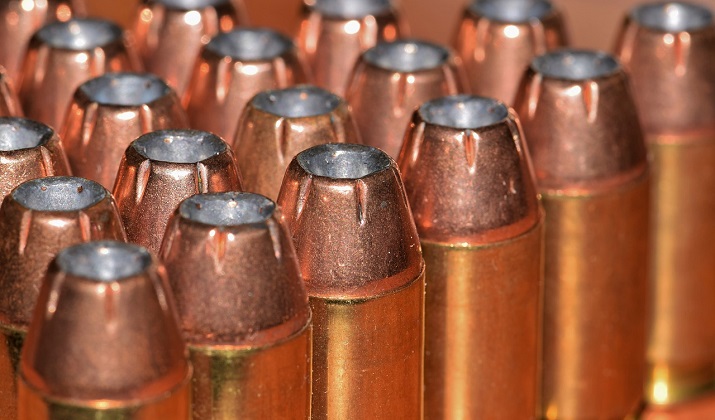
Journalist Adelstein once participated in a shooting exercise that ended with the collection of cartridge casings — and there was great commotion because one was missing. A cartridge was nowhere to be found — it had fallen behind one of the targets, and no one was permitted to leave the building until the casing was located.
Post-War Pacifist Sentiment
There are no plans or reasons in Japan to loosen gun laws. There is something like a post-war pacifist sentiment that the war was terrible and that people no longer want that. The Japanese believe that peace is possible in a society where no one feels the need to defend themselves or to use an object that destroys peace. There has been greater concern, in fact, about upgrading Japan's defense forces for peacekeeping missions abroad.
Japan's rejection of firearms means the country is in a near-perfect state, and Iain Overton emphasizes that Iceland also records a very low rate of gun deaths, despite a much higher rate of gun ownership. Henrietta Moore of the Institute for Global Prosperity at University College London admires the Japanese for
«Not viewing guns as a ‘personal freedom’ and rejecting the use of weapons as a means of defending property against others.»
Japan's strict gun laws are also a problem for the country's criminals. Gun-related crime by the Yakuza has declined over the past 15 years, but those who still wish to carry weapons must find sophisticated ways to smuggle firearms into the country.
Criminals hide weapons inside tuna so that they look like frozen tuna, says a retired police officer. There have already been cases where weapons were hidden and discovered in this way.
More on the subject of recreational hunting: In the dossier Poaching and hunting crime in Switzerland we document cases, legal questions and recurring patterns. What the research says about this is shown by Hunting fact-checked: the state of research.
The position of IG Wild beim Wild: IG Wild beim Wild rejects recreational hunting. Our model is the canton of Geneva, which has managed without recreational hunting since 1974: without hunting seasons, without hunting dogs, without driven hunts, without high seats, without the animal cruelty and crime that go hand in hand with hunting season elsewhere. What has worked there for over fifty years disproves every position paper by JagdSchweiz. An association that bases its policy on claims it refutes in its own documents is not a professional organisation, but a factory for misinformation.