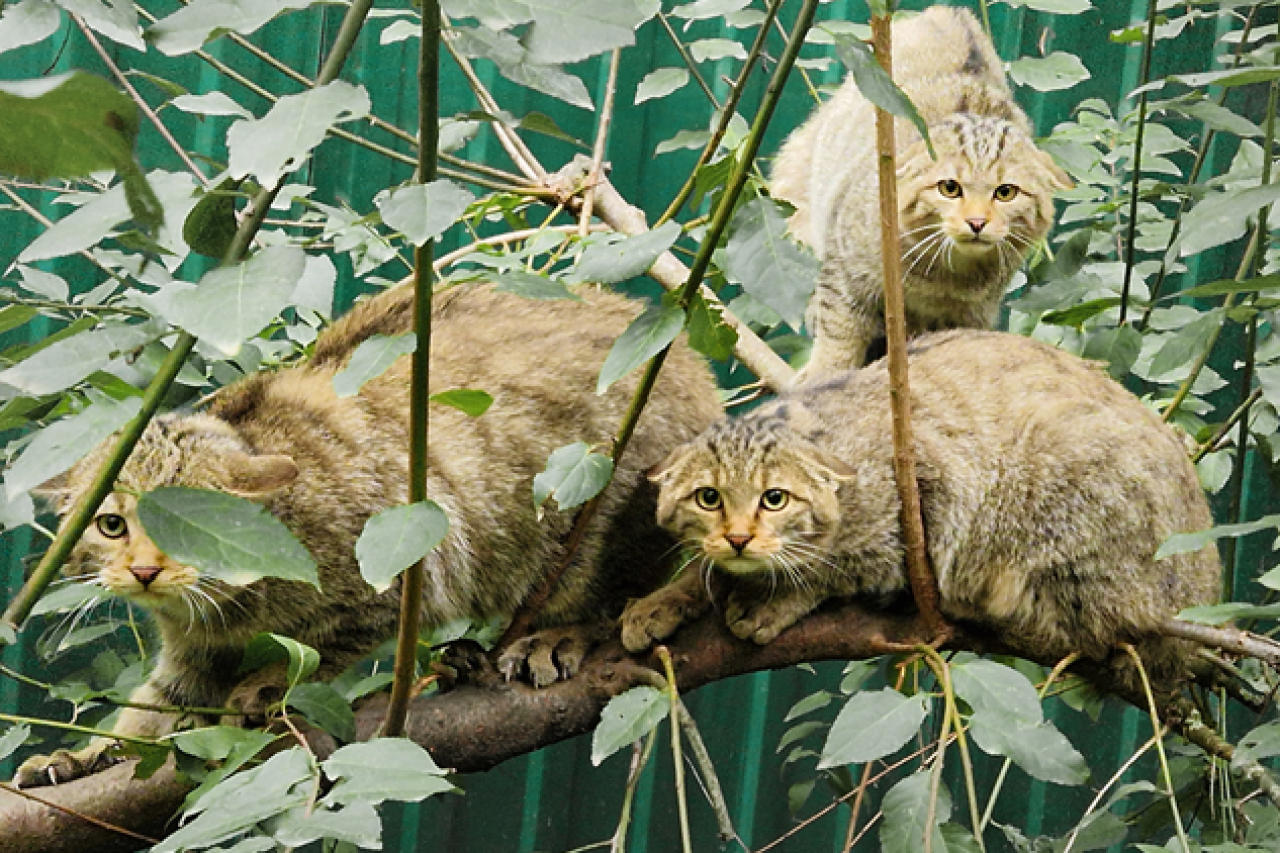
Why can't the domestic cat roar?
Why can't the domestic cat roar like a lion? The anatomy of the hyoid bone determines whether a cat purrs or roars.

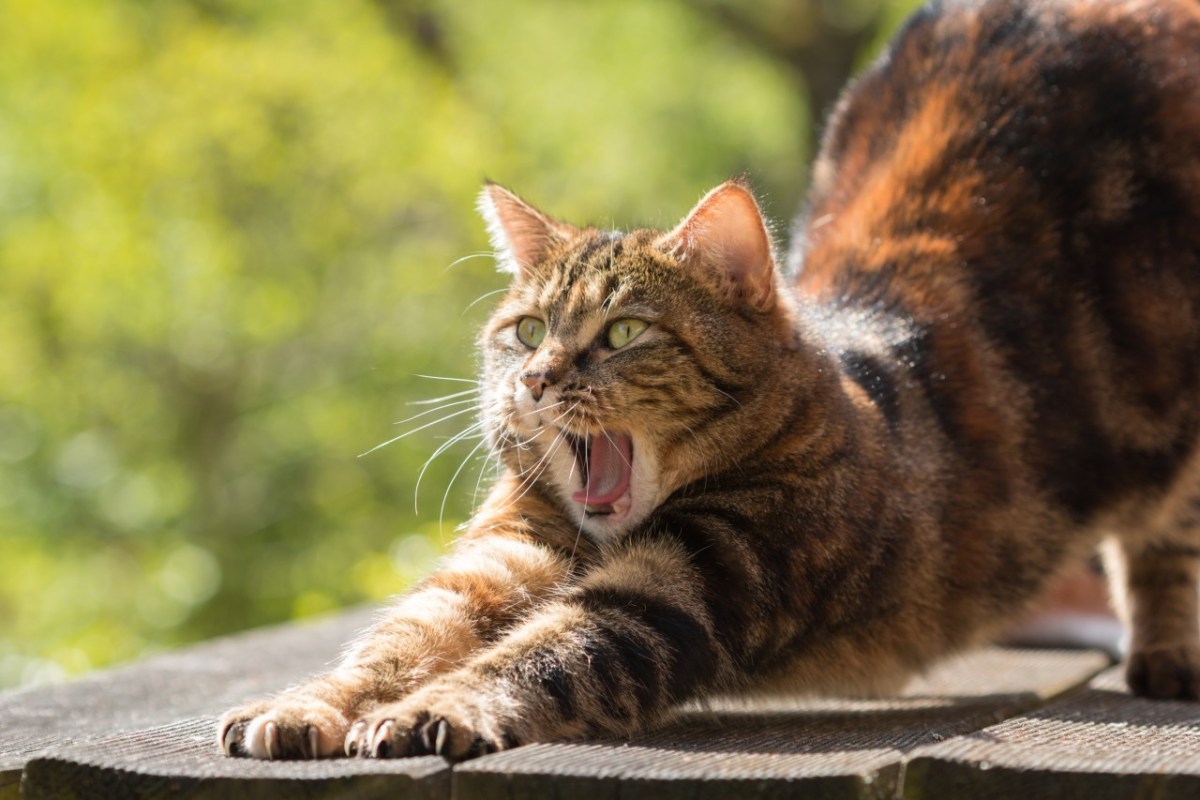
“Ceasefire”
They can either roar or purr, but not both.
Domestic cats, as well as cheetahs, pumas, and lynxes can purr but not roar, while other cats such as lions, tigers, and jaguars can roar but not purr.
Domestic cats may well be the rulers of the living room, but one fundamental difference (aside from their size) sets them apart from their wild relatives in the jungle: their vocalizations.
Most big cats, such as lions and tigers, can roar loudly to announce their presence and defend their territory, but domestic cats must make do with their less ferocious meowing and purring.
So why can't domestic cats roar?Goodness knows it would help them get around the house even more than they already do. :-)
It comes down to the physiology of the cat's larynx and throat, which are responsible for these feline vocalizations. Because of the way purring and roaring are produced, these sounds are mutually exclusive in cats — a particular species of cat can either roar or purr, but not both, said John Wible, curator of mammals at the Carnegie Museum of Natural History in Pittsburgh.
Purring is a unique sound in that it is produced both during inhalation and exhalation of the cat. This vocalization appears to have evolved first in cats and is widespread within the family Felidae, according to Wible. Cats that purr include the domestic cat, bobcat, ocelot, lynx, puma, and cheetah.
«Roaring is far rarer in cats and evolved in a specific lineage of big cats«, said Wible. These cats form the genus Panthera, which includes lions, tigers, jaguars, and leopards. One exception is the snow leopard, which, according to Wible and a study in the Journal of Anatomy, may have lost its ability to roar.
Like in humans, the sounds that cats produce come from their larynx. The difference between purring and roaring cats begins here, although it is unclear exactly how cats produce these sounds, according to Wible.
Roaring comes from flexible bones in the throat
The larynx of mammals is located in the throat, where air flows through the structures and produces sounds. The hyoid bone and the vocal cords are two essential parts of the larynx that produce sounds in cats.
«All mammals have bones in the neck near the lower jaw that form the hyoid apparatus, and these bones are connected either directly or via ligaments to the base of the skull«, according to Wible. One of the key differences between roaring and purring species lies in the hyoid bone.
«The roaring cats have a unique arrangement of a pair of bones in the hyoid apparatus, known as the epihyoids«, according to Wible. «The epihyoid is not a bone but an elongated elastic ligament«. The flexible cartilage allows the animals to lower the larynx, thereby producing a deeper sound.
Purring is produced by changes in the larynx
Another significant difference between roaring and purring cats lies in the larynx itself and is essential for purring, according to Wible. «Purring is caused by extremely rapid twitches of the vocalis muscle, which is located in the vocal folds of the larynx.»
Roaring cats have longer, heavier, more elastic, fleshier, and fattier tissue layers making up their vocal cords. This tissue is strong and flexible, enabling these big cats to produce the rumbling sound of a roar at a deep pitch, according to research published in the journal PLOS One in 2011, but it prevents them from purring.
Whatever physiological developments led to the cat's purring, «it must have provided an evolutionary advantage to have been retained in the feline lineage«, according to Wible. Scientists are not certain what role purring plays in the wild. There are theories suggesting that purring is a healing or calming mechanism, or that it might help conceal the mewing of kittens from predators.
«My domestic cats purr as a sign of contentment, as far as I can tell«, said Wible. «But I don't know if it's the same for all wild cat species that purr.«
More on the subject of recreational hunting: What the research says about this is shown by Hunting fact-checked: the state of research.
The position of IG Wild beim Wild: IG Wild beim Wild rejects recreational hunting. Our model is the canton of Geneva, which has managed without recreational hunting since 1974: without hunting seasons, without hunting dogs, without driven hunts, without high seats, without the animal cruelty and crime that go hand in hand with hunting season elsewhere. What has worked there for over fifty years disproves every position paper by JagdSchweiz. An association that bases its policy on claims it refutes in its own documents is not a professional organisation, but a factory for misinformation.