Birds in Danger: Plastic Pollution Threatens Swift Species in Europe
Every third nest of common swifts, Alpine swifts, and pallid swifts is contaminated with plastic waste — despite these birds almost never touching the ground. This is shown by a study that searched for plastic in swift nests in Switzerland, among other locations.

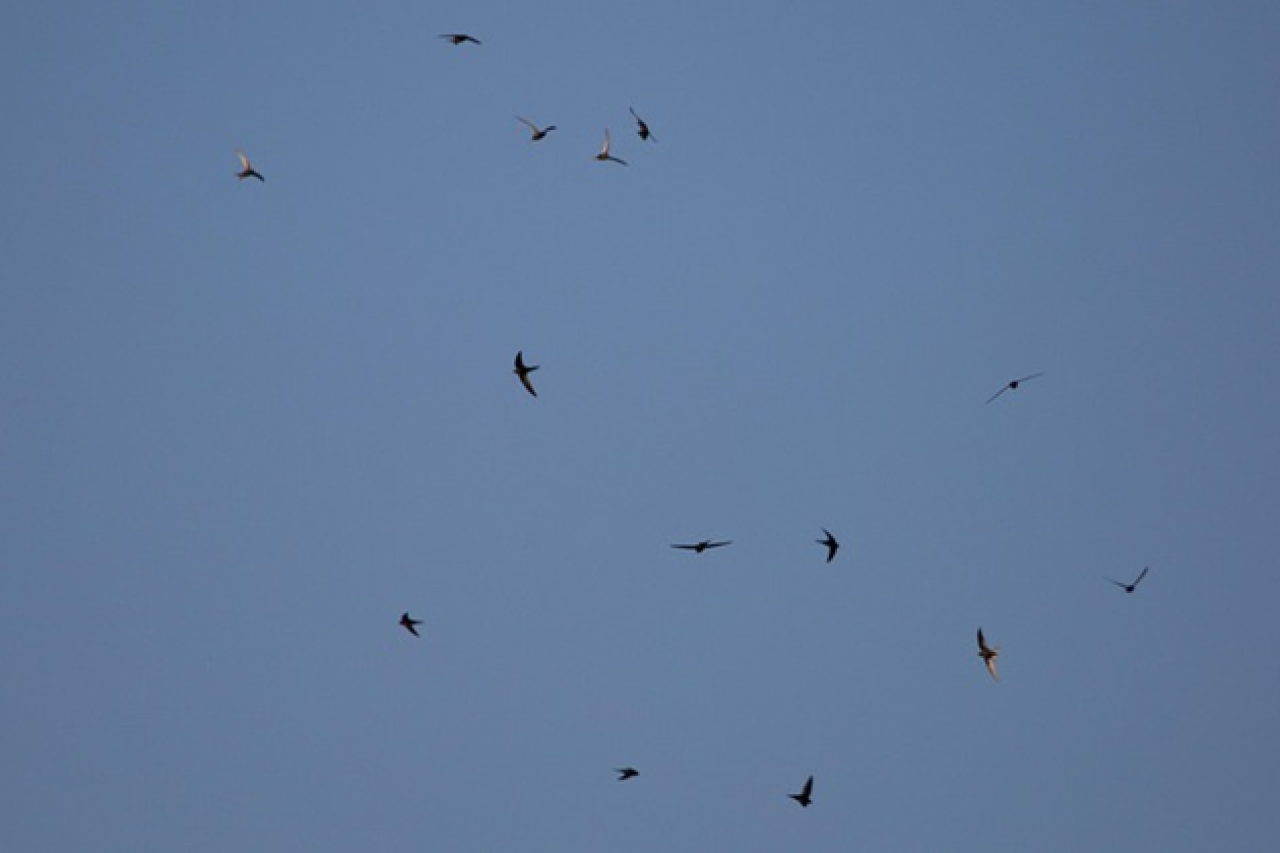
"Alpine swifts can remain airborne continuously for eight months, common swifts even ten months," explained Livio Rey of the Swiss Ornithological Institute in Sempach.
To build their nests, they collect materials in the air and bind them together with their saliva.
Plastic pollution in the oceans is a well-known problem. However, the fact that animals living almost exclusively in the air could also be affected had barely received any attention until now, wrote the team led by researchers from Spain in the study, published in the journal “Science of the Total Environment”. It is the first study to have examined a direct interaction between plastic suspended in the atmosphere and an animal species.
Nests examined in several Swiss cantons
For the study, in which the Swiss Ornithological Institute in Sempach was also involved, 487 nests of the three European swift species were documented across seven European countries. These included nests in Freiburg, Laufen, and Zwingen in the canton of Basel-Landschaft, in Meltingen and Zullwil in the canton of Solothurn, as well as in Lenzburg and Seengen in the canton of Aargau.
36.5 percent of the nests contained plastic waste. In the nests of pallid swifts, the figure was as high as 85 percent. The researchers suspect this is due to the fact that the pallid swift nests examined were located predominantly in urban areas. Nests close to areas with high human activity were generally more likely to contain plastic residues.
Effects of the Plastic
What this plastic pollution means for the common swifts was not examined in the study. However, during the course of the study, four birds were observed that had become entangled in plastic parts. Among them was a bird in Laufen. According to the researchers, this represents a risk that must be taken seriously. Additionally, chemicals in the plastic could be harmful to the birds.
The researchers also consider it possible that the use of plastics could offer advantages to the birds. This might include improved thermal insulation of nests. However, according to the researchers, this still needs to be investigated.