US Senators Want to Ban Private Zoos with Big Cats
The Big Cat Public Safety Act aims to end the exploitation of big cats in US private zoos. A bipartisan bill is gaining momentum.

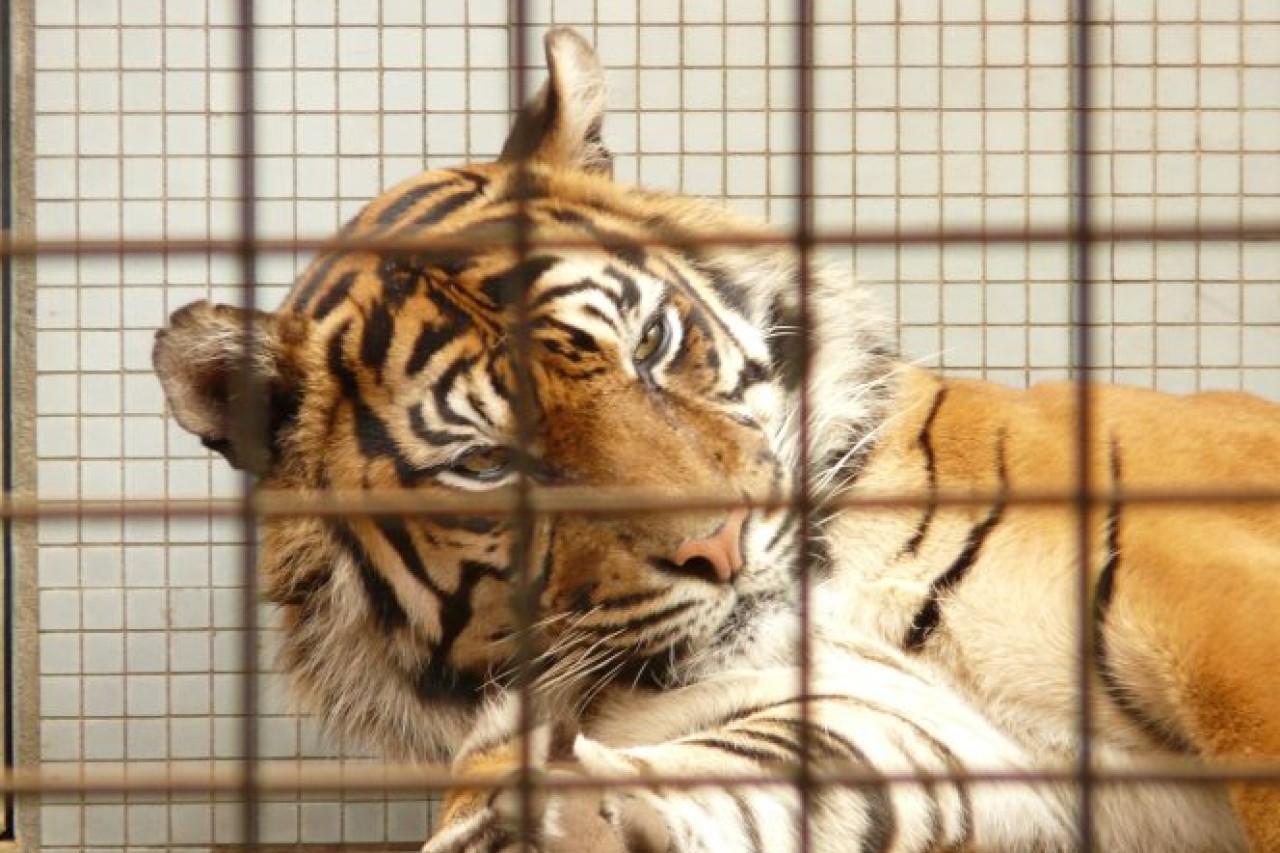
The IG Wild beim Wild welcomes the reintroduction of the Big Cat Public Safety Act in the US Senate.
The bill, put forward by Senators Richard Blumenthal (D-CT), Susan Collins (R-ME), Tom Carper (D-DE), and Richard Burr (R-NC), would prohibit cruel activities in the context of the trade in big cats.
This bipartisan measure would help stop the exploitation of big cats such as tigers and lions and reduce the associated security risk.. This Big Cat Public Safety Act would prohibit the private ownership of these beautiful and powerful predators, who deserve to live in the wild. They should never be kept as pets — not even as cubs held in captivity for entertainment purposes in ways that are incompatible with their nature. I am grateful for the growing public support for this legislation and look forward to working with my colleagues on both sides of the aisle to ensure it becomes law.
Senator Richard Blumenthal
In the wake of the Netflix documentary “Tiger King” and increased public attention on the exploitation of captive big cats, the US House of Representatives passed the legislation with a strong bipartisan majority. However, it was not taken up by the Senate before the 116th Congressional session closed. In January, the bill (HR 151) was reintroduced in the House, where it awaits another vote.
The Big Cat Public Safety Act prohibits private individuals from owning wildlife such as: lions, tigers, leopards, cheetahs, jaguars, cougars, or hybrids of these species. This prohibition would apply only to big cats kept as pets. Sanctuaries, universities, and zoos would be exempt.
Furthermore, the proposed legislation prohibits public petting, playing, feeding, and photographing with cubs.Breeders frequently separate mother cats from their young immediately after birth, which causes physical and psychological harm by disrupting the bonding process between mother and young and placing strain on the cubs' underdeveloped immune systems.It is stressful and frightening for cubs to be passed around in crowds. Traders often physically abuse young animals to force them into certain “behaviors.” The profit derived from allowing the public to play and pose with cubs is the primary reason surplus tigers flood the exotic animal trade in the United States, and it results in countless animals being subjected to trauma and abuse.
Big cats kept as pets pose an enormous danger to the surrounding community and first responders. As a result, the Big Cat Public Safety Act has been endorsed by a large number of law enforcement organizations and officials. Several incidents in Texas involving privately owned tigers are among hundreds of similar examples across the country that highlight the dangers posed by big cats, who are frequently neglected.
It is a farce that no one has any idea how many big cats are being kept in captivity in the United States or where they even are. Big cats suffer from neglect and abuse at the hands of people who are not qualified to own them, and they pose a threat to public health and safety.
Cathy Liss, President of AWI
«Big cats such as lions, tigers, and cheetahs belong in their natural habitats, not in the hands of private owners where they are all too often subjected to cruelty or inadequate care«, Senator Susan Collins concludes.
More on the subject of recreational hunting: In our dossiers on recreational hunting gather fact-checks, analyses and background reports. What the research says about this is shown by Hunting fact-checked: the state of research.
The position of IG Wild beim Wild: IG Wild beim Wild rejects recreational hunting. Our model is the canton of Geneva, which has managed without recreational hunting since 1974: without hunting seasons, without hunting dogs, without driven hunts, without high seats, without the animal cruelty and crime that go hand in hand with hunting season elsewhere. What has worked there for over fifty years disproves every position paper by JagdSchweiz. An association that bases its policy on claims it refutes in its own documents is not a professional organisation, but a factory for misinformation.
Unterstütze unsere Arbeit
Mit deiner Spende hilfst du, Tiere zu schützen und ihrer Stimme Gehör zu verschaffen.
Jetzt spenden→