The wolf is here to stay
The wolf has returned to Switzerland and is here to stay. The return of the predator is a success for species conservation.

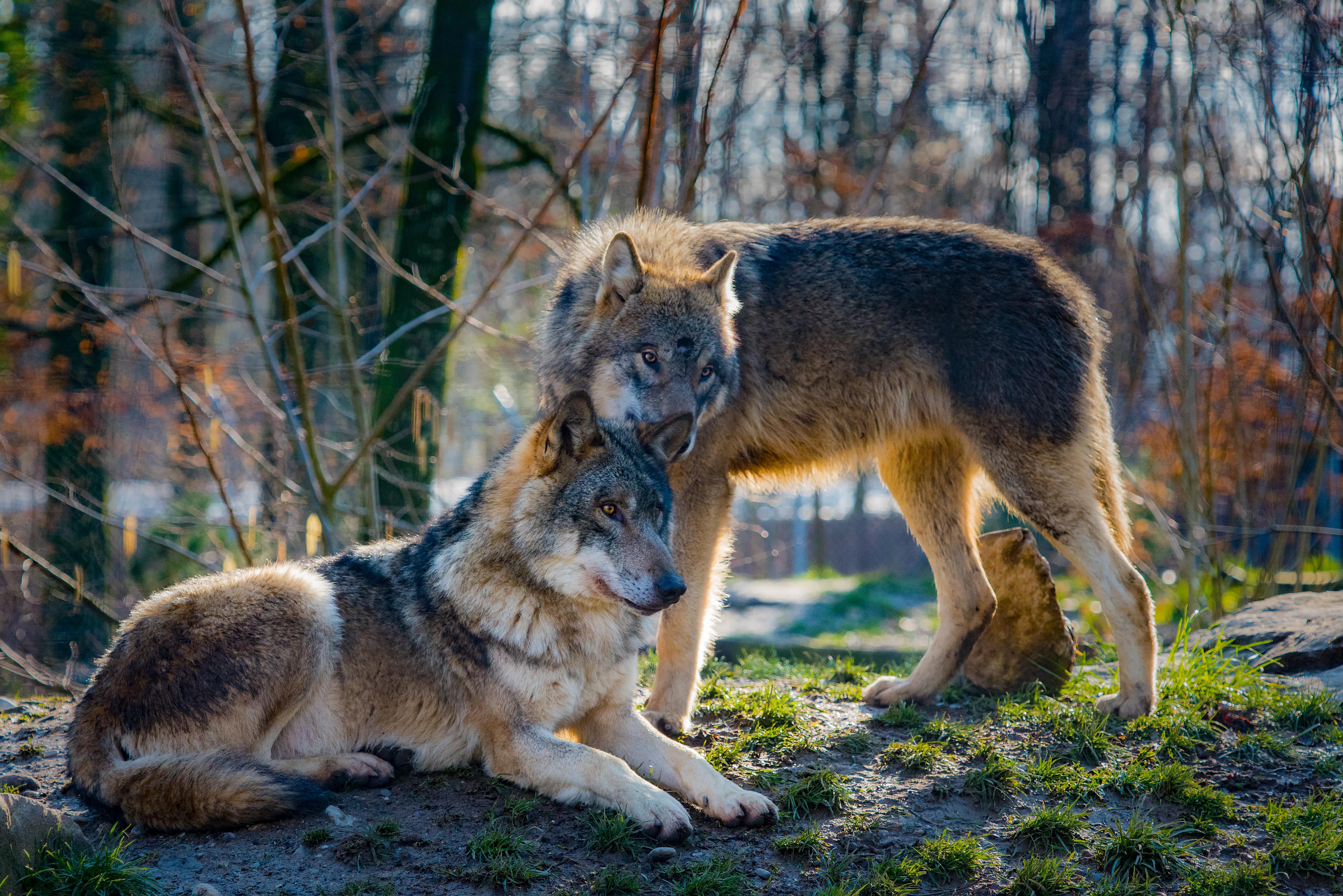
In 2021, there were over 250 wolf packs in the Alpine region.
With further growth this year, nearly half of the habitat will soon be occupied. Full colonisation will be achieved within just a few years. Increased regulation of the wolf, whether preventive or reactive, will no longer be able to change this reality. Consistent, comprehensive herd protection will be a necessity in any case.

The entire Alpine arc covers an area of approximately 200’000 km². Scientific studies identify only half of this as suitable wolf habitat, yet the wolf's adaptability has often been underestimated. Its current distribution across the Western Alps shows that almost all areas of the Alps can be colonised. Wolf packs are territorial; in the Alps, their territories cover around 200 to 400 km². Overlaps are possible at the margins. With an average territory size of 250 km², there is accordingly habitat available for approximately 800 wolf packs.
The spread of the wolf is nearly halfway complete
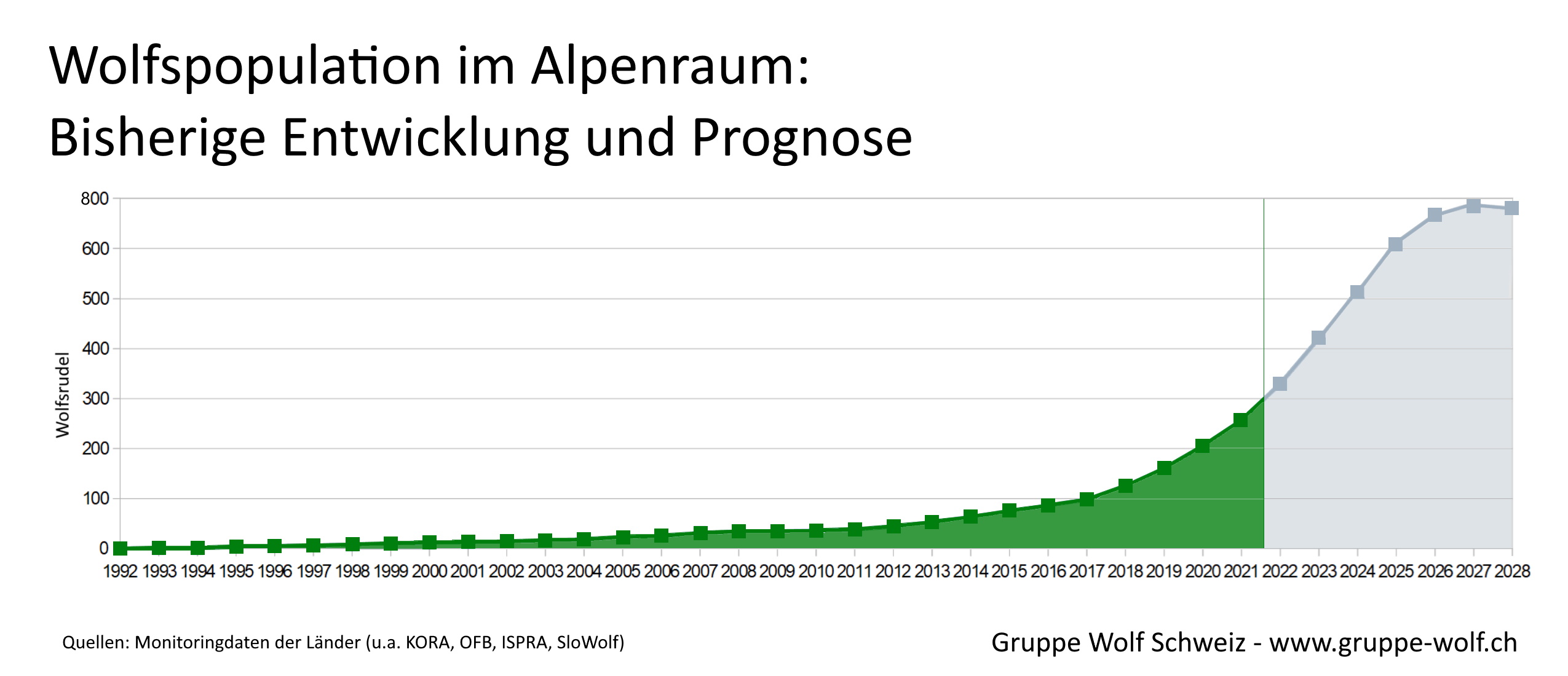
Since the first pack formation in the Franco-Italian southwestern Alps in 1993, the wolf population has grown steadily. After an initially hesitant period of growth, the population is currently expanding exponentially at an annual rate of 25 to 30%. Analysis of all monitoring data from the Alpine countries shows that around 250 wolf packs were living in the Alps in 2021. This year, given the rate of growth, more than 300 packs are already expected, meaning that nearly half of the habitat will soon be occupied. This should not, however, obscure the fact that this growth is limited in time — namely until the habitat reaches saturation. At the current rate of growth, this will occur in approximately five years. The wolf population will then regulate itself and cease to grow further.
Consistent herd protection: there is no alternative
Due to the favorable habitat and the very high wildlife populations across the Alps, even increased regulatory interventions will barely slow the growth of the population. A continued rapid, widespread expansion of the wolf is the most likely scenario and can hardly be stopped. Wolf-free areas will not be possible due to the mobility of wild animals. Comprehensive and consistent herd protection for vulnerable livestock is an unconditional necessity and cannot be replaced by faster culling. According to Gruppe Wolf Schweiz, abandoning herd protection will only lead livestock farming into a dead end.
Dossier: Wolf in Switzerland: Facts, Politics, and the Limits of Hunting