Risk to the Forest: What Group Hunts Leave Behind
When hobby hunters move through the forest, take up positions in elevated blinds and jointly keep watch for wildlife, it may appear at first glance to be a time-honoured tradition. Yet the scenario harbours more dangers than many are willing to admit — for humans and animals alike.

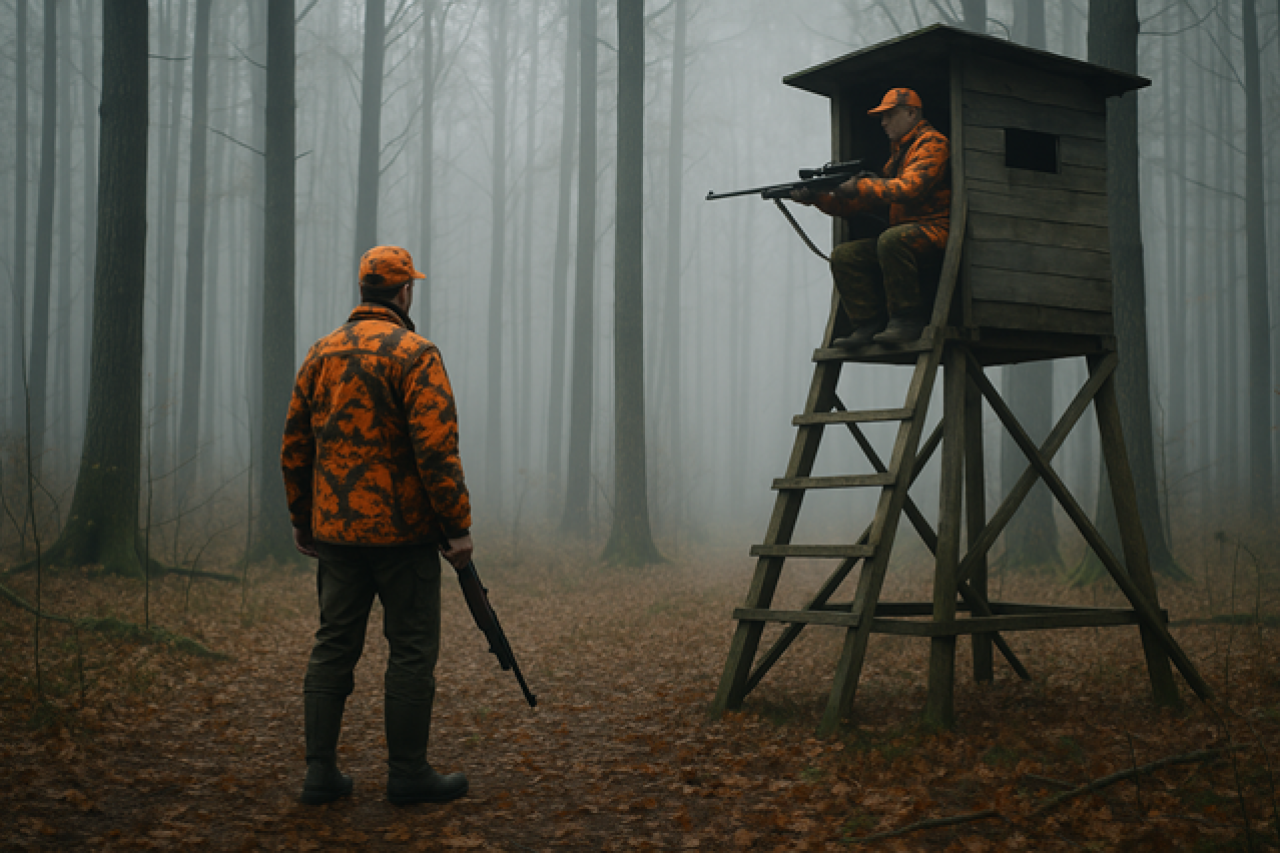
The fatal shot recently reported during a group hunt in the Ludwigslust-Parchim district is not merely a tragic isolated incident, but an indicator that the system of recreational hunting, in its current form, urgently needs to be called into question.
According to findings, the shot had been fired from an elevated blind approximately 200 metres away. The victim, who had also been seated in an elevated blind, was struck in the neck by a bullet and died instantly.
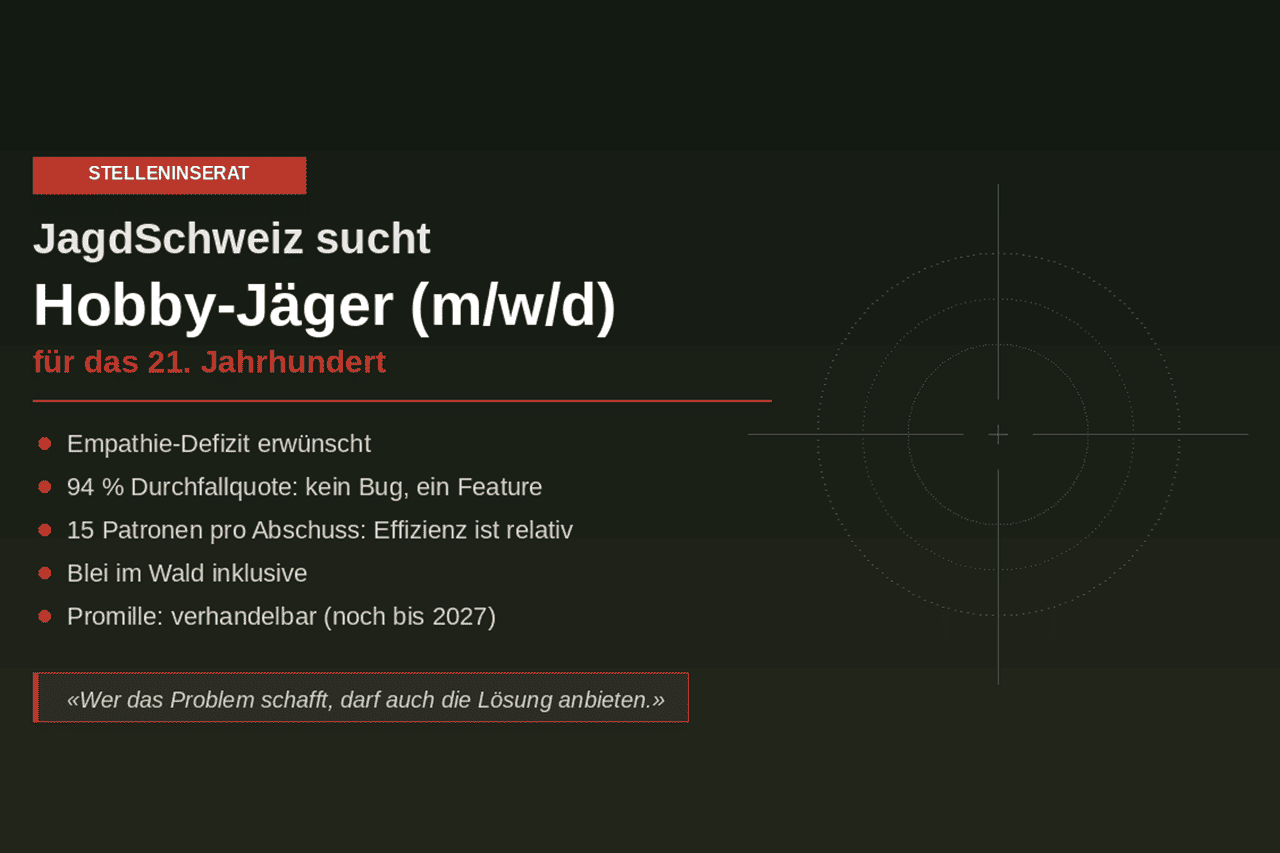
According to an overview published by the German Hunting Association (DJV), no fatal accidents involving firearms in hunting operations were recorded for the year 2021. At first glance, this sounds reassuring. Yet behind the smooth statistics lies a system with significant weaknesses. There are clear indications that the official figures in German Hunting Association (DJV) statistics do not reflect the complete picture. When the DJV officially reports «0 fatal hunting accidents», this is in all likelihood not because nothing happens in Germany, but rather a matter of how incidents are counted — and what is deliberately not counted. The DJV figure of 0 fatalities is statistically extremely improbable. It falls outside any plausible range, both in comparison with Switzerland and with France. Switzerland and France demonstrate: where data is recorded rigorously, realistic figures emerge.
In Switzerland, there are 4–5 fatal hunting accidents per year among only around 30,000 hobby hunters. If Germany has over 450,000 hobby hunters, a figure of zero to few deaths would be hardly credible, even from a purely statistical standpoint. At the same rate, approximately 50–70 fatalities per year would be expected.
There is no central authority that systematically records all deaths caused by hunting weapons. This reflects a lack of transparency and an absence of a reliable data basis.
The official figures provided by the DJV do not appear consistent, even when compared with logical expectations and reports from media and NGOs.
This does not necessarily imply fraud or deliberately falsified figures, but rather a statistic of very limited scope, restricted definition and perception — and therefore of little informative value in the overall picture, like virtually everything that comes from the DJV.
An older specialist analysis on hunting accidents (covering Germany, based on medical literature) cites even for the Federal Republic itself 2 to 12 hobby hunters killed per year by gunshot wounds, plus «several hundred» injured — clearly not zero.
Driven hunts as a risk situation
During driven hunts, several factors converge that increase the level of risk:
- More persons, more elevated hides, more movement: The more hobby hunters are involved, the more complex the coordination becomes and the greater the danger that a shooter is unclear about the direction of fire or the background.
- Use of elevated hides and long-distance shots: In the case described, shots were fired from a considerable distance — elevated hides approximately 200 metres away. This increases uncertainty regarding point of impact, background, and visibility conditions.
- Visibility conditions & technology: It is evident that night-vision devices or dusk hunts are already being used in some hunting grounds. Critics warn that hunting under reduced visibility conditions significantly increases the danger.
- Accountability and oversight: When multiple hobby hunters are involved, individual responsibility becomes diffuse, and the system of oversight and verification often remains inadequate. Are safety zones being observed? Who monitors the assessment of target background?
Consequences for wildlife and people
For the animals, this hunting practice represents a doubly questionable situation: on the one hand, killing from greater distances or under suboptimal visibility is hardly compatible with animal-welfare-compliant killing, as a clean, swift finishing shot is then more difficult to guarantee. On the other hand, wild animals are subjected to movement pressure, disorientation, and the risk of stray shots or grazing hits. For people — not only hobby hunters — there is likewise a risk: walkers, forestry workers, or neighbours in areas where group hunts take place are repeatedly affected when safety distances, warning signs, or shooting zones are unclear. The fact that a fatal case nonetheless involved a hobby hunter being struck by a shot fired by another hunter from a different raised hide illustrates this clearly: the hobby hunting system is not error-resistant in either regulation or practice.
It is to be welcomed that reforms to hunting law are being considered in some federal states. In Lower Saxony, for instance, a draft amendment to the hunting legislation has been tabled, with the stated aim of giving greater weight to ecological, wildlife-biological, and ethical criteria.
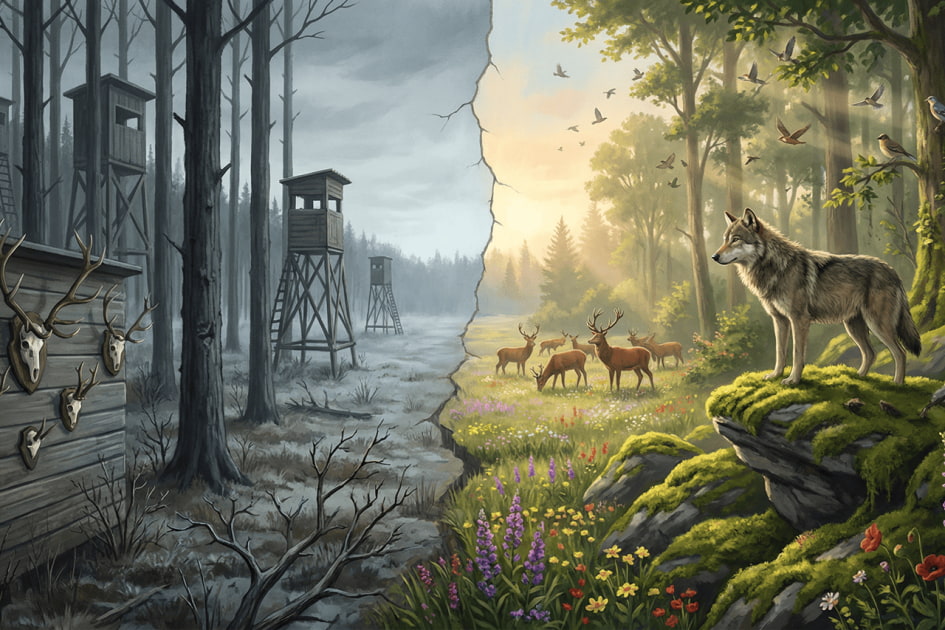
Wild animals are not shooting targets in recreational sport. In group hunts, hunting must not become a risk to humans and animals alike; the protection of wildlife and the safety of people must take precedence.
The incident in the Ludwigslust-Parchim district is not an isolated slip, but yet another alarm signal: when hunting in a collective format takes place in an uncontrolled manner, at great distances, or under reduced visibility, the line between controlled hobby hunting and a reckless recreational firearm has been crossed. Anyone who seriously speaks of wildlife as a “utility animal” while simultaneously tolerating such conditions fundamentally misunderstands the responsibility involved. It is time that hobby hunting is no longer regarded as an inviolable tradition, but as an activity subject to comprehensive critical scrutiny and regulation — in the interest of both people and wildlife.
In the view of IG Wild beim Wild, hobbyhunters annual medical-psychological fitness assessments modelled on the Dutch system, as well as a binding upper age limit. The largest age group among hobby hunters today is 65+. In this group, age-related limitations such as declining visual acuity, slowed reaction times, reduced concentration and cognitive deficits increase significantly in statistical terms. At the same time, accident analyses show that the number of serious hunting accidents involving injuries and fatalities rises significantly from middle age onwards.
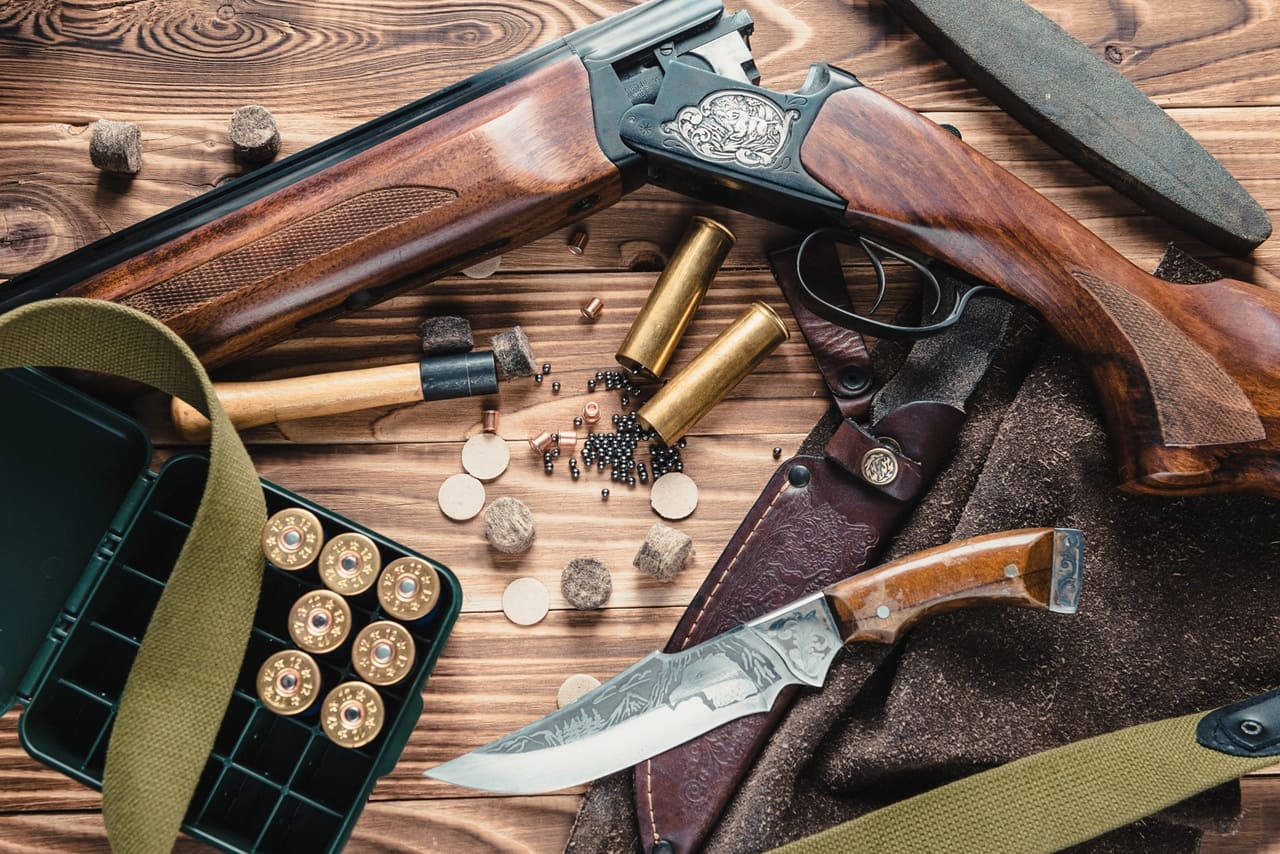
The regular reports of hunting accidents, fatal errors of action and the misuse of hunting weapons highlight a structural problem. The private ownership and use of lethal firearms for recreational purposes largely escapes continuous oversight. From the perspective of IG Wild beim Wild, this is no longer justifiable. A practice based on voluntary killing that simultaneously creates considerable risks for humans and animals forfeits its social legitimacy.
Hobby-hunting is furthermore rooted in speciesism. Speciesism describes the systematic devaluation of non-human animals solely on the basis of their species membership. It is comparable to racism or sexism and can be justified neither culturally nor ethically. Tradition does not substitute for moral scrutiny.
Critical scrutiny is particularly indispensable in the field of hobby hunting. Few other areas are so thoroughly shaped by euphemistic narratives, half-truths and deliberate disinformation. Where violence is normalised, narratives frequently serve the purpose of justification. Transparency, verifiable facts and an open public debate are therefore essential.