Elephant keeping in zoos must end
Basel Zoo has euthanised elephant bull Tusker due to tuberculosis. The Fondation Franz Weber is calling for an end to elephant keeping in zoos.

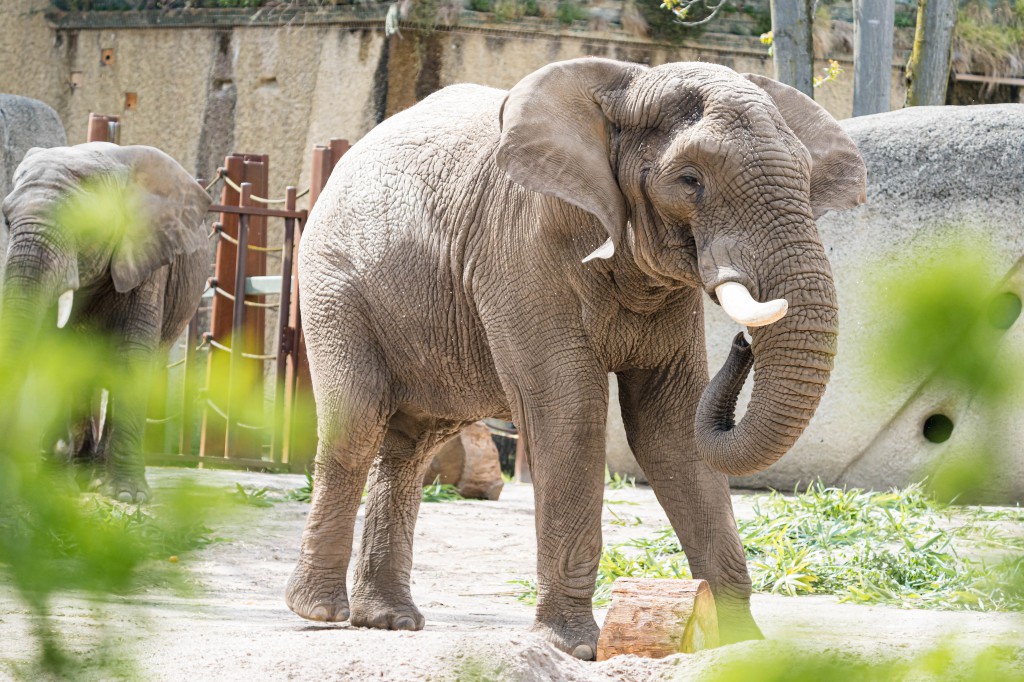
Basel Zoo has euthanised its bull Tusker, as the zoo management announced.
The elephant bull had contracted tuberculosis, and due to inadequate keeping conditions, further animals are now at risk. For the Fondation Franz Weber (FFW), the latest incident underscores the demand to leave elephants in their natural habitat.
Weight loss, passivity, lack of motivation and poor appetite – Tusker had been showing symptoms of tuberculosis for months.On Wednesday morning the management of Basel Zoo announced that he was euthanised due to the disease. However, many questions remain unanswered, in particular how he became infected with the pathogen and why, given his various symptoms, the bull was not separated from his conspecifics (in particular from Heri, the female who is currently a carrier).
How did Tusker become infected?
«Studies indicate that most tuberculosis cases in elephants are attributable to the human form of tuberculosis (Mycobacterium tuberculosum) and are transmitted from humans to elephants!», emphasises Dr. David Perpiñán, veterinarian and expert in zoological medicine. He points out that the zoonotic disease primarily affects elephants that have human contact, i.e. those living in captivity. It is known that Tusker had been exposed to the tuberculosis pathogen in previous years. For this reason, the original transfer to Basel Zoo was halted in 2017. Nevertheless, in 2021 the elephant bull arrived at the «Zolli» – as a symbol of hope for their breeding programme.
Given Tusker's specific history, he should have been isolated from the first symptoms. The fact that Basel Zoo allowed him to interact freely with his conspecifics clearly demonstrates a failure of zoo management, which particularly endangers the future of the pregnant Heri and her unborn calf. Under these conditions, it is evident that the zoo's breeding program should not be continued.
Zoos must take responsibility
For Vera Weber, President of the FFW, this new death is merely further confirmation that elephants should not live in captivity — and that the situation of these animals in Swiss zoos is no better than elsewhere. “Zoos must finally live up to their responsibility,” she states. “Like Zurich Zoo, the 'Zolli' is also trying to create the impression that it has been unlucky. But that is not the case: this death, like the one in Zurich, is attributable solely to the conditions of captivity, contact with humans, and other factors of zoo keeping. It is an obvious fact that the basic needs of elephants cannot be met in zoos.”
Zoos do not contribute to elephant conservation
The elephant breeding program in European zoos, in which Zurich and Basel zoos participate, is an utter failure. The captive elephant population has been continuously declining for a long time. Particularly telling is the case in Basel: the “Zolli” has kept African elephants for around 70 years and can point to only four births — including two stillborn elephants. The other two also died at the ages of 16 and 21 years respectively — a young age for elephants. Worse still, elephants born in zoos that do survive remain in zoos permanently, as they cannot be reintroduced into the wild.
“The elephant breeding program, like the keeping of elephants in zoos, makes absolutely no sense and does not contribute to the conservation of the species,” confirms elephant biologist Dr. Keith Lindsay. The African Elephant Specialist Group of the International Union for Conservation of Nature (IUCN) also sees no benefit whatsoever from ex-situ captivity (in zoos) for the conservation of the species in the wild — that is, in-situ.
The Basel Zoo, alongside those of Zurich and Rapperswil, is one of the only zoos in Switzerland that still keeps elephants. The current example demonstrates once again that the time has come for them as well to abandon the keeping of elephants!
Further articles
- Zoos cause more harm to animals than you may realize
- Justice for zoo animals
- Is it time to ban zoos?
- Finland: Zoo wants to send giant pandas back to China due to maintenance costs
- The keeping of elephants in zoos must finally come to an end!
- Killing surplus animals – zoos failing at species conservation