Brown Hare: Symbol of Fertility
An intact nature is part of it. What is the brown hare actually up to right before Easter?

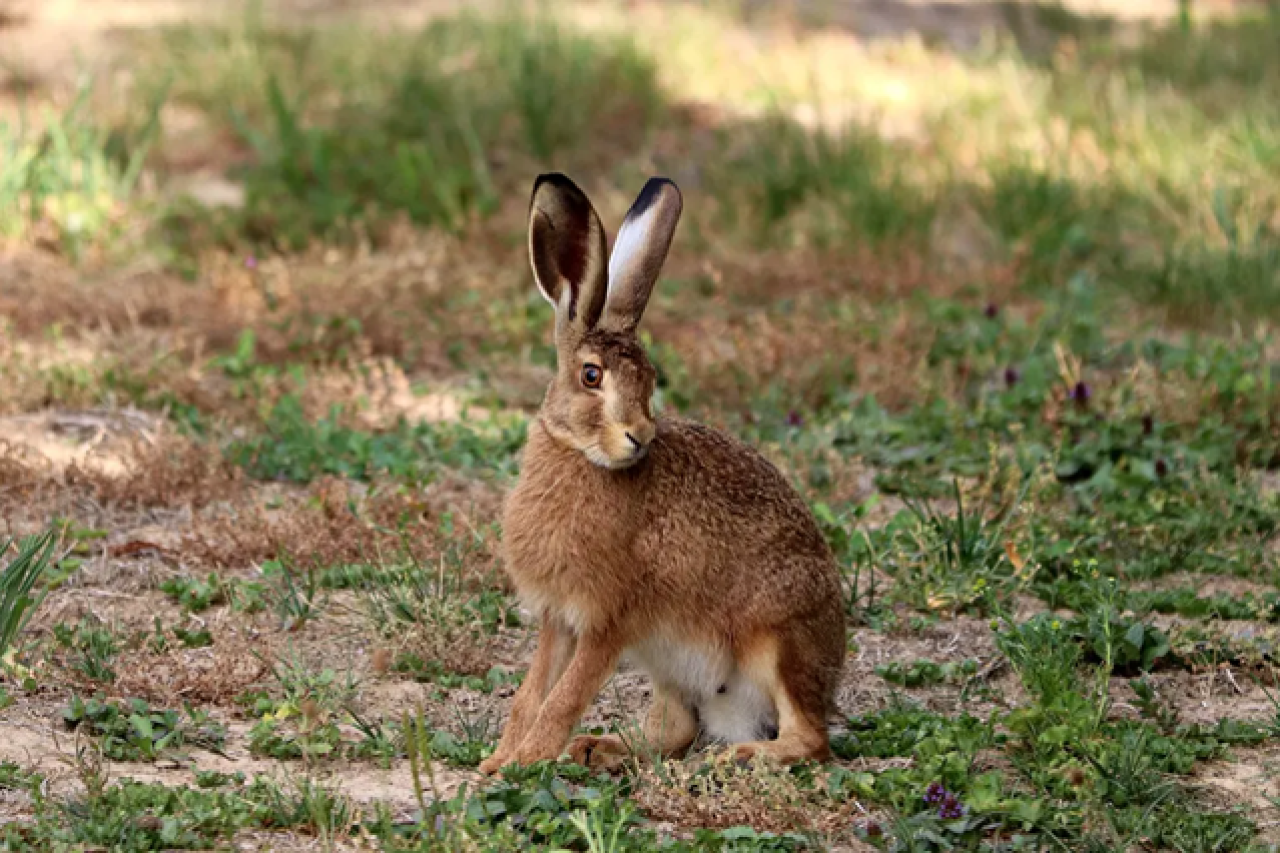
Whether made of fabric, chocolate, or sponge cake: Easter bunnies are everywhere right now.
The real thing, however — the brown hare — is becoming increasingly rare. Since the 1950s, when hares enjoyed near-paradise conditions in agricultural areas, their numbers have been declining drastically. In the 1990s, the average was 4.5 per 100 ha; by 2010, that figure had dropped to just 2.3. This is shown by surveys carried out on behalf of the Federal Office for the Environment (FOEN). The results from Central Switzerland are alarming: in four of the six areas studied around Lucerne, the brown hare has virtually disappeared in recent years. Yet the brown hare is still hunted.
The highest density of brown hares was recorded in 2016, with 17.7 per 100 ha in the hunting-free canton of Geneva — where professional wildlife wardens manage the local wildlife. This was the first density exceeding 17 brown hares per 100 ha recorded anywhere in Switzerland since 2006. The median density according to the 2020 monitoring stands at approximately 2.5 brown hares per 100 ha — very low population levels. More recent studies even show that spring temperatures account for a large proportion of the annual fluctuations in reproductive success.
The young are here now; leverets weigh just under 100 grams, making them roughly the size of a Kinder Surprise egg. To nurse her young, the doe waits until dark — she does not want to attract the attention of foxes, wild boar, and birds of prey, so that her offspring remain safe from predators. The little ones press themselves flat against the soil, providing near-perfect camouflage. «The stable high-pressure system and the dry weather we are experiencing right now are helping them to survive,» says Dr Andreas Kinser. The expert from the Deutsche Wildtier Stiftung completed his doctorate on the brown hare and knows only too well that young leverets are vulnerable to adverse weather conditions. «If spring is too wet, their chances of survival drop significantly.»
After a gestation period of 42 days, the female hare gives birth to up to five young three to four times between January and October. Unlike rabbits, the leverets are born furred and with open eyes. Since hares have no eyelids, they sleep with their eyes open, rolling their pupils upward during sleep. However, they do not become independent until three to four weeks of age.
Unlike rabbits, hares can be doubly fertilized. This so-called superfetation is a remarkably rare evolutionary trick in the animal kingdom. Since the gestation period of the European hare is relatively long, the female can become pregnant again while still carrying a litter in her womb.
Unlike rabbits, hares cannot be bred in narrow, barred cages, which is why the term «stable hare» is a «contradictio in adiecto» — a contradiction in terms.
The start in life is tough. In spring, many young hares are ploughed under by agricultural machinery during field cultivation, or crushed when meadows are rolled. In summer, the vegetation is often so dense that they can only move along the tyre tracks of the machines — the crops quite literally grow over their heads. The range of food available in intensive agriculture is also not as varied as it once was. Their diet is essentially limited to wheat stalks, rapeseed, and other crops. But a perfect hare’s dinner looks quite different. «European hares prefer to graze on fat-rich herbs«, says Dr. Andreas Kinser. They favour clover and the stalks of the common poppy. But the supply of wild herbs in a monocultural agricultural landscape is meagre. In addition, an ever-denser road network is frequently the hare’s undoing.
The European hare does not have an easy time in Switzerland. Hunting, intensive agriculture, and habitats lacking sufficient structural features such as hedgerows or unmown meadows make life difficult for it. Its populations are under pressure in many parts of the country, which is why it is listed on the Red List of threatened species.
The hare is an ancient symbol animal. In antiquity, it was considered the embodiment of fertility, vitality, luck, and sexual desire. Its enormous reproduction rate made it the quintessential game animal, one that could only survive thanks to its numerous offspring. The Greek goddess of love Aphrodite was depicted with a hare, as was the Virgin Mary in Christian art. In the iconography of the Eastern Church and in the writings of the Bishop of Milan and Church Father Ambrose (339–397), the hare is a symbol of the risen Christ, who brought life through death.