Oldest Swiss She-Wolf: Controversy Over Her Fate
At the beginning of December 2023, the association Wolfshirten and more than 200 co-signatories submitted the petition “Last Honours for the Oldest She-Wolf in Switzerland, Akbara (F07)” to the Office for Hunting and Fisheries (AJF) and to Councillor Dr. Carmelia Maissen, Head of the Department of Infrastructure, Energy and Mobility.

Canton Wants to Put She-Wolf in a Museum
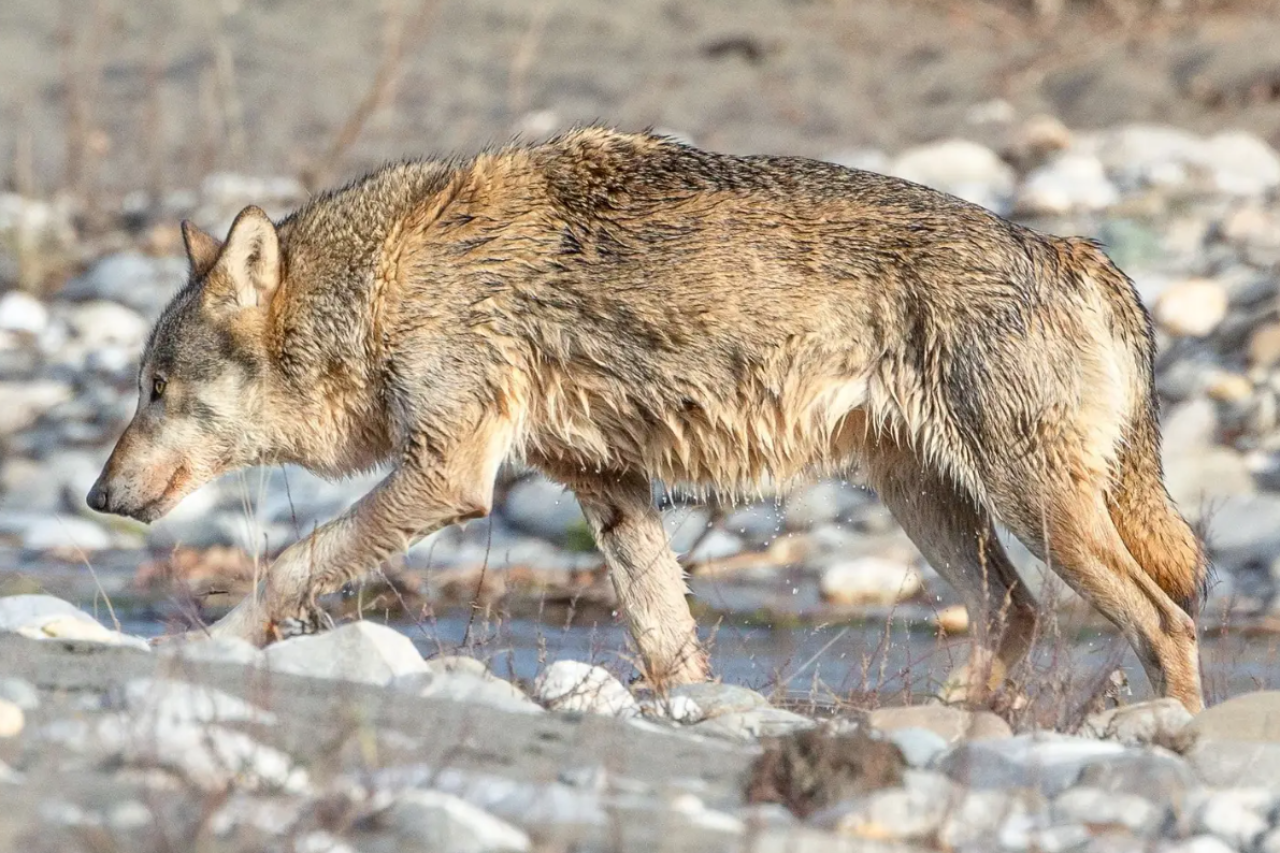
The canton of Graubünden wants to make the oldest she-wolf in Switzerland available to the Graubünden Natural History Museum in Chur.
F07 is of public interest and should accordingly be made accessible to the public upon payment of an admission fee, the canton argues.
The Wolfshirten believe that the she-wolf Akbara (F07) deserves better than to languish as a soulless exhibit in a museum, particularly since those responsible never advocated for the protection of wolves or stood up to political pressure.
Wolfshirten Wanted Cremation at the Calanda
The Wolfshirten sought, via petition, to purchase the she-wolf Akbara (F07) from the canton. A simple cremation at the Calanda would have paid her final honours, with her ashes subsequently scattered at the Calanda, the place where she lived.
A small memorial recounting the history of the Calanda pack would have been erected there. The site is accessible to all with a modest effort, and free of charge at that.
Canton Rejects Sale
The Department of Infrastructure, Energy and Mobility (DIEM) has taken note of the petition “Last Honours for the Oldest She-Wolf in Switzerland, Akbara (F07)”. However, it rejects the sale of the carcass of she-wolf F07.
The she-wolf (F07) is regarded as the first pack founder and is therefore without doubt of public interest, as stated in the department’s response to the petitioners.
The carcass is to be made accessible to the Graubünden Nature Museum as a cantonal educational and research institution of regional significance. This will allow the museum to use the example of wolf F07 to illustrate the history of wolves in Switzerland and in Graubünden in particular.
Should preservation not be possible, the carcass will remain accessible at the Graubünden Nature Museum for research purposes.
Dossier: Wolf in Switzerland: Facts, Politics and the Limits of Hunting