ASP fence becomes a death trap for wildlife
The water in the polder is receding, but the danger of roe deer perishing at the ASP protective fence remains.


The water in the polder is receding, but the danger of roe deer perishing at the ASP protective fence remains.
In summer 2021, a wire fence approximately 255 kilometres long was completed along the Brandenburg-Polish border in the Lower Oder Valley National Park to protect against African Swine Fever (ASF). The fence is intended to prevent potentially infected wild boar from migrating from Poland into Germany.
Animal welfare advocates and the Lower Oder Valley National Park are urgently calling on the district to find a solution. Protective fences against African Swine Fever in Brandenburg should remain passable for smaller wildlife such as roe deer, but not for wild boar. Following the discovery of roe deer that had perished at the fence in the Uckermark, districts had been asked to find short-term solutions to prevent animal suffering now and in the future, the Consumer Protection Ministry announced.
Animal welfare advocates call for permanent remedies
The national park administration had already warned in summer about the negative impact of the fence on wildlife movement and the conservation objectives of the national park. Should the entire area flood in winter, far more animals are likely to die.
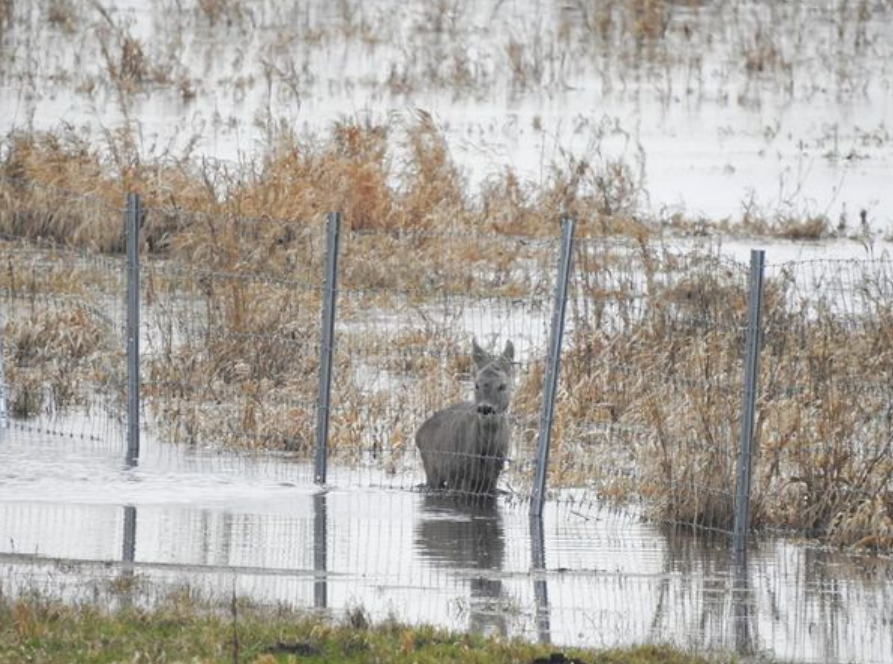
The protective fences are currently the only effective measure for preventing the spread of swine fever, according to the ministry. At a height of 1.20 metres, the fences are largely designed so that roe deer and red deer can jump over them and smaller animals can slip through.
Uckermark district wants to open gates temporarily
In connection with the incident, it is believed that the animals were unable to jump over the fence as usual due to the wet ground, according to the ministry. The Uckermark district now intends to temporarily open the existing gates, giving the animals the opportunity to find their way into the area outside the polders. In addition, the protective fence will be patrolled daily. Rangers will then guide the animals toward the openings. A drone will also be deployed. Afterward, the gates will be closed again.
More on the subject of recreational hunting: What the research says about this is shown by Hunting fact-checked: the state of research.
The position of IG Wild beim Wild: IG Wild beim Wild rejects recreational hunting. Our model is the canton of Geneva, which has managed without recreational hunting since 1974: without hunting seasons, without hunting dogs, without driven hunts, without high seats, without the animal cruelty and crime that go hand in hand with hunting season elsewhere. What has worked there for over fifty years disproves every position paper by JagdSchweiz. An association that bases its policy on claims it refutes in its own documents is not a professional organisation, but a factory for misinformation.