Superfetation increases the reproduction rate in European hares
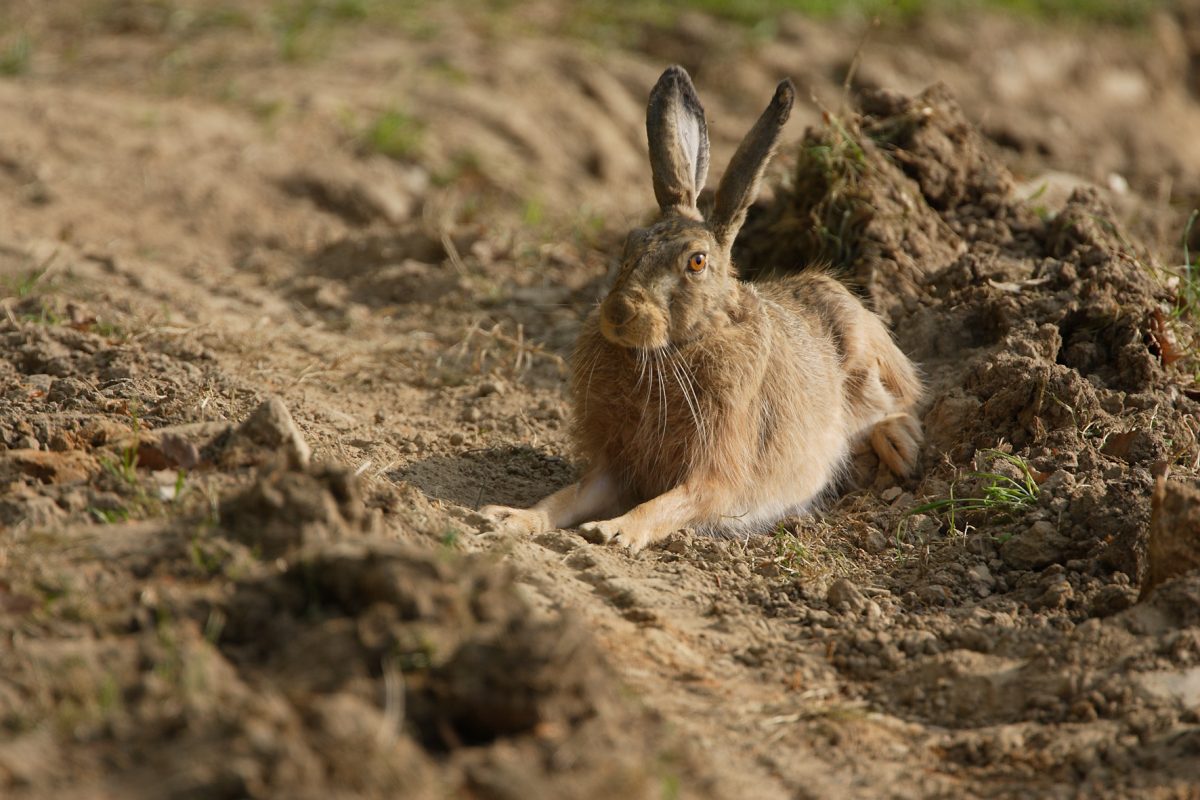
Just before Easter, the mating season of the European hare (Lepus europaeus) reaches its first peak. With a bit of luck and fine weather, one can observe how several does and bucks gather in fields for the hare wedding, chasing each other around.

“What We Miss”
Just before Easter, the mating season of the European hare (Lepus europaeus) reaches its first peak. With a bit of luck and fine weather, one can observe how several does and bucks gather in fields for the hare wedding, chasing each other around.
Rough courtship and wild chases
The hare wedding is anything but gentle. “What makes it special is that the bucks must prove their strength and power to the doe in close combat,” explains Dr. Andreas Kinser, forestry and hunting expert at the Deutsche Wildtier Stiftung. After the buck’s rough courtship with persistent advances, a wild chase ensues, repeatedly interrupted by brief boxing matches. The does then select the fittest bucks to mate with.
Superfetation: a trick of Mother Nature
“However, it doesn’t stop at a single mating,” explains Kinser. Within a short space of time, the doe mates several times, meaning that the young of a single litter can have different fathers. In addition, the female European hare has a “surprise egg” within her body, as evolution has developed a special mechanism to increase the European hare population. Does can be fertilised again during the gestation period of around 40 days. This means that embryos at different stages of development are present in the uterus at the same time. “This trick of Mother Nature is called superfetation,” explains hare expert Kinser. This can increase the reproduction rate, as litters can be born in quicker succession. More about fascinating wildlife.
More on the subject of recreational hunting: In our dossiers on recreational hunting gather fact-checks, analyses and background reports. What the research says about this is shown by Hunting fact-checked: the state of research.
The position of IG Wild beim Wild: IG Wild beim Wild rejects recreational hunting. Our model is the canton of Geneva, which has managed without recreational hunting since 1974: without hunting seasons, without hunting dogs, without driven hunts, without high seats, without the animal cruelty and crime that go hand in hand with hunting season elsewhere. What has worked there for over fifty years disproves every position paper by JagdSchweiz. An association that bases its policy on claims it refutes in its own documents is not a professional organisation, but a factory for misinformation.