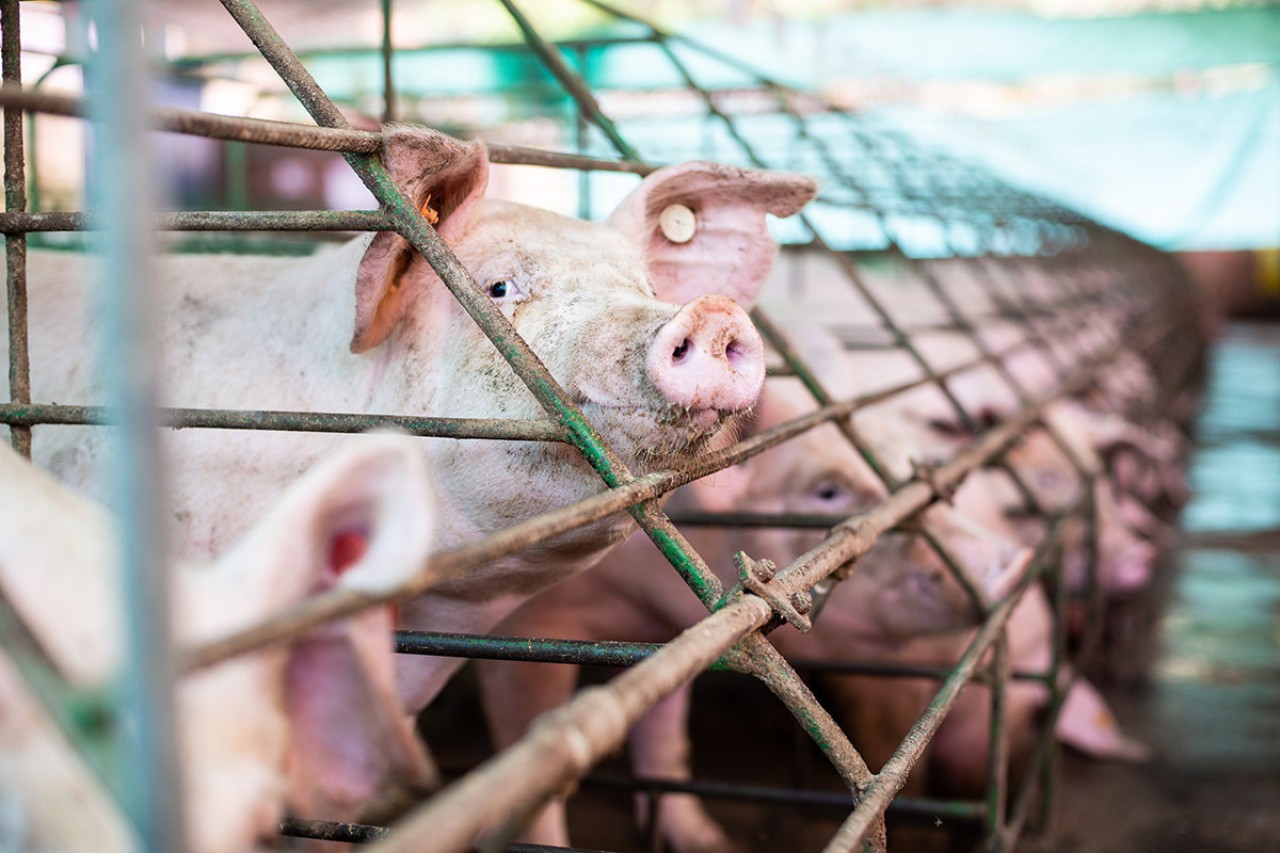
One of the many topics discussed at COP27 in Egypt this year was the need for the world to address how animal farming contributes to the global climate crisis.
It was revealed that Canada's reporting on its agriculture-related emissions is not comprehensive, as some of the emissions are attributed to other industrial sectors. For example, emissions from feed production, fertiliser production and fertiliser use are reported under "heavy industry". This obscures the true impact of the agricultural sector.
91 Megatons of CO2 from Agriculture
Recent research by Navius commissioned by World Animal Protection shows that Canada generates 91 megatons of CO2 emissions from the entire agricultural sector. This is equivalent to the greenhouse gas emissions of 19.6 million car drivers per year.
This study was the first of its kind to quantify the actual greenhouse gas emissions from Canadian agriculture.
"Industrial animal farming is one of the largest contributors to agriculture-related greenhouse gas emissions," said Lynn Kavanagh, World Animal Protection’s Farming Campaign Manager, in a statement. "This silent climate offender in the world's largest economies, including Canada, releases disproportionately high emissions with global consequences that affect countries and communities in less developed regions such as Africa, even though they do not contribute to the problem."
Plant-Based Diet Could Save Climate Targets
If Canadians shifted from a meat-heavy to a meat-reduced diet, the impact on greenhouse gas emissions would be so significant that Canada could once again meet its climate targets for 2030 and 2050, according to the study. The transition would reduce emissions from the entire agricultural industry by 13.5 megatons by 2030, equivalent to the annual elimination of nearly 6 million cars.
A recent report by the Boston Consulting Group underscores the scale of this transition. It finds that expanding meat and dairy alternatives can lead to an 11-times greater reduction in emissions than zero-emission vehicles.
“Reducing animal husbandry in the food value chain is an effective and cost-efficient solution to the global climate crisis,” says Kavanagh.
For all Canadians, avoiding meat and dairy products is an effective and meaningful way to make a positive impact, reducing their contribution to the climate change problem, improving biodiversity and maintaining personal health.
Experts predict that, without an urgent and drastic change in global meat consumption, agriculture will consume the entire world’s carbon budget needed to keep global temperature rise below 2°C by 2050.
| You can help all animals and our planet with compassion. Choose compassion on your plate and in your glass. Go vegan. |