Solar Panel Waste: The Disposal Problem
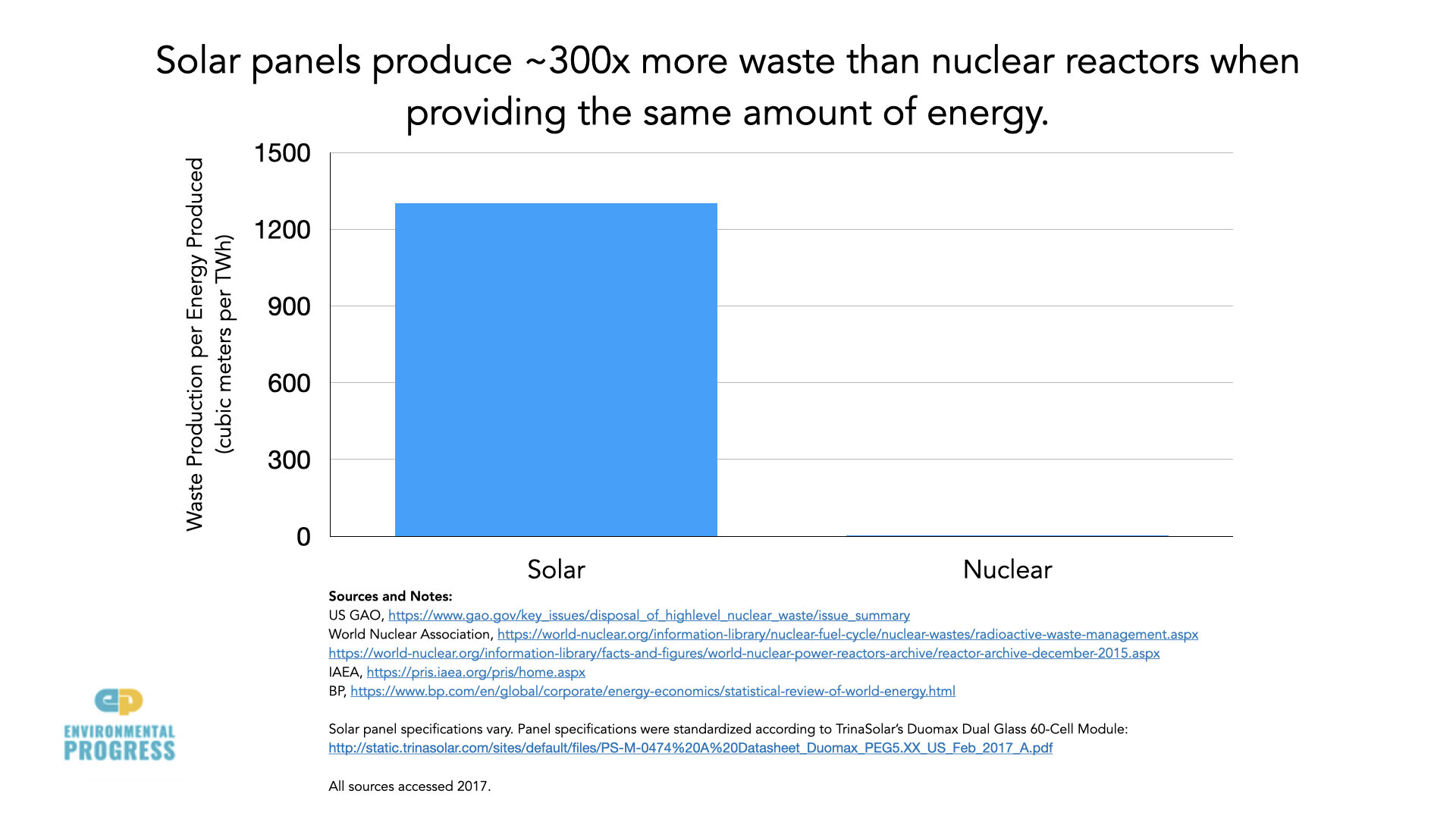
Solar panels generate approximately 300 times more toxic waste per unit of energy than nuclear power plants over their lifetime.

In recent years, concern has grown about what happens to solar panels at the end of their lifespan.
The following statements, for example, are cause for concern:
- The problem of solar panels will explode with full force in two or three decades, massively polluting the environment once again after the production of these modules, as it involves an enormous quantity of waste that is not easy to recycle.
- Solar cells generate 300 times more toxic waste per unit of energy than nuclear power plants. If solar and nuclear power plants produce the same amount of electricity over the next 25 years and the waste is stacked on a football field, the nuclear waste would reach the height of one Leaning Tower of Pisa (53 metres), while the solar waste would reach the height of several Mount Everests (8’848 metres).
- Contrary to previous assumptions, pollutants such as lead or carcinogenic cadmium can be almost completely leached from fragments of solar panels by rainwater over a period of several months. Furthermore, it was found that even rainwater flushes cadmium out of an intact solar panel.
- In countries such as China, India and Ghana, people living near e-waste dumps often burn the waste in order to salvage the valuable copper wires for resale. Since this process requires burning plastic, the resulting smoke contains toxic fumes that are carcinogenic and teratogenic (causing birth defects) when inhaled.
- The greatest problem with solar panel waste is probably the sheer volume. Since sunlight is diluted and diffuse, large collectors are required to capture solar rays and convert them into electricity. These large surface areas require many times more materials (glass, heavy metals and rare earth elements) than other energy sources.
- Convincing waste processors to recycle more solar panels requires enormous amounts of subsidies once again.
Many consumers are unaware of the toxicity of the materials contained in some panels and the ways in which they are disposed of.
Copper mining: The largest volumes of toxic waste
A single solar module accounts for roughly 1 kilogram of copper — and approximately 200 kilograms of mining sludge. This sludge, known as tailings, consists of finely ground ore dissolved in strong acids, bases, or other solvents. This mixture contains large amounts of arsenic, cadmium, mercury, lead, and other heavy metals. Even in industrialized countries, these mining tailings are mostly stored in vast open settling ponds, and in some cases are disposed of directly into rivers — predominantly in distant countries.

According to figures from the International Energy Agency (IEA), an electric car contains around 53 kilograms of copper — more than twice as much as a combustion engine vehicle. A solar installation with a capacity of 1 megawatt contains 2.8 tonnes of copper. And a typical onshore wind turbine with an assumed capacity of 3 megawatts requires around 8.7 tonnes of copper.
Worldwide, photovoltaics generate around 100 million tonnes of copper tailings — per year. Since they are not radioactive, meaning they do not decay, they remain toxic indefinitely.

One example of this is Cerro de Pasco in Peru, where nearby water sources contain 3’200-times more cadmium, 6’000 times more iron, 200 times more manganese, and 197 times more zinc than national statutory limit values. The water also contains lead, arsenic, and mercury. These pollutants cause cancer, kidney damage, infertility, and neurological diseases. Lead has damaged the brain development, social skills, and language and motor abilities of children. Mining activities contaminate their water sources and burden their quality of life.
An investigation by the German Federal Environment Agency found a “high risk potential” at the overwhelming majority of the 45 copper mines that together account for around half of global production — particularly in the areas of “conditions for acid mine drainage,” “formation of heavy metals,” “use of auxiliary substances” (toxic solvents), and “mining waste.”
The example of the Antapaccay mine in Peru also illustrates the devastating consequences that copper mining can have. It is owned by Swiss commodity giant Glencore. Reports by Peruvian authorities recently revealed a alarming extent of contamination: elevated levels of heavy metals and pollutants were found in soils, plants and animals, in the air and in water. Many people living in the region report frequent serious illnesses such as cancer, lung damage and anaemia.
Added to this is the immense energy expenditure required for the extraction of raw materials and the production of photovoltaic systems, as well as the multiple transport operations across several continents in the supply chains for raw materials and semi-finished products.
Copper mining generates the largest quantities of toxic waste on this planet, as the NZZ rightly states. The technologies of the energy transition are anything but green.
Recycling: Expensive and barely profitable
Manufacturers reduce the costs of producing solar modules by lowering the silver content in their modules. Although silver accounts for only a small fraction of the mass of a solar module, it contributes approximately 47 percent to its value, which reduces the incentive for recyclers to recycle a module. Silver is considerably more valuable than other recyclable components such as aluminium, copper, silicon and glass. Manufacturers can reduce the silver content by replacing it with a combination of copper, nickel and aluminium using inkjet and screen-printing technologies. They also rely on smarter manufacturing techniques that more precisely specify the minimum required amount of silver. The decline in silver content makes recycling more difficult from a value perspective, as less silver can be recovered from the modules.
Solar cells, which have a lifespan of 20 to 30 years, lose productivity over time. The International Renewable Energy Agency has already estimated that approximately 250’000 tonnes of solar module waste were generated worldwide by the end of 2016, and this figure will almost certainly rise massively further. Solar modules can contain in particular lead or cadmium and other toxic chemicals that cannot be removed without dismantling the entire module.

Global disposal crisis: From Europe to Asia
In Europe, manufacturers of solar modules are required to collect and dispose of solar waste at the end of their useful life. However, most modules are produced in China and imported. Chinese solar modules have a devastating environmental record.
In Switzerland, an advance recycling fee is levied on solar installations, and the special waste is then recycled in France or Germany. According to the Deutsche Umwelthilfe, by 2030 there will be around one million tonnes of solar waste in Germany alone. Despite this legislation, the recycling rate for photovoltaic modules in the EU is no better than in the USA — it stands at approximately 10%.
The aluminium from the frames and copper from cables are recycled in Germany. The glass is mixed with other components but is only processed into glass wool, which cannot be recycled again at a later stage. This is because the glass from the panels in particular is of relatively low quality. It cannot be used in applications requiring high-quality glass, such as the production of new solar modules.
According to the British government, there are also tens of millions of solar modules in the United Kingdom. However, the specialised infrastructure needed to scrap and recycle them is lacking.
Australia is one of the countries with the highest use of rooftop solar power in the world. Currently, almost all defective or end-of-life solar modules end up in landfills.
In November 2016, the Japanese Ministry of the Environment issued a warning that the volume of solar panel waste generated annually in Japan would likely rise from 10’000 to 800’000 tonnes by 2040, and that the country had no plan for safe disposal. According to a published report, it would take Toshiba Environmental Solutions 19 years to recycle all the solar waste Japan had produced by 2020. By 2034, the annual volume of waste will be 70 to 80 times higher than in 2020.
China has more solar power plants than any other country, operates approximately twice as many solar panels as the United States, and likewise has no comprehensive or sustainable plan for disposing of old panels. Chinese and Japanese experts agree: when a recycling facility carries out every step precisely according to regulations, its end products can turn out to be more expensive than new raw materials.
Not only in most US states are solar panels classified as hazardous waste. The majority of panels are based on crystalline silicon; predominantly older panels may contain lead. Thin-film solar cells contain cadmium and selenium.
The disposal of solar modules in regular landfills is not recommended, as the modules can break and release toxic substances into the soil, which can lead to problems with drinking water, among other things. Solar modules can be recycled, but the costs of recycling are generally higher than the economic value of the recovered material. Used solar modules are also sold to developing countries, which wish to acquire them at a low price despite their reduced ability to generate energy.
Solar panel recycling is barely or not at all worthwhile, says AJ Orben, Vice President of the company "We Recycle Solar", based in Arizona. Raw materials worth only about two to four dollars can be recovered from each panel, with labor accounting for the largest share of costs. According to the "LA Times", the National Renewable Energy Lab in America estimates that it costs 20 to 30 dollars to recycle a panel and one to two dollars to send it to a landfill.
There are companies that present themselves as "solar module recyclers" but instead sell the modules on secondary markets in countries with less developed waste disposal systems, with Ghana, Nigeria, Vietnam, Bangladesh, Pakistan, and India as the main destinations for electronic waste.
Nitrogen trifluoride and soil contamination
Another problem: According to data, the production of solar modules significantly increases emissions of nitrogen trifluoride (NF3), which acts as a greenhouse gas 19’700 times more potently than carbon dioxide over a period of 100 years. One kilogram of nitrogen trifluoride thus warms the climate 19’700 times as much as one kilogram of carbon dioxide. NF3 emissions have increased thousandfold over the past 25 years. By comparison, carbon dioxide emissions in the United States rose by approximately 5% during the same period.
While nuclear power plants can operate without issue for 50 or 60 years, solar panels have a shorter lifespan (20 to 30 years), meaning their disposal will become an enormous problem in the coming decades. While nuclear waste is stored in heavy drums and regularly monitored, very little has been done regarding the disposal of solar waste. Outside of Europe, solar waste typically ends up in the vast stream of electronic scrap.
The hazardous materials and chemicals generated during the construction of these installations — such as lead, arsenic, mercury, and cadmium — cannot be recycled and cause lasting damage to the environment.
Since solar panels are artificial objects, they have an impact on the natural cycle. Billions of solar panels heat up to an extraordinary degree, easily reaching 80 degrees Celsius; the heat released into the surrounding environment over large areas is massive. When one also considers the planned large-scale installations in high alpine regions — near glaciers — each will contribute its share to making the last ice reserves disappear as well.
The dark surfaces of solar modules absorb most of the light and heat that reaches them. However, only around 15% of incoming energy is converted into electricity. The remainder is released into the surrounding environment as heat. Some solar modules can burn insects and the feathers of birds flying past.
Once solar cells have been installed in a field, the likelihood of it returning to arable land is not high, as it may be severely contaminated by the infrastructure and panels. The infrastructure embedded in the ground to support the panels, the concrete and galvanized metal on which these devices rest, allows zinc to seep into the soil. The galvanized metal beneath the surface can lead to high zinc levels in soil samples. Zinc may be an essential micronutrient, but when too much of it seeps into the soil, there is no way to extract it again.

Conclusion: Not as green as thought
Photovoltaic solar energy is not as environmentally friendly or sustainable as many believe. Apart from being an intermittent energy source and more expensive than conventional technologies, there are serious waste disposal problems that only a few countries are addressing. Nine out of ten panels are carelessly discarded, estimates the International Renewable Energy Agency (Irena).
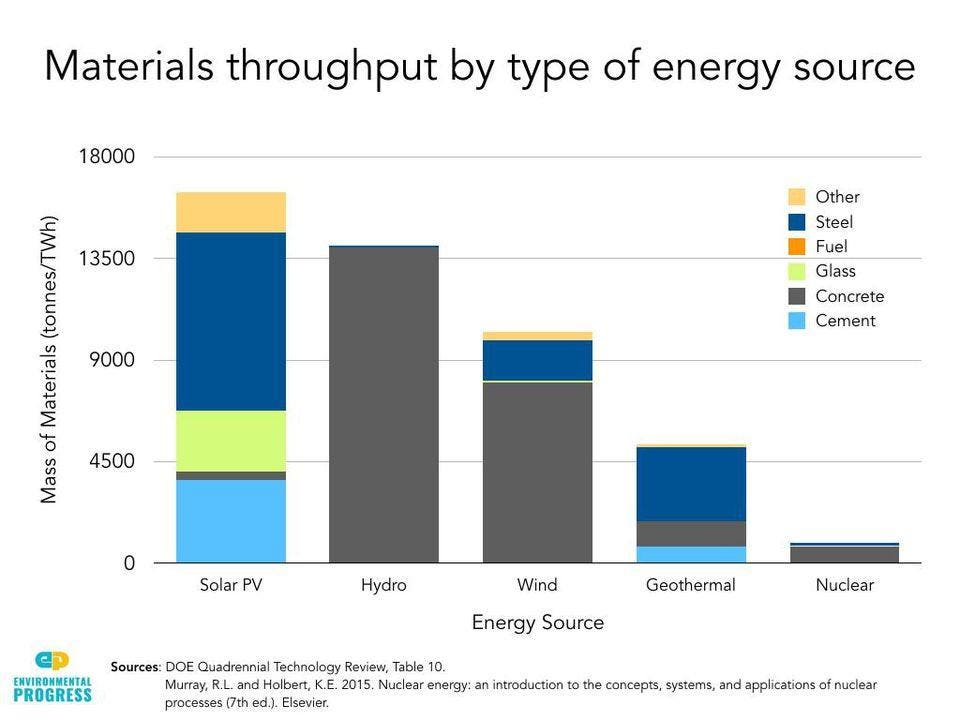
The manufacturing of solar panels also consumes the most materials and resources such as cement, glass, plastic, fuel, steel, aluminium, copper, chemicals and others. More than hydropower, wind turbines, geothermal energy or nuclear power plants (in that order).
What is more environmentally and climate-friendly: solar energy or nuclear power? The sun, of course, most people will say. That is wrong — at least when CO₂ emissions are also taken into account. Nuclear power plants perform better in this regard.
Solar panels including their toxic add-ons such as inverters, storage systems, etc. cut a miserable figure both economically and ecologically given the current state of technology. Solar energy is nothing more than another form of speculation that devours vast amounts of land.
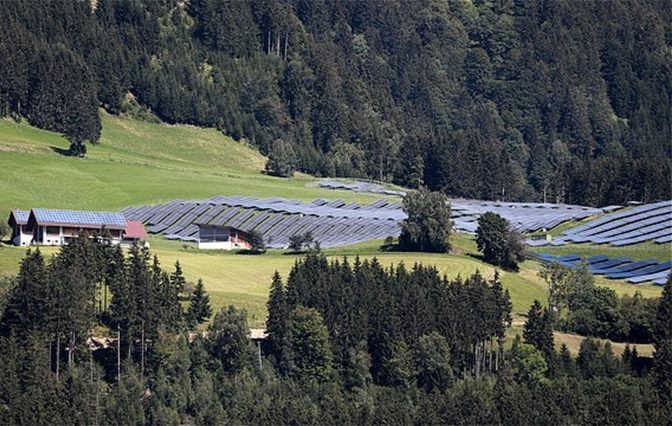
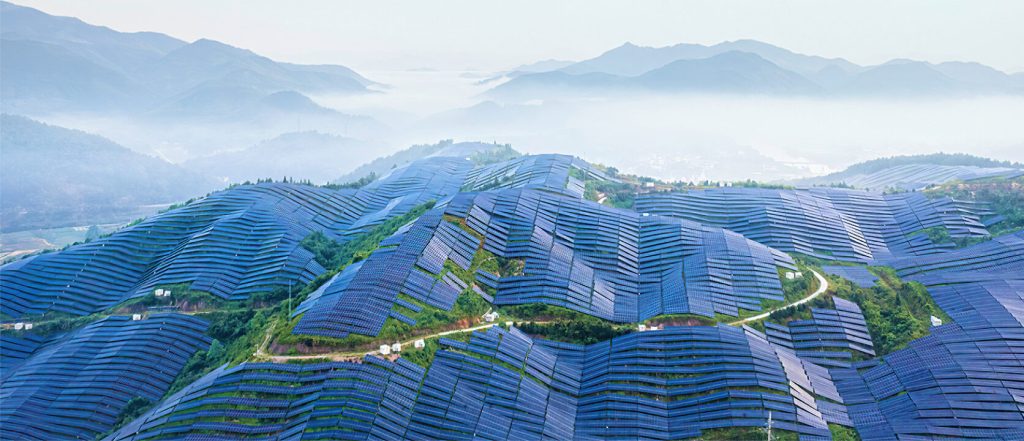
Solar installations of the scale required to supply power grids are enormous and transform idyllic landscapes into industrial landscapes of metal and glass surrounded by security fences. These sprawling installations can alter everything from solar radiation to surface temperatures, which can have immense and unexpected effects on plants, animals and people, and may profoundly transform an entire region.
The grounds of photovoltaic installations are fenced off for insurance reasons (protection against vandalism/theft or for the purpose of livestock keeping). This creates new barriers in the open countryside that also restrict the habitat of wildlife .
Forests and forest edges are indispensable habitats for wildlife in our already intensively used cultural landscape. They must be kept free from solar installations without any ifs or buts — for reasons of species and nature conservation, and to avoid impeding migration and genetic exchange between individuals, demands IG Wild beim Wild.
The French government is planning to build a total of 14 new next-generation nuclear power plants by 2050, some of them close to the Swiss border. In Finland, the most powerful EPR reactor in Europe is in operation. This too can represent a sustainable version of the energy transition — more output with greater safety and less landscape disfigurement. For the Greens in Finland, the most important priority is a “stop to the climate crisis,” and in this regard “we cannot do entirely without nuclear energy.” Nuclear power delivers constant electricity, especially in winter. If, for example, Switzerland were to have two new EPR reactors of the size of Leibstadt by 2050, the country could largely meet its own needs. Token power plants that disfigure unique natural landscapes and further undermine species protection would then be unnecessary.
Two new large nuclear power plants would be sufficient for Switzerland. Nuclear researcher Annalisa Manera on the construction of nuclear power plants, on microreactors, and on what would need to change in Switzerland.
A Swiss company is developing a nuclear power plant that runs without uranium — and destroys the waste from old reactors. Maurice Bourquin, former rector of the University of Geneva and former president of the CERN Council, demands: the Federal Council must examine the project despite the nuclear power ban.
According to experts, solar power installations mounted on buildings and rooftops could generate around 67 terawatt-hours of electricity per year — exceeding Switzerland’s current annual electricity consumption of just under 60 terawatt-hours.