Lynx beaten to death in Alsace: France punishes harshly, Switzerland stays almost silent
Three dead lynx in Grisons, a juvenile beaten to death in Niederbronn-les-Bains: how a criminal verdict from France ruthlessly exposes the gaps in Swiss lynx protection.
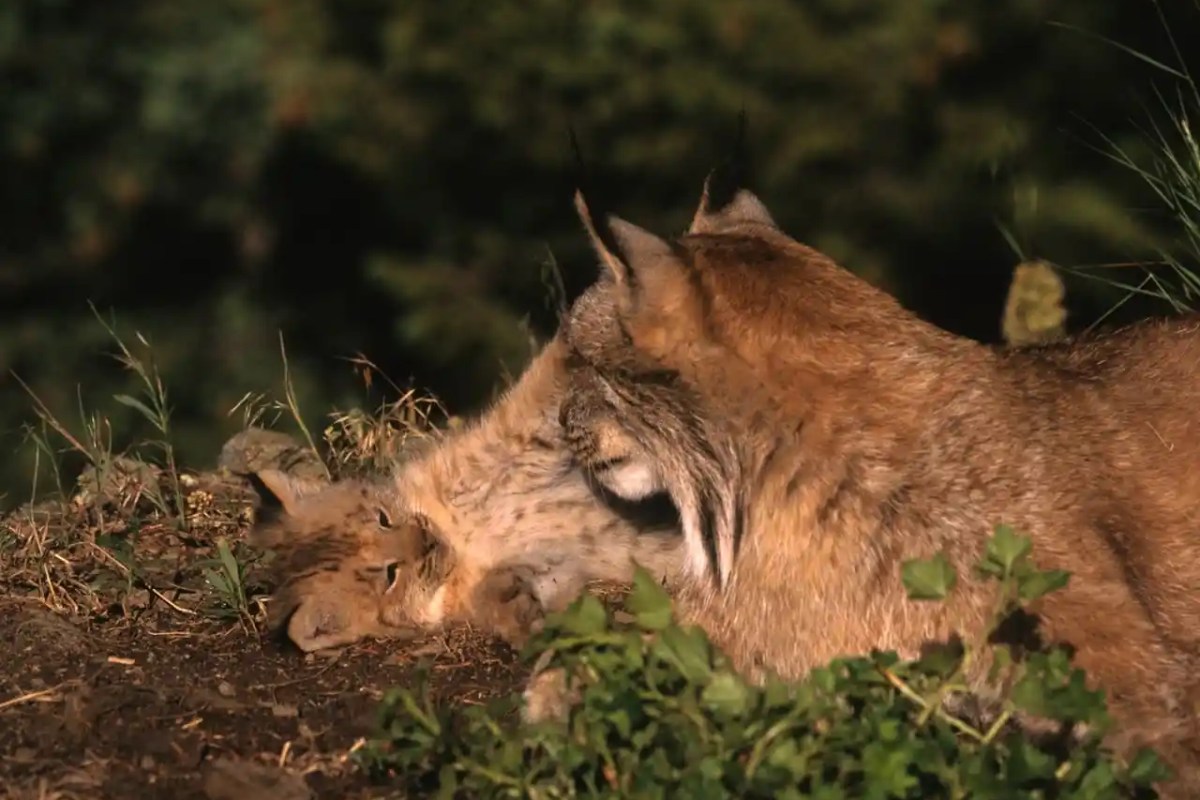
In Niederbronn-les-Bains in Alsace, a 62-year-old woman beat to death an emaciated female lynx just a few months old with a stick after the animal had attacked one of her five chickens.
She claimed she had mistaken the animal for a cat and panicked. The court in Strasbourg only partially accepted this account and sentenced the woman to three months' suspended imprisonment. Animal welfare organisations received more than 30,000 euros in compensation in total. With this, France is sending a clear signal: killing a lynx is not a mishap, but a serious breach of the legal protection of an endangered species.
Trivialisation despite a clear legal situation
Media close to the hobby hunting lobby are nevertheless attempting to reframe the case as a harmless everyday story. The brief reports emphasise that the lynx had killed chickens, that the woman had been overwhelmed, had seen "a cat" and reacted out of fear. What is left out: the lynx is a strictly protected species which in Central Europe was almost wiped out by hobby hunting and habitat loss, and which could only be reintroduced with considerable effort. A single killing may at first glance appear to be a marginal event, but for small, isolated populations it can have significant consequences.
Such trivialisation narratives are not new. In Austria, a hobby hunter declared, after shooting a lynx, that it was a "stupid mistake", but was nevertheless convicted of damaging wildlife populations and of cruelty to animals. In another Austrian case, a hobby hunter had to pay, in addition to a fine of more than 11,000 euros, a further 12,000 euros in damages following the illegal killing of a lynx. In Germany, lynx poachers in the Bavarian Forest were convicted after animals had "disappeared" for years, with firearms being confiscated, fines imposed and a clear rebuke from the court. Despite these verdicts, the same formulas persist in hobby hunting circles: mistake, misidentification, self-defence, being overwhelmed.
Cross-border population, local sentencing practice
The case in Alsace gains additional significance because lynx in the border region of Switzerland, Germany and France know no boundaries. Animals from reintroduction projects in the Palatinate Forest migrate into the Vosges, lynx from the Swiss Jura settle in German and French forests, and vice versa. Every illegally killed lynx is therefore not only a regional loss, but a blow to a cross-border species conservation project that has been built up with public funds and considerable societal effort. We continually document more about these wild animals and their protection status.
In Switzerland itself, the lynx also lives dangerously. Studies from Valais have shown that systematic poaching contributed significantly to the disappearance of the lynx population, while the responsible authorities for a long time drew hardly any consequences. In lynx found killed by vehicles, shotgun pellets are repeatedly detected in the body — an indication that shots and “accidents” are more closely linked than official statistics would suggest. At the same time, the federal government and the cantons emphasise the strict protection status of the lynx, yet rarely manage to identify perpetrators and hand down harsh sentences.
Three dead lynx in the Surselva
This imbalance is particularly evident in the Grisons case. In the Surselva, as part of wolf culls, a game warden was on duty who, equipped with thermal imaging technology and professional training, was meant to regulate wolves. In one night, he shot three lynx — two juveniles and an adult male — which, by his own account, he had mistaken for wolves. He did report himself, but this does not change the fact that a state-commissioned professional killed three strictly protected wild animals that were not even the target of the operation.
The sentence is sobering in direct comparison with the Alsace case. The game warden was found guilty of multiple violations of the hunting act and the negligent killing of a protected species. The penalty: a fine in the four-figure range, the exact amount of which was not made public by the public prosecutor. In addition, the man was excluded from further wolf regulation operations — an internal measure that changes little about the system itself. No prison sentence, no known five-figure compensation sum, no clear signalling effect on other actors.
€30,000 versus a four-figure fine
Placing the two cases side by side, the discrepancy is striking. In France, a lynx beaten to death leads to a suspended sentence and compensation of over EUR 30,000. In Switzerland, three shot lynxes cost a professional game warden a four-figure fine. The woman in Alsace is a private individual who claims to have struck out in panic with a stick. The Grisons game warden is a trained professional with the equipment and the mandate to "regulate" wild animals. While France makes clear that the life of a lynx has a high legal and financial value, Swiss practice conveys the opposite: even three dead animals can be entered into the books as "mistaken kills".
Added to this are cases such as the lynx poaching in the Gruyère district. There, in October 2025, the carcass of an approximately eight-year-old female lynx was found with gunshot injuries. The animal had verifiably been a mother and presumably had young, whose chances of survival drop drastically without an experienced lynx mother. The authorities spoke of a clear case of poaching and asked the public for information, but no perpetrator is known to date. On paper, the illegal killing of a lynx carries prison sentences and heavy fines; in reality, cases often disappear into the unreported figures or end without consequences.
Strong law, weak enforcement
Together with the documented incidents in Valais, where traps, shots and a looking away by those responsible have contributed over the years to the disappearance of lynxes, a clear pattern emerges. The legal protection is strongly worded but weakly enforced. Lynxes are officially flagship species of biodiversity policy, but in practice they are in many places fair game for frustration, ignorance and the interests of a hobby hunting lobby that perceives wild animals primarily as competition and disturbance.
The hobby hunting lobby contributes to this situation not only through deeds but also through language. Terms such as "mistaken kill", "oversight", "self-defence" or "panic reaction" shift responsibility away from the shooters and authorities and onto supposedly unpredictable animals. They gloss over the fact that these are highly professional structures in which the technology, training and experience would be available to identify lynxes, wolves and other predators to distinguish. Anyone who shoots or kills a lynx under these conditions is not acting in a natural state of emergency, but within a system created by humans that produces errors but rarely sanctions them consistently.
Protection gap in the border region
For the border region of Switzerland, Germany and France, this discrepancy is fatal. Protection projects and reintroductions only work if all participating countries take protected status seriously and effectively prosecute violations. Anyone who kills a lynx in France or Germany now risks tangible penalties and high compensation claims. If at the same time a triple lynx killing in Switzerland can be settled with a moderate fine, a dangerous protection-gap effect emerges: the habitat may be cross-border, but the danger to wild animals is greatest where law enforcement is weakest.
From a wildlife protection perspective, at least three clear corrections are therefore needed. First, a harmonisation of sentencing practice in the border region, so that poaching and illegal killings are sanctioned similarly harshly everywhere. Second, the consistent disarmament and permanent exclusion of convicted offenders, whether hobby hunters or game wardens, from all hobby-hunting and regulation-related functions. Third, more transparency, more forensic investigations and honest communication about the role of hobby hunting and poaching in the disappearance of lynx in Switzerland. Alongside this, what is needed are public campaigns that break the silence.
The case in Alsace shows how courts can react when they take the protected status of a species seriously. The cases in the Gruyère district, in Valais and in Grisons show how far Switzerland still is from this. Whether the lynx has a future in the border region will be decided less by fine-sounding protection paragraphs than by whether illegal killings and "mistaken kills" are finally treated as what they are: attacks on an endangered species and thus on the credibility of all species protection. The demand for genuine animal rights thus becomes the acid test of the rule of law.
Support our work
With your donation you help to protect animals and give their voice a hearing.
Donate now →