South Africa: Radioactive Isotopes Against Rhino Poaching
In South Africa, biologists and scientists have developed a new method to deter poachers that allows rhinos to keep their horns.

Until now, it was common practice to capture and dehorn rhinos to deter poachers from killing them, but the absence of a horn had a lasting negative impact on the animals' social structures.
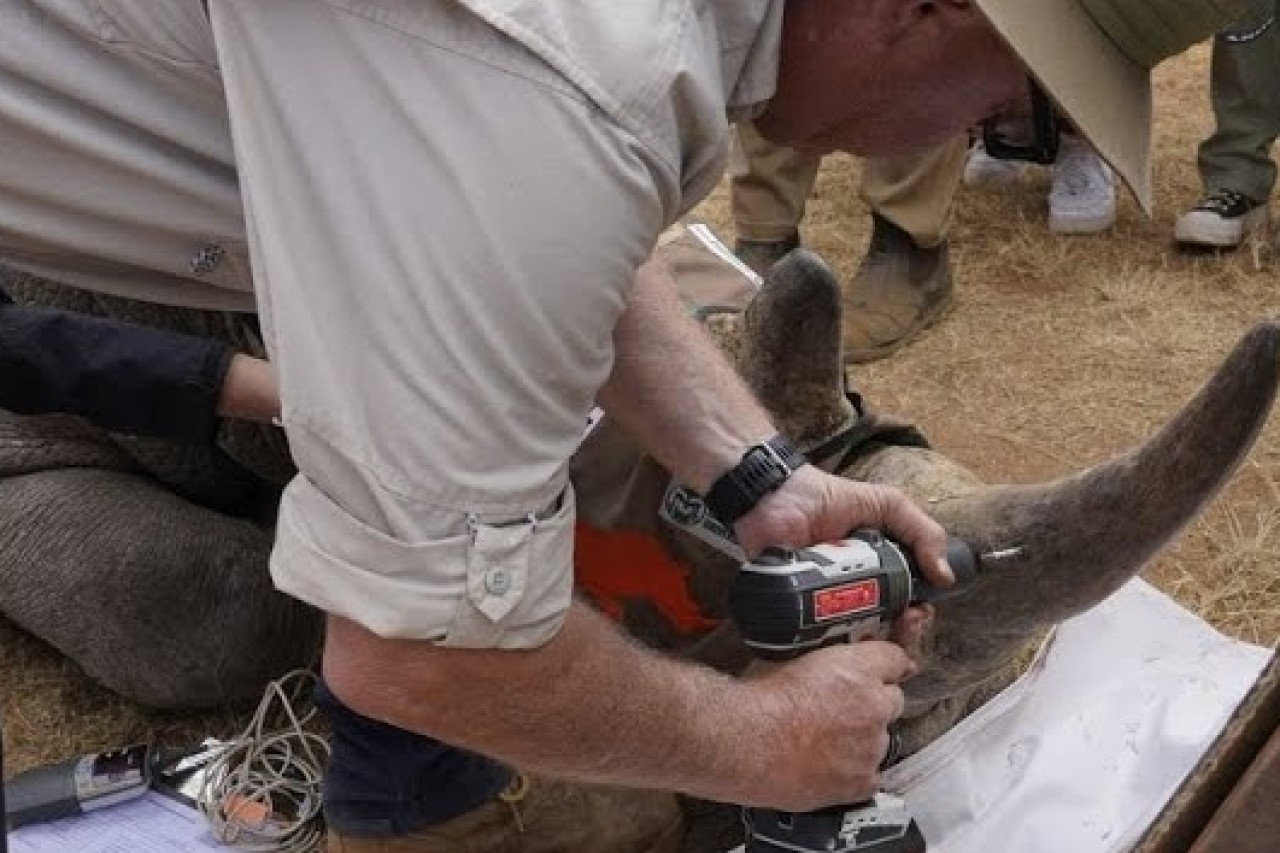
Instead, radioactive isotopes were incorporated into the horns of rhinos at a breeding station in the northern province of Limpopo. The idea is that the radiation emitted by these isotopes will identify anyone crossing a border as the holder of a rhino horn.
It is a superior form of tracking, because even if the tracker is removed, the radiation remains on the horn and on everything it comes into contact with.
Nuclear researchers from the Department of Radiation and Health Physics at the University of the Witwatersrand in South Africa have injected these isotopes into 20 living rhinos.
«We are doing this because it makes it considerably easier to intercept these horns when they are being smuggled across international borders, as there is a global network of radiation monitors developed to prevent nuclear terrorism», explained Professor James Larkin, who leads the project, to Africa News. «And we are taking advantage of that.»
Larkin adds that innovations to prevent poaching are urgently needed, as all existing methods have their limitations and South Africa still loses dozens of rhinos every year.
Professor Nithaya Chetty, Dean of the Faculty of Science at the Witwatersrand, said the dose of radioactivity is very low and its possible negative effects on the animal have been extensively tested.
While elephants are poached for their ivory, which represents a unique material for sculpture and craftsmanship, rhinoceros horns are smuggled to criminal groups in Asia, who sell them in the mistaken belief that they contain therapeutic properties.
Critics question effectiveness
Critics questioned the effectiveness of the method, as poachers had found other ways to smuggle rhinoceros horn out of the country or off the continent, according to Pelham Jones of the South African Private Rhino Owners Association. «They bypass the border crossings because they know that is the area with the highest risk of seizure or interception,» said Jones.
Rhino poaching on the rise again
According to conservationists, there are approximately 27,000 rhinoceroses worldwide, with an estimated 16,000 living in South Africa. Around 500 are killed there each year. Rhino poaching in South Africa has increased significantly again after a decline during the pandemic.
More on the subject of recreational hunting: What the research says about this is shown by Hunting fact-checked: the state of research.
The position of IG Wild beim Wild: IG Wild beim Wild rejects recreational hunting. Our model is the canton of Geneva, which has managed without recreational hunting since 1974: without hunting seasons, without hunting dogs, without driven hunts, without high seats, without the animal cruelty and crime that go hand in hand with hunting season elsewhere. What has worked there for over fifty years disproves every position paper by JagdSchweiz. An association that bases its policy on claims it refutes in its own documents is not a professional organisation, but a factory for misinformation.