Results of Lynx Monitoring Central Switzerland West
From mid-December 2023 to mid-February 2024, a lynx monitoring survey took place for the fifth time in the so-called large predator compartment Central Switzerland West. This monitoring uses a network of camera traps to determine lynx density. Compared to the recordings in winter 2020/2021, the determined lynx density in the reference area is slightly higher, but lower compared to earlier monitoring surveys.

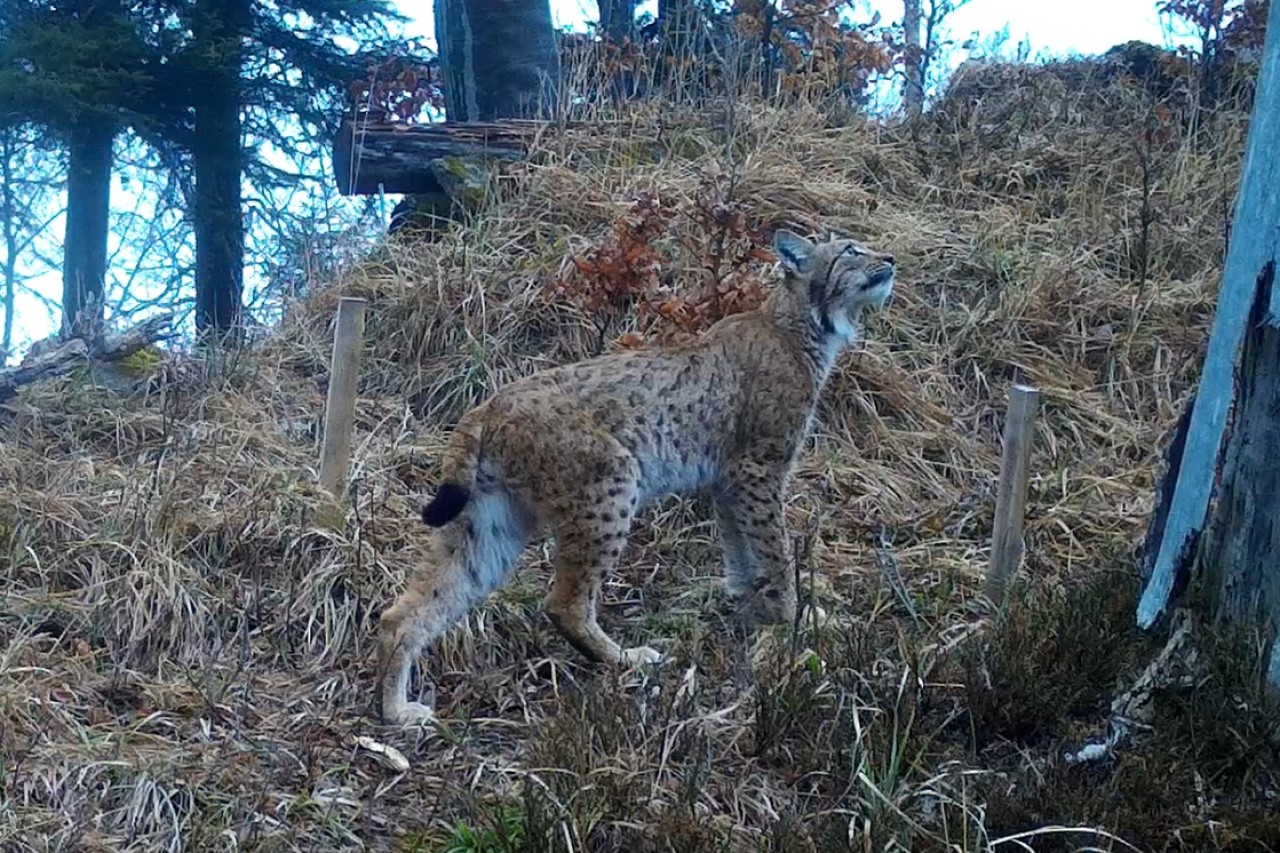
In the so-called deterministic lynx monitoring, lynx density is calculated on the basis of photographic evidence.
The photos are collected using a standardised camera trap network. In Switzerland, lynx habitats are divided into so-called sub-compartments (see Lynx Switzerland concept, BAFU 2016). The reference area Central Switzerland West covers parts of the cantons of Bern, Obwalden and Lucerne. In this area, a total of 74 locations were selected with the assistance of the wildlife wardens and local recreational hunters, each equipped with 2 camera traps per location. The camera traps were deployed for 60 nights from 13 December 2023 to 11 February 2024. These population surveys are carried out on behalf of the federal government as a rule every four years by staff of the foundation KORA using the photographic capture-recapture method to estimate the number and density of lynx occurrences.
Lynx density on the rise again
In total, 93 photos of lynxes were taken within 60 nights across the territory of the three cantons, documenting eleven distinct (independent) lynxes and three, possibly four, juveniles from at least two litters. The lynxes were photographed at 33 of the 74 locations. Most locations with lynx records are situated in the centre of the reference area, north of Lake Brienz, northwest of Lake Sarnen, and in the upper Entlebuch region. In the Emmental (western reference area), lynxes could only be photographed at two locations. In the northeastern part of the reference area (region around Pilatus, northern Entlebuch), only a few lynxes were photographed as well, and some locations yielded no lynx records at all.
The lynx density in the reference area averaged 1.16 independent lynxes per 100 km². This density value rises to 1.35 lynxes per 100 km² when only suitable habitat is taken into account. Compared to the last monitoring survey of 2020/21, this value increased significantly and comes fairly close to the figure from the 2018/19 survey. However, the density was still lower than the values recorded during the monitoring winters of 2012/2013 and 2015/2016.
More on the subject of recreational hunting: In our dossiers on recreational hunting gather fact-checks, analyses and background reports. What the research says about this is shown by Hunting fact-checked: the state of research.
The position of IG Wild beim Wild: IG Wild beim Wild rejects recreational hunting. Our model is the canton of Geneva, which has managed without recreational hunting since 1974: without hunting seasons, without hunting dogs, without driven hunts, without high seats, without the animal cruelty and crime that go hand in hand with hunting season elsewhere. What has worked there for over fifty years disproves every position paper by JagdSchweiz. An association that bases its policy on claims it refutes in its own documents is not a professional organisation, but a factory for misinformation.