Pesticides in flea treatments for pets kill songbirds
Chemical found in flea and tick treatments for pets is discovered in the nests of blue tits and great tits, killing chicks.

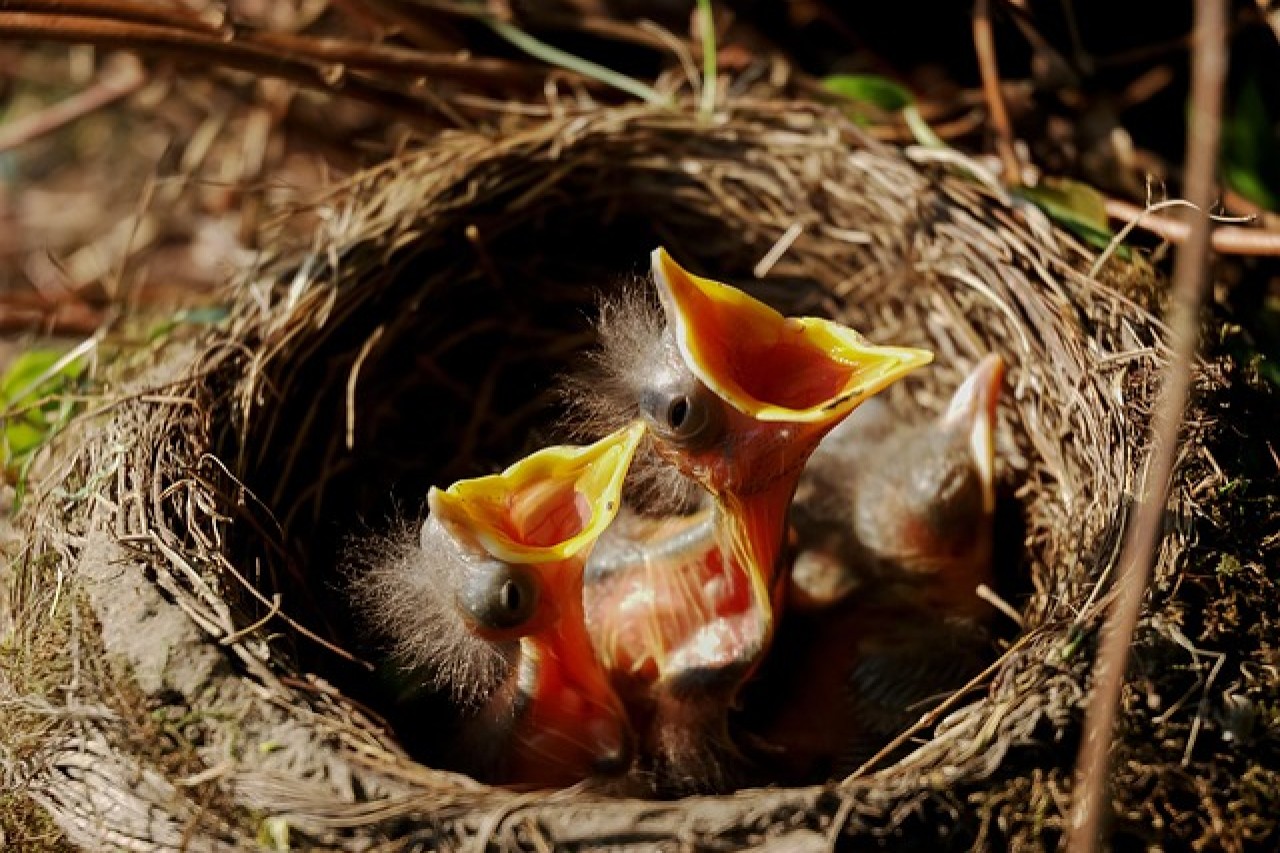
According to a study songbird chicks are being killed by high concentrations of pesticides in animal fur, which their parents use to line their nests.
Researchers examined nests for the harmful chemical found in flea treatments for pets and discovered it was present in every single nest.
Dog fur in the nest becomes a death sentence
Combing the dog on a walk and leaving the undercoat directly for nesting parent birds to use: what is well-intentioned and eagerly accepted by industrious bird pairs is often a death sentence for young birds.
Scientists at the University of Sussex are now urging the government to urgently reassess the environmental risk of pesticides used in flea and tick treatments and to restrict their use. In Switzerland too, biodiversity is threatened by pesticides.
Cats and dogs are frequently treated with insecticides to protect them from fleas. Veterinarians often recommend regular flea treatments as a preventive measure, even when dogs and cats are not actually infested with the parasite.
Scientists are now recommending, however, that animals should only be treated for fleas when they actually have them. It was already widely known that the chemicals in the treatments affect life in rivers and streams after pets have swum in them, but the discovery of contamination in songbird nests is set to increase pressure further.
Cannelle Tassin de Montaigu, the lead author of the research paper, said:
«In our study, not a single nest was free of insecticides, and this significant presence of harmful chemicals could have devastating consequences for bird populations in the United Kingdom. Our investigation shows that, based on the chemicals identified, veterinary flea and tick treatments are the most likely source of contamination. We conducted our investigations at a time when it was safe to do so — namely at the end of the breeding season — meaning the problem could in reality be far greater. This raises questions about the environmental impact of veterinary medicines and requires a comprehensive assessment of their environmental risks.»
100 percent of nests contaminated with fipronil
The study, funded by the charity SongBird Survival and published in Science of the Total Environment shows that the fur birds use to line the interior of their nests contained chemicals used in flea treatments for pets, such as fipronil.

The researchers collected 103 blue tit and great tit nests lined with fur and found that 100% of the nests contained fipronil, which is banned for agricultural use in the United Kingdom and the EU, and 89% contained imidacloprid, which was banned as a pesticide in the EU in 2018. Both are still widely used in flea treatments for pets. More on environmental and nature conservation.
The British government is planning a complete ban on imidacloprid in agriculture, but not for the treatment of pets. The researchers also detected 17 of the 20 insecticides they had tested for. In nests where more insecticides were present, scientists found a higher number of unhatched eggs or dead chicks.
Call for comprehensive environmental impact assessment
Recent research has found that these flea treatments also enter rivers and kill the animals living in them, and that pet owners who use these products risk contaminating their hands with the chemicals for at least 28 days after application. Sue Morgan, Chief Executive of SongBird Survival, said:
«We are a nation of animal and bird lovers, and it is extremely concerning to see the alarming quantities of toxic pesticides in bird nests originating from veterinary medicines. Pet owners will be dismayed to learn that in trying to do the right thing to protect their pets from fleas and ticks, they could be harming our ecosystem, resulting in dead newborn chicks and unhatched eggs. Our songbirds in the United Kingdom are in crisis. More than half of British songbirds are threatened or already in decline, which is why this latest research shows how important it is to act as quickly as possible. We call on the government to carry out a more comprehensive environmental impact assessment of veterinary medicines.»