Lamb's Lettuce: The Healthy Champion
Lamb's lettuce is at its peak during the cold season. However, as one of the few crops, it is available all year round.

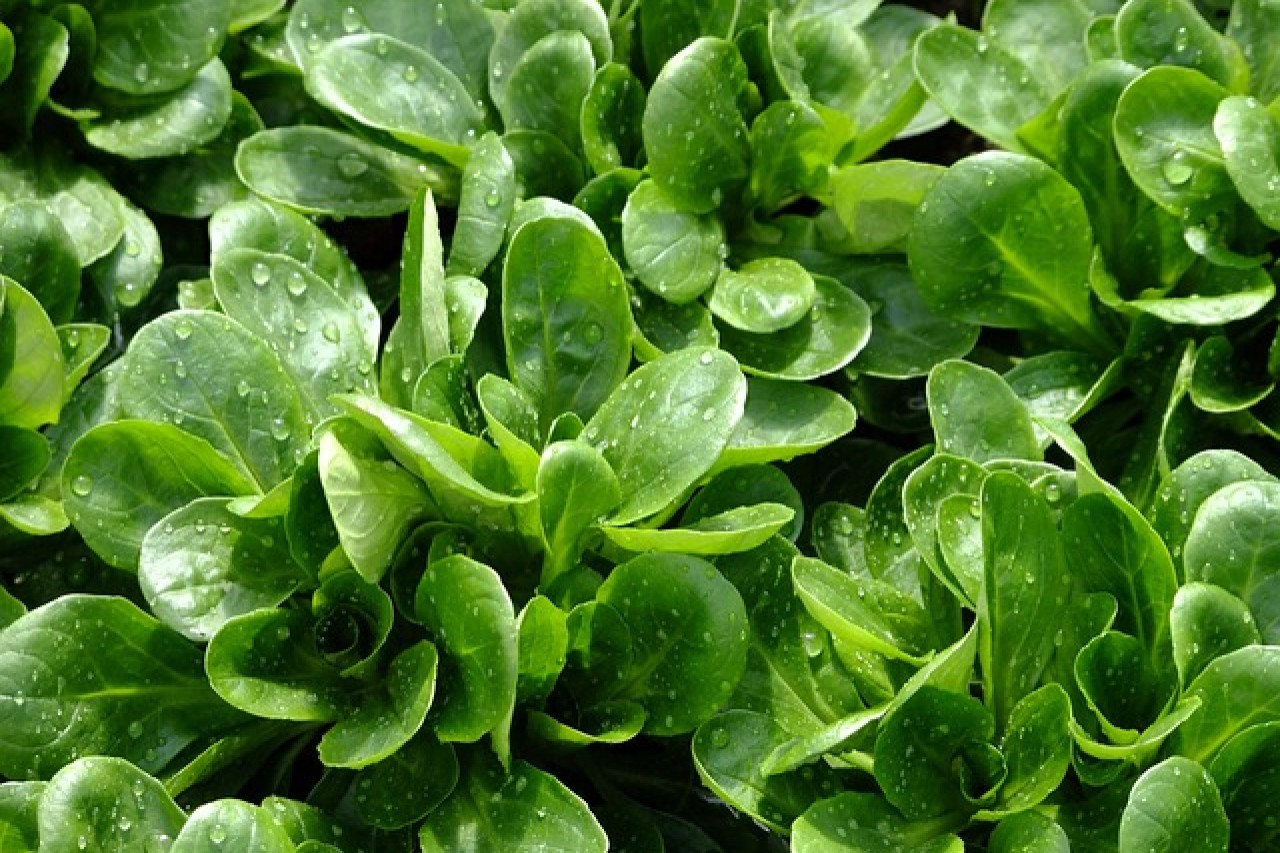
Lamb's lettuce originally comes from Eurasia, where it still grows widely in its wild form to this day.
In cultivated form, it has been known since the Middle Ages. Previously, it grew in fields as a weed, was picked and prepared as a salad in the kitchen.
Too Many Varieties to Count
By now, the varieties of lamb's lettuce are so numerous that their exact number cannot even be determined. According to some sources, there are more than 200 different varieties. These differ primarily in yield, flowering time, shape and harvest time.
The variety ‘Dunkelgrüner Vollherziger’ is fast-growing and productive. The variety ‘Gala’ is particularly robust and winter-hardy. The variety ‘Korbfüller Duplex’ develops full-hearted rosettes. The variety ‘Vit’ is suitable for autumn and winter cultivation.
In addition to lamb's lettuce, it is also known under the names corn salad, field salad, rapunzel, Vogerlsalat, Schafmaul and Rebresse Mäuseöhrchen. This diversity shows that it is widely distributed and valued.
A Popular Winter Salad
In Switzerland, lamb's lettuce is one of the most popular winter salads, and encouragingly, the majority of the leaves sold come from Switzerland. Swiss vegetable producers grow lamb's lettuce throughout the year. The robust salad withstands temperatures down to -15 degrees.
For vegetable producers, lamb's lettuce is an important crop: in 2023, it ranked first among salads with a turnover of just over 61 million francs. plant-based nutrition is also gaining increasing importance in Switzerland.
In this country, around 3’500 tonnes of lamb's lettuce are grown on just over 450 hectares, of which around 16 percent is produced in organic farming. Of the total production, just over 40 percent of lamb's lettuce grows in greenhouses.
The Vitamin Champion Among Salads
Lamb's lettuce provides our body with many nutrients and vitamins. A single serving covers nearly 30 percent of our daily requirement of vitamin C. This far exceeds iceberg lettuce, which covers only about 7 percent. It also scores highly with significant amounts of potassium, vitamin B6, magnesium, phosphorus, zinc, and copper. Furthermore, lamb's lettuce is an excellent source of iron. Further information on plant-based nutrition and legumes.
We traditionally know lamb's lettuce served with bacon, egg, and croutons. However, cheese and mushrooms also pair excellently with its nutty flavour. A somewhat different variation is warm lamb's lettuce salad. To prepare it, briefly sauté the leaves in a little butter and serve them as a warm vegetable side dish, similar to spinach.