Karl Lüönd: Publicist, Hobby Hunter and His Legacy
Death has come for Swiss publicist and hobby hunter Karl Lüönd, but his words remain. For him, hunting was "like picking an apple." The killing of wild animals was a kind of harvest that was "right" in his worldview. Now, especially after his death, it's worth taking a sober look at these metaphors: What do they reveal about the psyche of hobby hunters, the handling of violence against animals, and the societal normalization of killing?

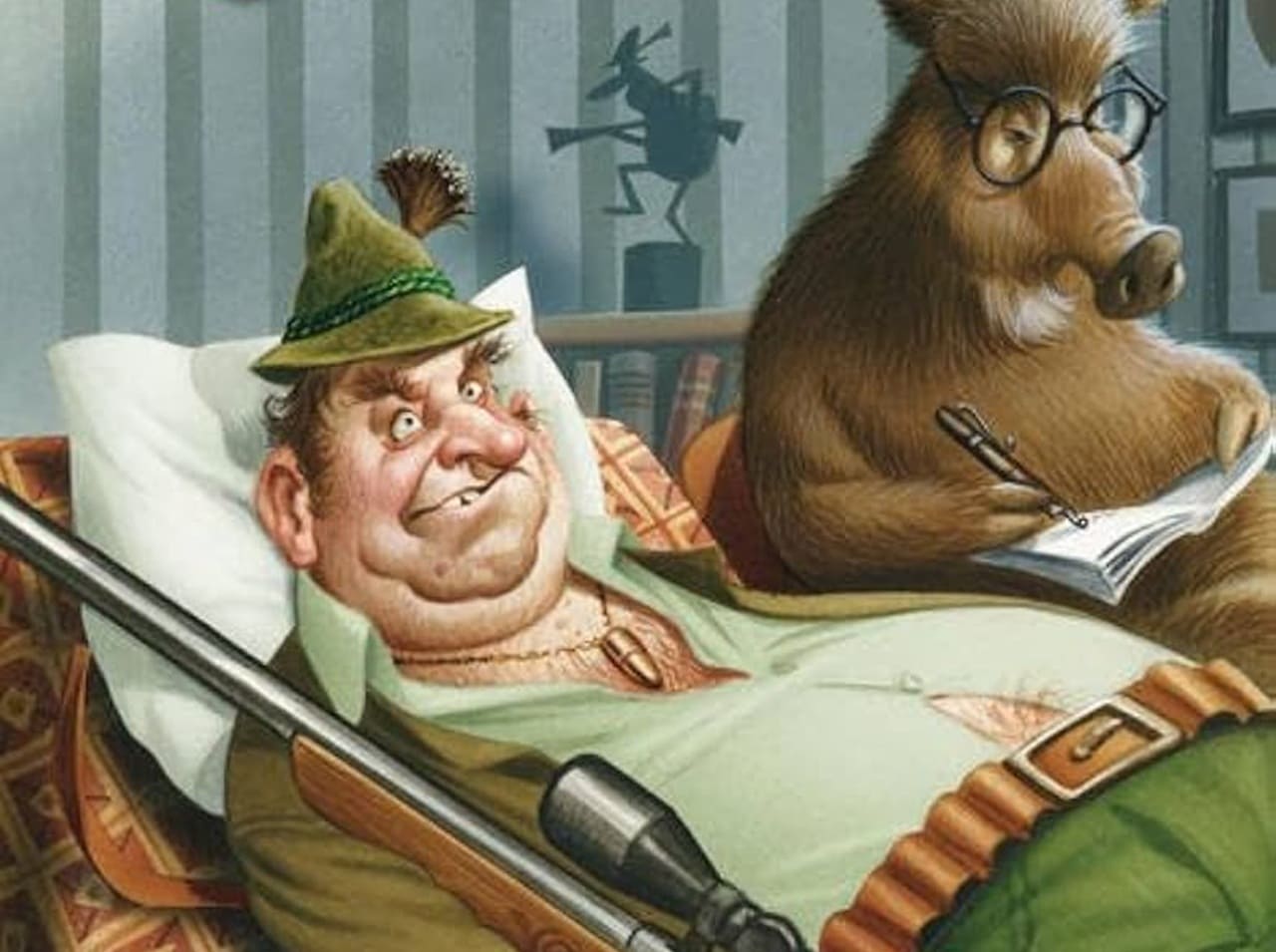
Karl Lüönd was considered an influential Swiss journalist and non-fiction author for decades, commenting on and portraying the media, politics, recreational hunting and business.
In parallel, he maintained a hunting double life, presenting himself publicly as an experienced hobby hunter and defending recreational hunting as an "active nature experience" and cultural technique.
Explosive are those passages in which he linguistically trivialized the act of killing: Shooting an animal was for him like picking a ripe apple, a harvest that had its place in his worldview. In other statements he emphasized that he had 'never taken pleasure in killing' and had to justify the killing, while simultaneously admitting to decades of hunting practice and hunting trips to Africa.
With his death, Lüönd is honored in many places primarily as an influential publicist. His hunting passions and the way he spoke about killing are hardly discussed. Yet precisely these quotes show how deeply a generation of opinion makers was rooted in a hunting mentality that romanticizes, trivializes and morally displaces violence against wild animals. This legacy continues beyond his death, including in the minds of younger recreational hunters.
When killing sounds like 'picking apples'
The equation of animal shooting with apple harvesting is more than an unfortunate metaphor. It reveals a radical devaluation of the animal individual: A sentient being with capacity for fear and pain is linguistically pushed into the same category as an inanimate product on a tree.
Psychologically, this can be read as cognitive dissonance reduction. One's self-image ('decent citizen', 'sensitive person') doesn't match the behavior (killing animals for pleasure or passion). To endure this tension, language is twisted so that violence disappears: killing becomes harvesting, blood becomes nature, the victim becomes a 'piece of game'.
Added to this is what social psychologists describe as moral disengagement: The victim is anonymized, the act is packaged in technical terms ('making bag', 'regulating population'), responsibility is delegated to tradition, law or 'nature'. In Lüönd's image of picking apples, many of these mechanisms converge: a seemingly harmless image that conceals the core of the action: the deliberate ending of a life.
'No fun in killing' yet hunting safaris
Particularly contradictory appears the frequently repeated assertion that there is 'no fun' in killing animals, alongside simultaneous hunting passion pursued for years, including booked hunting trips to Africa. Someone who finds no pleasure in killing doesn't book expensive hunting safaris, doesn't travel halfway around the world to shoot antelopes, kudus or other wild animals.
Bookings of such trips are not random side effects, but the core of a product: The opportunity to kill specific animals under controlled conditions and stage them as trophies is specifically sold. Anyone who repeatedly makes use of this experiences the entire process: journey, stalking, shot, trophy, social recognition as rewarding, even if they publicly deny any 'fun in killing'.
This is precisely where the discrepancy between self-presentation and behavior becomes obvious. The scene knows a whole palette of justifications for this: One travels 'for the nature experience', 'for the culture', 'for species conservation'. In reality, animals are specifically offered for shooting, wild animals are economized, habitats are made into backdrops. That the scene cannot endure these contradictions but linguistically recodes them is a central motif of hunting-critical analysis.
What brain research and psychology say about recreational hunting
Neuroscientific studies show that repeated acts of violence against humans or animals can be associated with measurable emotional numbing. Alarm reactions to screams, flight behavior and visible suffering become weaker, while cognitive justifications and routine procedures become more dominant.
For a human to become a recreational hunter can be done, for someone who regularly kills animals in their spare time, this natural empathetic impulse must be overridden. This is achieved through cultural narratives ('tradition', 'stewardship', 'hunting as cultural heritage'), social rewards within hunting circles, and the aforementioned metaphors that dissolve violence into harmless imagery.
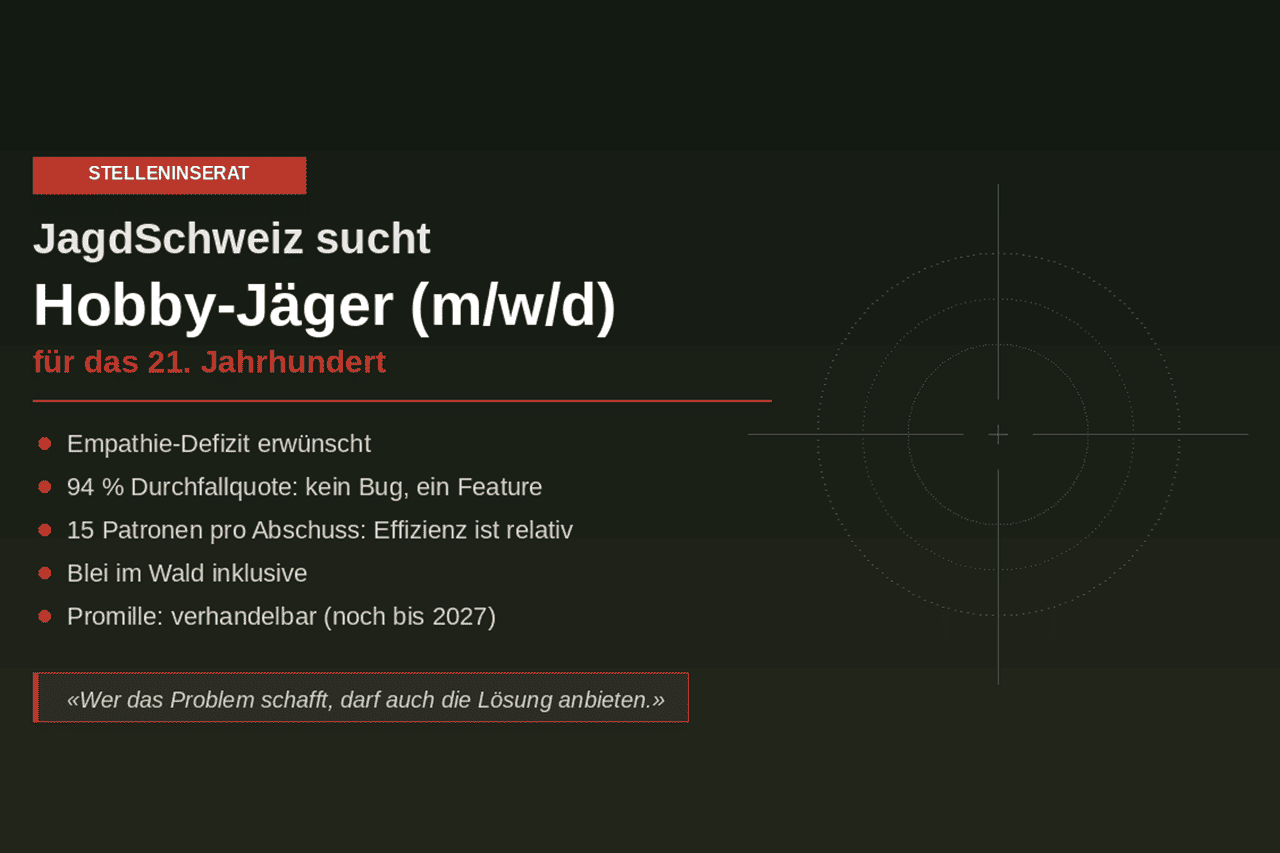
Analyses of hobby hunters, as summarized on wildbeimwild.com, also point to overlaps with so-called dark personality traits (narcissism, Machiavellianism, psychopathy) in parts of the scene: pleasure in control and dominance, instrumental treatment of suffering, need for superiority and status. This does not mean that 'every hobby hunter is a psychopath', but it does mean that a recreational activity based on killing particularly well serves and reinforces such structures.
In this light, Lüönd's statements appear less as personal slips, but rather as an exemplary concentration of a system that systematically downregulates empathy in order to make the killing of wild animals feel 'normal'.
Personality disorder or symptom of a system?
Legally and ethically sound is being restrained with clinical diagnoses regarding individuals, especially posthumously. Whether Karl Lüönd had a personality disorder in the strict psychiatric sense can only be assessed by professionals who examined him personally.
What can be described, however, are patterns that his statements and actions share with the broader hobby hunting scene: trivializing killing, reframing violence as harvesting, emphasizing culture and tradition while simultaneously ignoring individual animal suffering. In this sense, Lüönd is less interesting as an isolated case, but rather as a symptom of a hunting ideology deeply anchored in bourgeois circles.
A system-critical approach focuses precisely on this: Not the 'evil individual perpetrator', but a socially accepted recreational model that aestheticizes, ritualizes and elevates the killing of animals with meaning. Lüönd's metaphors serve as illustrative material for this, and they will continue to be quoted after his death, whether as justification or as a deterrent example.
Hobby hunters, death and responsibility after Lüönd's passing
'Whoever kills must justify it' - this sentence, which Lüönd himself formulated, gains additional sharpness after his death. He can no longer respond to criticism, no longer adjust his narrative. What remain are published sentences, books, interviews and a hunting story that must be measured against them.
The task of critical public discourse does not end with the death of a prominent hobby hunter. On the contrary: Especially when obituaries produce blind spots, media are needed that expose the hunting passion, the metaphors and the contradictions. It is not an attack on the person to state matter-of-factly: Whoever compares killing wild animals to picking apples has moved far away from compassion for the individual animal.
For modern wildlife policy, this means recognizing wild animals as sentient individuals, reducing hunting pressure and recreational killing, and naming the psychological costs of hobby hunting for animals and humans. Karl Lüönd's death marks the end of a life, but not the end of a debate. His words remain as a lesson in how normalized the killing of wild animals still is in parts of society and how necessary it is to openly name this supposed normality and overcome it politically.
Support our work
With your donation you help protect animals and give voice to their cause.
Donate now →