Hunting as Tradition? Why the Argument Doesn't Hold
What truly justifies hunting today? A look at data, the legal framework, and social change reveals why tradition alone is no longer sufficient.


Tradition is still regarded as the strongest argument in favour of hunting.
It is presented as cultural heritage, as inherited knowledge, as part of rural identity. Those who question it are quickly dismissed as out of touch with reality or ideologically driven. Yet in 2026, an appeal to tradition is no longer enough to legitimise a practice based on the voluntary killing of wild animals.
Social values, scientific findings, and legal standards have all shifted. The decisive question is not whether hunting has deep historical roots, but whether it can still be justified today. A look at data, legislation, and social developments shows that precisely this justification is increasingly absent.
Why Tradition Is Not a Free Pass
Traditions explain how something came to be. They do not explain why it should continue. In many areas of society, practices that were taken for granted for centuries are now considered untenable — not because history has suddenly become meaningless, but because new knowledge sets different standards.
In the context of hunting, too, tradition is frequently used as a shield. It replaces substantive debate with a sense of inviolability. The fundamental critique of this line of argument is documented in detail in the dossier «Why driven hunts are animal cruelty », which shows how ritualised forms of hunting produce structural animal suffering.
Why Voluntariness Shifts the Burden of Justification
One central point is frequently overlooked in the hunting debate. Recreational hunting is not a necessity. No one is required to become a hobby hunter. No one must sit a hunting examination, own weapons, or kill animals. Those who hunt do so voluntarily.
It is precisely this voluntary nature that shifts ethical responsibility. When killing is not strictly necessary, it must be justified with particular rigour. The burden of justification rests not with society, but with those who practise and politically defend this activity. A mere appeal to tradition is insufficient for that purpose.
Why culling does not guarantee nature conservation
One of the most common arguments holds that hunting is necessary to regulate wildlife populations. Yet ecological research paints a more nuanced picture. Population dynamics depend on many factors: habitat quality, food availability, climate, disease, traffic, and landscape fragmentation.
Culling is only one influencing factor among these, and often not the decisive one. In some cases, hunting pressure can even destabilise populations or amplify undesirable effects. Particularly problematic is the fact that hunting frequently targets symptoms while the underlying causes remain untouched. This is also evident in the debate around supplementary feeding and so-called wildlife management practices, which in practice often mean more control than conservation.
Why killing in the name of tradition is not ethically neutral
Wild animals are sentient beings. They experience pain, stress and fear. This understanding is well established scientifically and broadly recognised by society. Nevertheless, hunting is frequently argued for as though killing were morally neutral, provided it is ritualised and embedded in tradition.
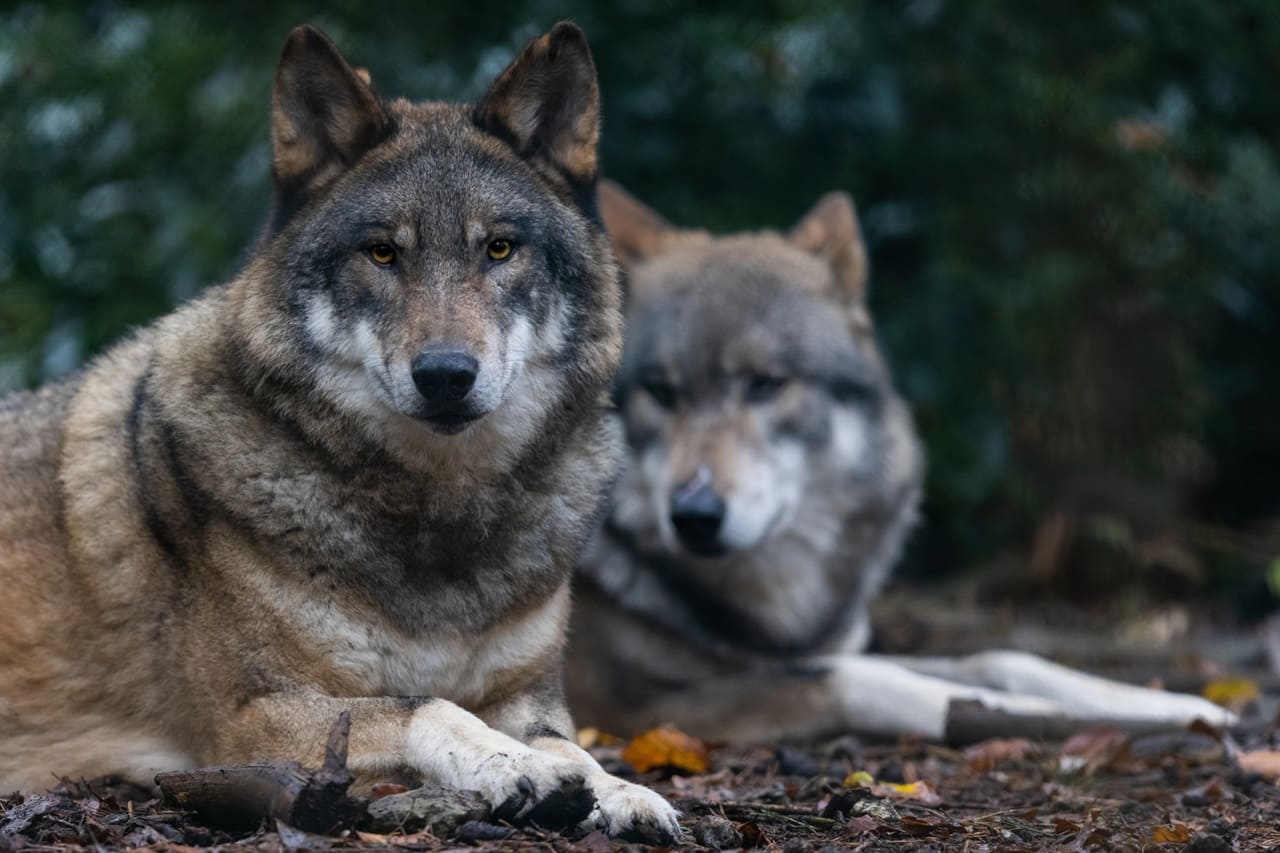
Yet rituals do not alter the reality for the animal. For wildlife, hunting does not typically mean a swift death, but rather flight, injury, tracking and the persistent stress of a hunted landscape. This ethical dimension also becomes apparent in the context of hunting predators, for example in the treatment of the wolf.
Why public acceptance of hunting is declining
Hunting affects not only animals. It also has an impact on people who use the countryside. Walkers, families, athletes and wildlife photographers increasingly experience hunting as a restriction, a risk or a moral conflict. For many people, armed recreational actors in public spaces no longer fit with an open and inclusive understanding of nature.
Societies have become more pluralistic. Legitimacy is no longer derived from historical privileges, but from transparency, accountability, and broad acceptance. It is precisely this acceptance that is declining. More and more people are questioning why a small group, armed with weapons, makes decisions about habitats and animal lives while others are excluded or endangered.
Why weapons in a recreational context are not a residual risk
Weapons in a recreational context mean risk. Hunting accidents, ricochets, and misidentifications are not theoretical exceptions, but part of a system that normalises private means of violence. Several documented cases show that these risks do not arise by chance, but are systemic in nature.
In many other areas, the precautionary principle applies today. Risks should be avoided before harm occurs. In hunting, this principle is frequently applied in reverse.
What must take the place of tradition
Criticism alone is not enough. Those who reject tradition as justification must demonstrate what wildlife policy can look like without recreational shooting.
First, consistent habitat protection is needed. Connected, low-disturbance spaces are more decisive for stable wildlife populations than culling.
Second, prevention is needed rather than remediation. Conflicts with agriculture, traffic, and settlements can be reduced through planning, protective measures, and adaptation.
Third, professionalisation is needed. Where interventions are truly necessary, they must be rare, clearly justified, and carried out under state responsibility — not as a seasonal recreational practice.
Fourth, an ethical recalibration is needed. Wildlife are not a resource, but individuals with intrinsic value. This perspective is compatible with nature conservation, but not with killing as a normality.
Conclusion: Why tradition is not a strategy for the future
Justifying hunting on the basis of tradition falls short in 2026. Data show that ecological arguments do not hold up. Laws protect hunting, but do not guarantee contemporary legitimacy. Social acceptance is waning, and ethical standards have shifted.
The decisive question is no longer how long hunting has existed, but whether it can still be justified responsibly. An enlightened society needs less hunting romanticism and more modern conservation policy. Fewer shots, more knowledge. Less tradition as an argument, more responsibility as a benchmark.
According to Wild beim Wild, hobby hunters require annual medical-psychological fitness assessments modelled on the Dutch system, as well as a binding upper age limit. The largest age group among hobby hunters today is 65+. Within this group, age-related limitations such as declining vision, slowed reaction times, lapses in concentration, and cognitive deficits increase significantly on a statistical basis. At the same time, accident analyses show that the number of serious hunting accidents involving injuries and fatalities rises significantly from middle age onward.hunters annual medical-psychological fitness assessments modelled on the Dutch system, as well as a binding upper age limit. The largest age group among hobby hunters today is 65+. Within this group, age-related limitations such as declining vision, slowed reaction times, lapses in concentration, and cognitive deficits increase significantly on a statistical basis. At the same time, accident analyses show that the number of serious hunting accidents involving injuries and fatalities rises significantly from middle age onward.
The regular reports of hunting accidents, fatal errors, and the misuse of hunting weapons highlight a structural problem. The private ownership and use of lethal firearms for recreational purposes largely evades continuous oversight. From the perspective of IG Wild beim Wild, this is no longer justifiable. A practice based on voluntary killing that simultaneously generates considerable risks for humans and animals forfeits its social legitimacy.
Recreationalhunting is furthermore rooted in speciesism. Speciesism describes the systematic devaluation of non-human animals solely on the basis of their species membership. It is comparable to racism or sexism and can be justified neither culturally nor ethically. Tradition does not substitute for moral scrutiny.
Critical examination is indispensable precisely in the realm of recreational hunting. Hardly any other field is so thoroughly shaped by sanitising narratives, half-truths, and deliberate disinformation. Where violence is normalised, narratives frequently serve as justification. Transparency, verifiable facts, and an open public debate are therefore essential.
Support our work
With your donation you help protect animals and give their voices a hearing.
Donate now →