Hunting Joggers: The Principle of Harassment Remains
On January 13, 2026, ZDFheute Xpress showed a report from Great Britain that initially appears like an odd footnote: At an event, human runners serve as 'substitute prey,' pursued by riders and hounds. A race where, according to ZDF, 'no animal is harmed.'

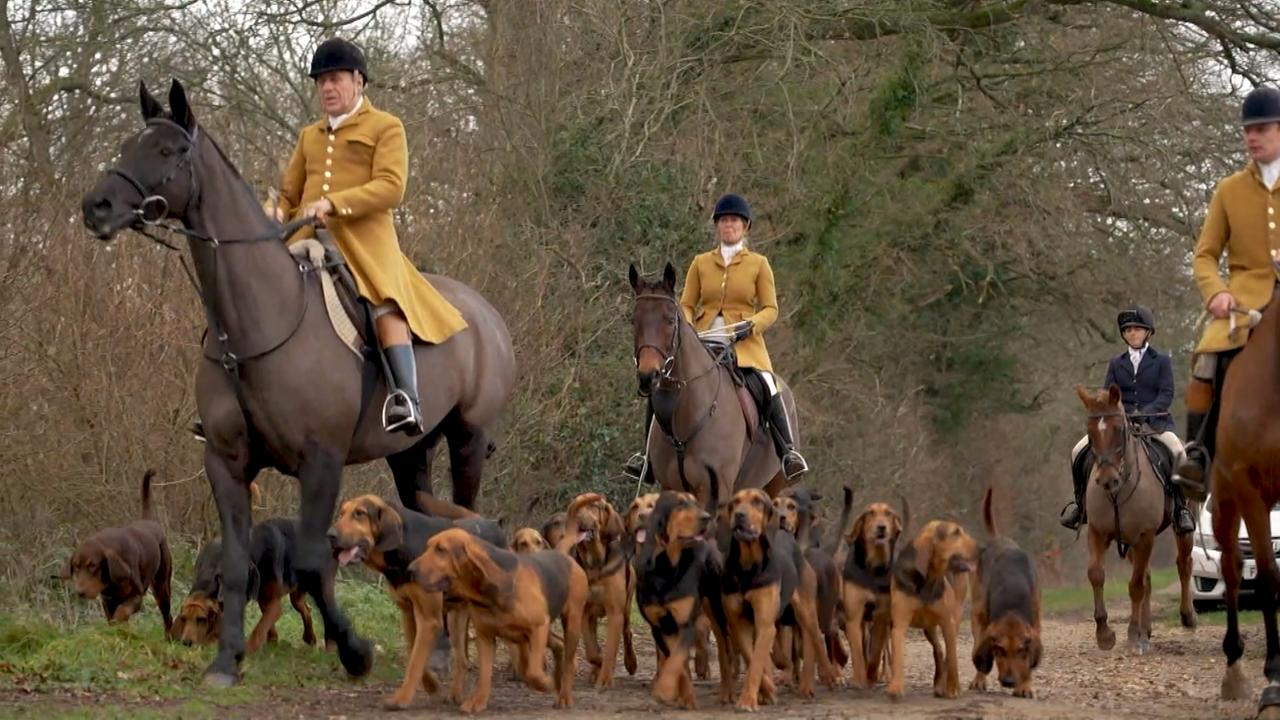
Yet precisely this staging reveals what recreational hunting often is at its core: not 'stewardship,' not 'tradition,' but the thrill of the chase.
The wild animal disappears from the picture, but the pattern remains.
What's actually happening: Recreational hunting without foxes, but with hounds
Since the legal ban on traditional fox hunting with hounds in England and Wales through the Hunting Act 2004, hunting associations and hunting enthusiasts have been seeking substitute formats. These include legal forms like drag hunting, where an artificial scent trail is laid that the hounds follow, instead of harassing an animal.
And there is that practice that has caused controversy for years: Trail Hunting. Officially, the pack follows an artificial scent trail, but critics frequently see this as a loophole for the de facto continuation of fox hunting.
The «hunt for runners» fits into this environment. It shows a scene that presents itself as modern and «animal-friendly» but carries the same symbolism: dogs, riders, audience, adrenaline, hierarchy.
The ethics question: «No animal harmed» is insufficient as a standard
The central claim is convenient: If no fox dies, everything is harmless. But ethics does not end only at bloodshed. Those who view recreational hunting as a social ritual recognize here a shift, not an abandonment:
- Normalization of the chase: Recreational hunting is narrated as a game. The hunting motif is aestheticized and depoliticized.
- Training and culture: Dogs remain conditioned for pursuit, riders practice formations, youth grow up into the ritual.
- Message: The attraction visibly lies not in «game meat» but in dominance, speed, control.
Those who seriously justify recreational hunting with «wildlife management» face a problem here: This event has nothing to do with management. It is a stage.
Why this also concerns us: Recreational hunting is a narrative that migrates
In Switzerland, debates about recreational hunting are frequently conducted with terms like «wildlife stewardship» or «population regulation.» But parallel to this operates a strong visual culture: recreational hunting as sport, recreational hunting as event, recreational hunting as «experience.» The British scene shows how flexible this narrative is: When fox hunting is banned, the ritual is rebuilt.
And those who believe «events» are a British curiosity should look more closely at how much certain forms of battue hunting here also rely on staging, group dynamics and performance pressure.
The political level: loopholes, lobby pressure and the next ban
Great Britain continues to struggle with how effective the Hunting Act is in practice. Trail Hunting is under political pressure because animal protection organizations and parts of the public view it as circumvention. The debate is instructive: A ban alone is not enough when the culture immediately builds a substitute action that «looks legal» yet serves the same purpose.
Conclusion: The fox is gone, recreational hunting remains
The «hunt for joggers» is not simply bizarre. It is revealing. It shows that recreational hunting as a system will, if necessary, find a new object, as long as the dramaturgy remains: trail, pack, pursuit, triumph.
For animal protection this is a warning signal. Not only because animals can still be affected when such formats stabilize hunting practices. But because society is being accustomed to a worldview in which the chase is entertainment.
Source: ZDFheute Xpress, «Bei diesem Event wird Jagd auf Jogger gemacht», 13.01.2026.
Support our work
With your donation you help protect animals and give voice to their cause.
Donate now →