Italy: Scandalous Conditions in Rabbit Farming
In Italy, animal welfare organisations are uncovering scandalous conditions in rabbit farming. The animals suffer under cruel intensive husbandry practices.

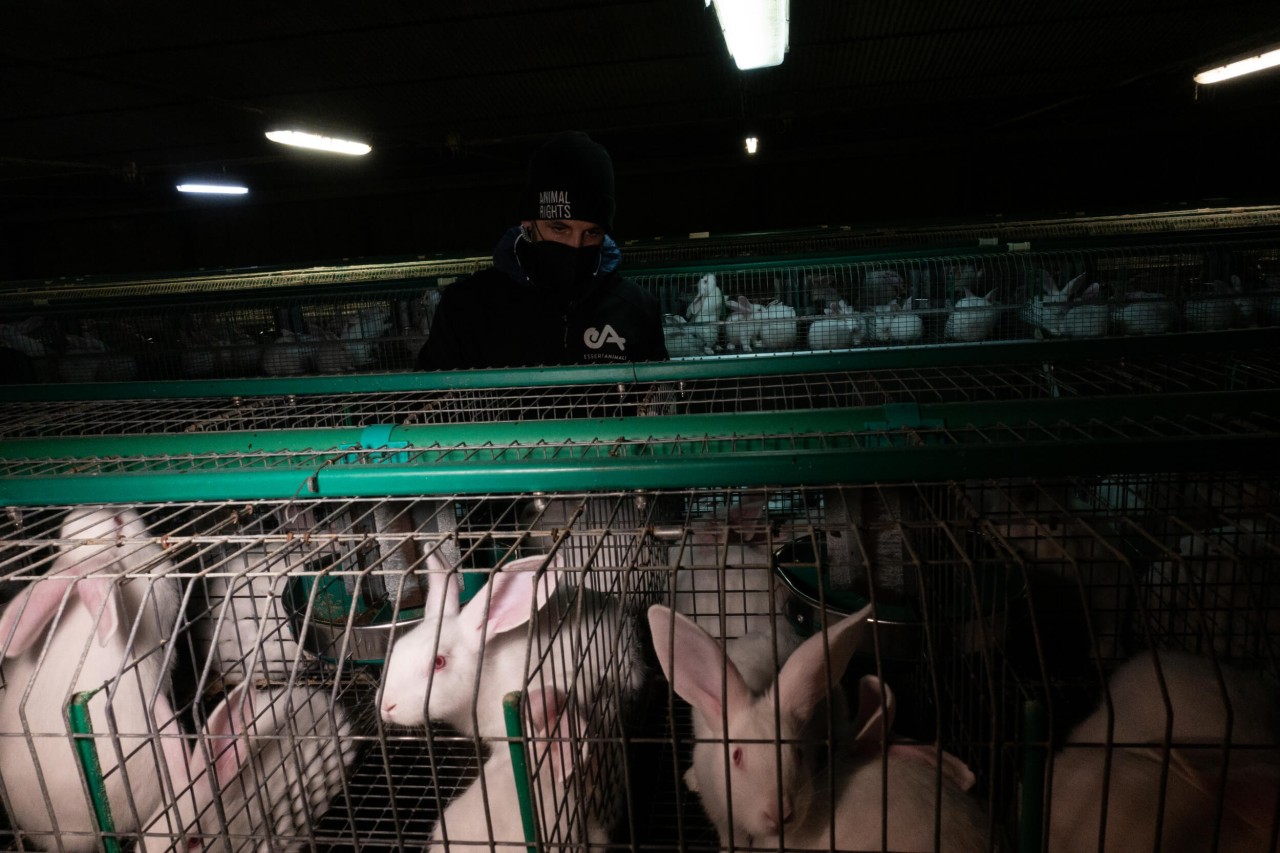
A new investigation documents the conditions of rabbits bred for meat production in Italy: crammed and injured in battery cages.
The Italian coalition in support of «End the Cage Age« – the European Citizens' Initiative (ECI) calling for an end to cage farming of animals for food production – has published a new investigation carried out at seven Italian rabbit farms. The coalition is urging the Italian government to urgently introduce a national ban on cage farming and to support the commitment of the EU Commission.
The footage was filmed between September 2021 and April 2022 by investigators at facilities in Veneto (the region accounting for over 40% of national rabbit production), Lombardy, and Emilia-Romagna, in order to provide a complete picture of the living conditions of rabbits bred for meat production in Italy.
Italy is one of the largest producers of rabbit meat in Europe, with approximately 20 million rabbits kept in undignified cages. Male breeding animals spend around two years of their lives under these conditions before being slaughtered. Females are retired after one year, having typically given birth to six litters, while the young bred for meat production are killed after 70–90 days once they have reached an average slaughter weight of 2.7 kg.
The animals are raised in sheds and kept in battery cages housing 2 or 3 adult rabbits or 6–7 young rabbits. The cages are made entirely of wire, including the floor, and have no adequate environmental enrichment.
The footage shows:
- The presence of dead rabbit carcasses in the cages;
- the presence of animals with injuries to their legs caused by constant rubbing against the wire, as well as to their ears and head, resulting from the aggression that animals display toward one another when forced to live in an environment with high stocking density and little opportunity for movement;
- the occurrence of stereotypies – repetitive behaviors with no apparent function – such as frequent circular movements along the cage walls or repeated biting of the wire.
The coalition «End the Cage Age» emphasizes that these problems can be attributed to cage housing and the resulting lack of living space and positive environmental stimuli for the animals, as documented in the scientific literature.
There is no law prescribing minimum dimensions for cages: adult rabbits have a space no larger than an A4 sheet of paper. According to the European Food Safety Authority (EFSA), the biggest problem for breeding rabbits is restriction of movement. A standard cage provides only 1% of the space that a group of rabbits would need under natural conditions, where they would occupy an area of at least 50 square meters. Even in larger cages equipped with an elevated platform, the space available to each rabbit is very limited.
In cages, rabbits cannot meet their needs or express their natural behaviors – they cannot even stand upright on their hind legs. Furthermore, rabbits are naturally shy prey animals, and the absence of shelter or hiding places causes additional stress.
On June 30, 2021, the European Commission committed to gradually and permanently banning cage housing in European agricultural operations through appropriate legislation – an extraordinary achievement made possible by the signatures of 1.4 million people through the European Citizens’ Initiative (ECI) End the Cage Age. Once submitted, however, the legislative proposal must also be assessed and approved by the Council of the European Union, which is composed of ministers from the member states.
In every facility visited, cases of injured, dead, or behaviourally disturbed animals were documented, which is a clear indication that cage farming is incompatible with animal welfare. The Italian government stands at a crossroads: in the coming months, it will have to decide whether to support an anachronistic breeding system that forces sentient beings to live in cages under the most severe deprivations, inflicting physical and psychological suffering upon them, or whether to advocate for a ban on this abhorrent practice and serve as a European bulwark of positive change in favour of stronger protection for farm animals, writes Essere Animali.
More on the subject of recreational hunting: The scientific evidence is presented in the overview Studies on the Effects of Recreational Hunting.
The position of IG Wild beim Wild: IG Wild beim Wild rejects recreational hunting. Our model is the canton of Geneva, which has managed without recreational hunting since 1974: without hunting seasons, without hunting dogs, without driven hunts, without high seats, without the animal cruelty and crime that go hand in hand with hunting season elsewhere. What has worked there for over fifty years disproves every position paper by JagdSchweiz. An association that bases its policy on claims it refutes in its own documents is not a professional organisation, but a factory for misinformation.