These are the cantons where the risk of wildlife accidents is higher
Thousands of wildlife accidents occur every year. Drivers should be especially careful in the cantons of Jura, Graubünden, and Fribourg — the risk there is significantly higher than in other regions.


Thousands of wildlife accidents occur every year. Drivers should be especially careful in the cantons of Jura, Graubünden, and Fribourg – the risk there is significantly higher than in other regions.
Thanks to preventive measures, fewer and fewer accidents are occurring on our roads. Wildlife accidents are a different story: the number of accidents involving animals on Swiss roads has remained unchanged for years. Axa alone receives reports of 3’000 wildlife accidents every year.
Wildlife accidents in Jura nine times more frequent than in Geneva
«In the cantons of Jura, Fribourg, and Graubünden, the probability of colliding with an animal is up to nine times higher than in the canton of Geneva, and around four times higher than in the cantons of Zurich or Ticino,» says Bettina Zahnd, Head of Accident Research and Prevention at Axa.

«Particular caution is advised in October, November, and December. As the days grow shorter, wildlife are on the move at the same time as drivers more frequently,» says Bettina Zahnd.
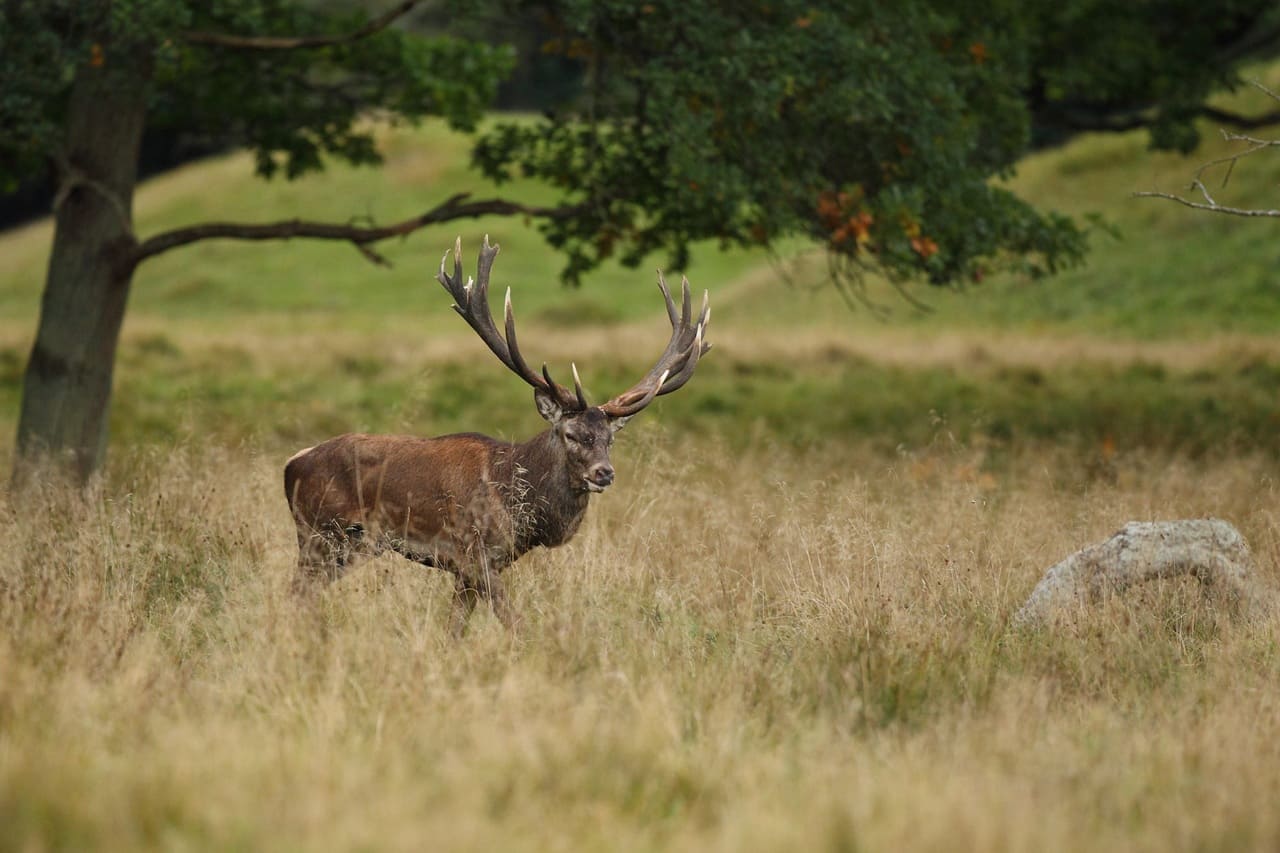
Every year, thousands of roe deer and hundreds of red deer and wild boar lose their lives in road traffic. While collisions between cars and wildlife usually turn out relatively harmless for humans, according to the Federal Statistical Office, 78 people were nevertheless slightly to seriously injured in animal-related accidents last year.
In the event of a collision risk: full braking
If a wild animal does unexpectedly jump in front of a car, immediate braking is called for. «Since the introduction of ABS, full braking is the best solution even on slippery roads. It allows speed to be reduced so that any resulting collision is less severe,» explains Bettina Zahnd.
Tips for avoiding wildlife accidents
- Take road signs indicating wildlife crossings seriously.
- Drive with extra caution on rural roads and in forested areas. Reduce your speed.
- Switch on your headlights if possible.
- As soon as a wild animal appears at the roadside: brake immediately, dip your headlights, and honk if the animal does not move away.
- Be prepared for more wildlife in the same area — animals are often travelling in groups.
What to do after a collision?
- Pull over and secure the accident site (hazard lights, warning triangle).
- Notify the police (Tel. 117): wildlife accidents are required by law to be reported in Switzerland.
- Wait for the police and do not attempt to approach the animal.
More on the subject of recreational hunting: In our dossiers on recreational hunting gather fact-checks, analyses and background reports. The scientific evidence is presented in the overview Studies on the Effects of Recreational Hunting.
The position of IG Wild beim Wild: IG Wild beim Wild rejects recreational hunting. Our model is the canton of Geneva, which has managed without recreational hunting since 1974: without hunting seasons, without hunting dogs, without driven hunts, without high seats, without the animal cruelty and crime that go hand in hand with hunting season elsewhere. What has worked there for over fifty years disproves every position paper by JagdSchweiz. An association that bases its policy on claims it refutes in its own documents is not a professional organisation, but a factory for misinformation.