How to help bees and other pollinators
Bees and pollinators are under threat worldwide. With simple measures in your garden and on your balcony, you can help them.

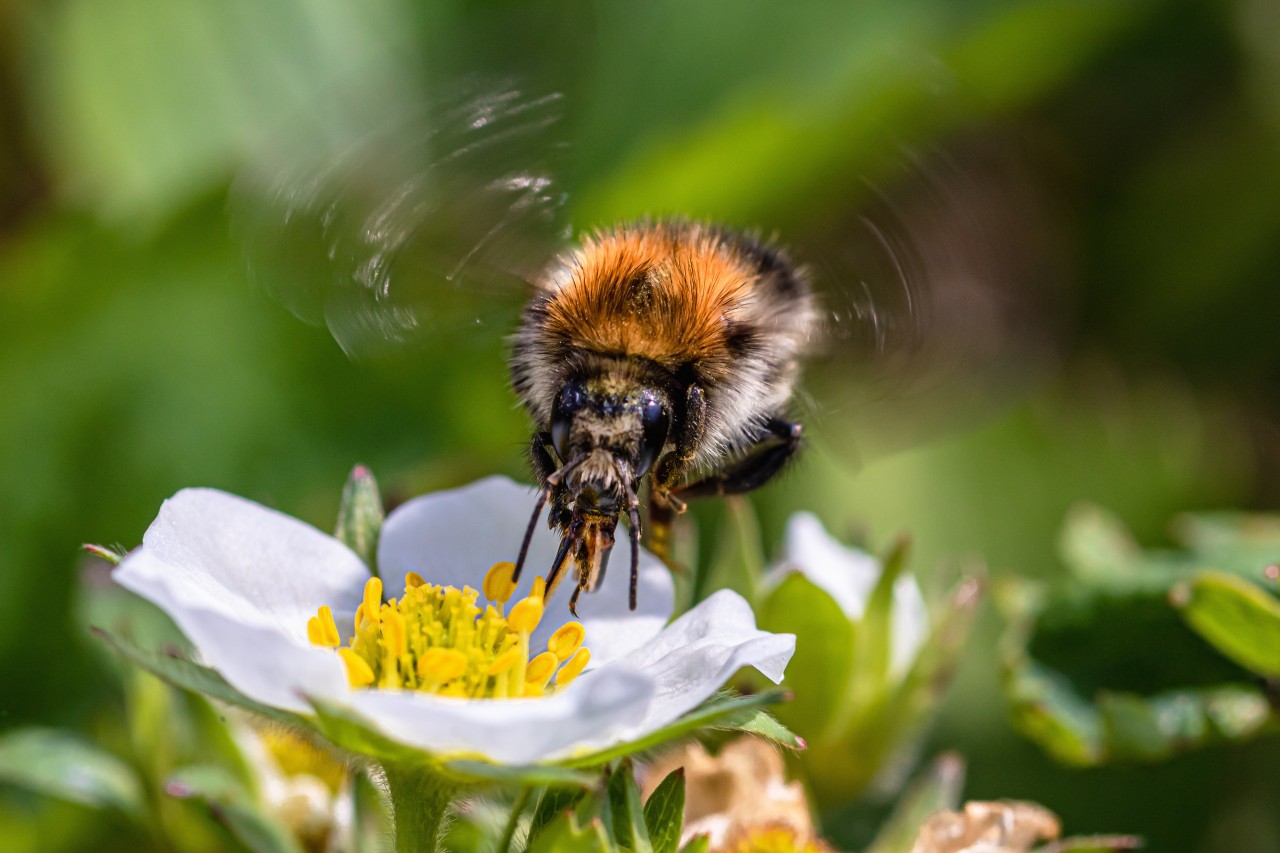
The annual World Bee Day on 20 May is meant to remind us how important honey bees and their wild relatives are for nature and, not least, our food supply.
Each of us can contribute to supporting bees, which are threatened by habitat loss and pesticides — for example by offering them food and nesting sites in the garden and on the balcony. There are, however, a few things to keep in mind.
Bees are among the most important pollinating insects on our planet: around 75% of the food plants used by humans, as well as countless wild plants, depend on visits from these insects for their reproduction. The key players here are not only honey bees, but also more than 20,000 wild bee species. In Germany alone, around 595 such wild bee species occur. Unlike honey bees, many of their wild relatives do not live in complex states or colonies, but are solitary. They often build their nests individually in the ground, in plant material, and in other sheltered spots.
But like honey bees, wild bees also face significant challenges: the loss of plant biodiversity in agricultural landscapes, the use of pesticides in farming, and the concreting over of the countryside all take their toll. As a result, bees can no longer find enough food and egg-laying sites, they are affected by parasites and viruses, or are even directly poisoned by pesticides.
Food: long-grass patches and diverse flowering plants
A contribution to preserving these diligent pollinators can be made in your own garden and even on a small city balcony. There are, however, a few points to bear in mind. One of them: the lawn in the garden should not be cut too short. "A lawn that is only allowed to grow a few centimetres has no food plants to offer wild bees. But those who mow only once or twice a year — namely in early summer after the main flowering of the first plants, and again after the growing season in September — give many flowering plants the chance to bloom and do a great deal of good for many insects." explains Manuel Hensen, coordinator of wild bee projects at the Deutsche Wildtier Stiftung. This does not mean that a wild-bee-friendly garden has to look untidy. It is enough to simply leave a few small plant islands when mowing the lawn.
Also important is a variety of plants that ensures bees always find something in bloom, depending on their feeding preferences and the season. Many native flowering plants are suitable as nectar and pollen sources for wild bees. "It doesn't always have to be flowers. Native woody plants such as hawthorn, blackthorn, willow, or fruit trees of all kinds are also attractive to wild bees in a garden and are used primarily in spring as nectar and pollen sources", explains Hensen. For the balcony, the advice is: occasionally plant native wild perennials such as dyer's chamomile or yarrow in your pots.
Nesting sites: Open patches and sunny bee hotels
Anyone who wants to offer wild bees the opportunity to create nests and egg-laying sites should provide open patches of ground in the garden. If there is only dense grass everywhere and flower beds are covered with bark mulch, wild bees have little opportunity to establish nesting sites in the soil. Far better are sunny lawn areas that are kept open and sandy in some spots. Many wild bee species dig a nesting tube here and place their brood cells inside. "You can also create a sandy area or a sand pile. An area of four square metres or more is sufficient. The sand should be 20 to 30 centimetres deep. To prevent plants from growing through, remove the topsoil to a depth of about 20 centimetres beforehand", says Hensen.
There are also a few things to keep in mind when it comes to the popular wild bee hotels. The nesting aids should be hung in a dry, warm, sunny, and sheltered location. A south-easterly facing spot is ideal. Bee hotels placed in trees or freely hanging, shaded nesting aids, on the other hand, are not accepted by the insects. The filling should also be suitable — drilled holes in wood or hollow bamboo tubes work well. "Unfortunately, wild bee hotels are frequently sold in DIY stores that are of virtually no value to the animals", says Hensen. Completely useless materials include, for example, wood wool, pine cones, or pebbles.