How recreational hunting portals celebrate themselves and what remains of their conservation claims
Europe is in the midst of a hunting crisis: The wolf is being made huntable again, migratory birds are to be shot despite fragile populations, trophy recreational hunting is booming.


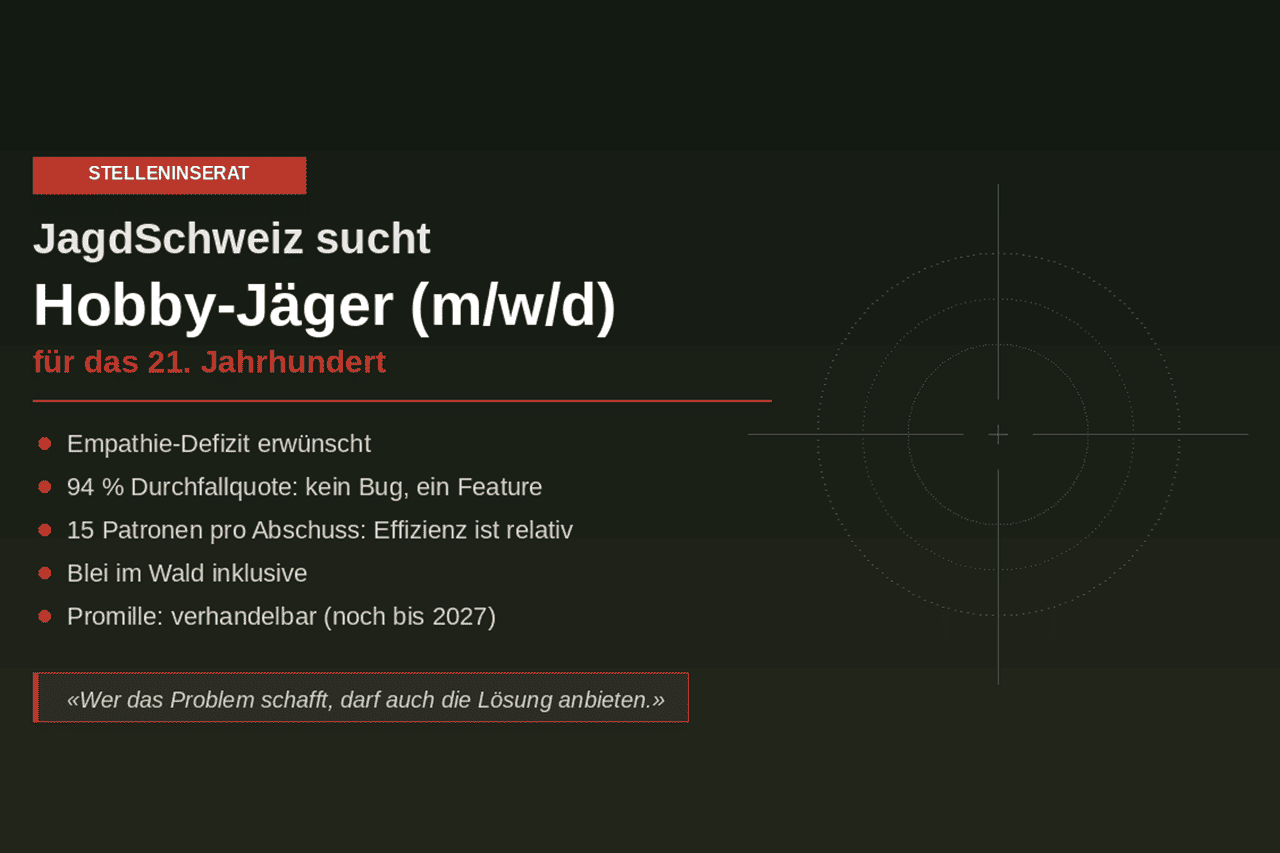
At the same time, recreational hunters stage themselves in their own portals as the "backbone of conservation".
Those who only read these portals might think that without recreational hunters, nature would be hopelessly lost. A look behind the headlines shows, however: This is a self-contained PR system that contributes to problems it subsequently uses to legitimize itself.
Further reading: The wolf in Europe: Why recreational hunting is not the solution and Recreational hunting starts at the desk.
"The positive influence of recreational hunters on nature" – a narrative makes a career
On March 24, 2026, the Italian portal 'Caccia Passione' publishes an article about the alleged 'positive influence' of European recreational hunters on nature. The basis is FACE's 'Manifesto della Biodiversità', the umbrella organization of European hunting associations, which portrays hobby hunters as active conservationists: not just users, but guardians of biodiversity.
The argumentative structure is always the same: First, real problems are identified – wild boar damage, traffic risks, land use conflicts, climate crisis. Then it is suggested that these problems are unsolvable without hobby hunters; recreational hunting appears as an indispensable 'tool' of wildlife management. Finally, it is claimed that recreational hunting is inherently sustainable because it is 'regulated' and hobby hunters support individual 'conservation projects'.
What is systematically missing from this narrative is the structural context: that overpopulations of certain species such as wild boar are strongly linked to intensive agriculture, feeding, corn monocultures, absence of predators, and hunting practices. That many 'management problems' are a consequence of political decisions tailored precisely to the needs of recreational hunting. And that recreational hunting – particularly in the form of trophy, recreational, and fenced hunting – itself causes considerable ecological and ethical costs that cannot be eliminated with individual nesting box projects.
In the dossier Recreational hunting starts at the desk it is shown in detail how much administration, lobbying, and narrative maintenance is necessary to uphold this positive self-image.
Patronage ecology: When hobby hunters first pollute and then 'clean up'
A striking example of this PR logic is the action 'I cacciatori per l'ambiente' in Giffone (Calabria), which Caccia Passione celebrates as the '13th ecological day of Operazione Paladini del Territorio'. Hobby hunters collect empty cartridge cases, take photos, and present themselves as role models of environmental protection.
On a small scale, it may be gratifying when litter is removed from the landscape. In the bigger picture, however, this is patronage ecology – symbolic environmental actions with which actors celebrate themselves for problems in which their practice is significantly involved. Annually, millions of shotgun pellets and projectiles end up in soils, waterways, and wetlands, with documented contamination from lead and other metals. Widespread disturbances from recreational hunting – noise, dogs, driven hunts – affect non-target species indiscriminately, from ground-nesting birds to large mammals. 'Clean-up actions' do nothing to change these fundamental problems; they merely provide images that polish the image of recreational hunting.
Instead of systematically addressing the causes – lead ban, strict controls, restriction of hunting seasons, large-scale quiet zones, independent wildlife management – responsibility shifts to the symbolic politics of hobby hunter associations. Those who first pollute and then clean up for PR purposes are not pursuing an ecological transformation, but damage control for their own image. The scientific evidence on the impacts of recreational hunting on wildlife impressively documents these connections.
'Project Mallard': Species protection or shooting optimization?
The imbalance becomes even clearer in dealing with waterfowl. Under the headline 'Cacciatori migratori acquatici', Caccia Passione reports on the 'Progetto Mallard' by ACMA (Associazione Cacciatori Migratori Acquatici) in the Marche region. ACMA installs artificial nests for mallards in wetlands and describes the project as a measure for 'tutela e monitoraggio' of the species and to promote biodiversity.
According to the project description, this is supposed to increase the reproduction rate of mallards, protect nests from predation by corvids and foxes, and strengthen the migratory bird fauna in the region in the long term. At the same time, however, this represents a classic population manipulation in favor of a huntable wild animal by precisely those groups that later hunt these animals.
Through artificial nests, predator control – targeted hunting of corvids and foxes – and local population support, the 'huntable' biomass is increased. The ecological role of predators, complex food webs and the overall function of wetlands are reduced to the question of how many 'pieces' are available per season. There can be no talk of genuine species protection in the sense of protection from exploitation; rather, it is about more intensive exploitation under a green label.
Hunting communication markets such projects as 'nature conservation' – but consistently conceals that the actual conservation goal would be not to shoot these animals. From a wildlife protection perspective, it is contradictory to promote a species with effort in order to then systematically kill it.
German Hunting Association: 'Wolf in hunting law' as success story
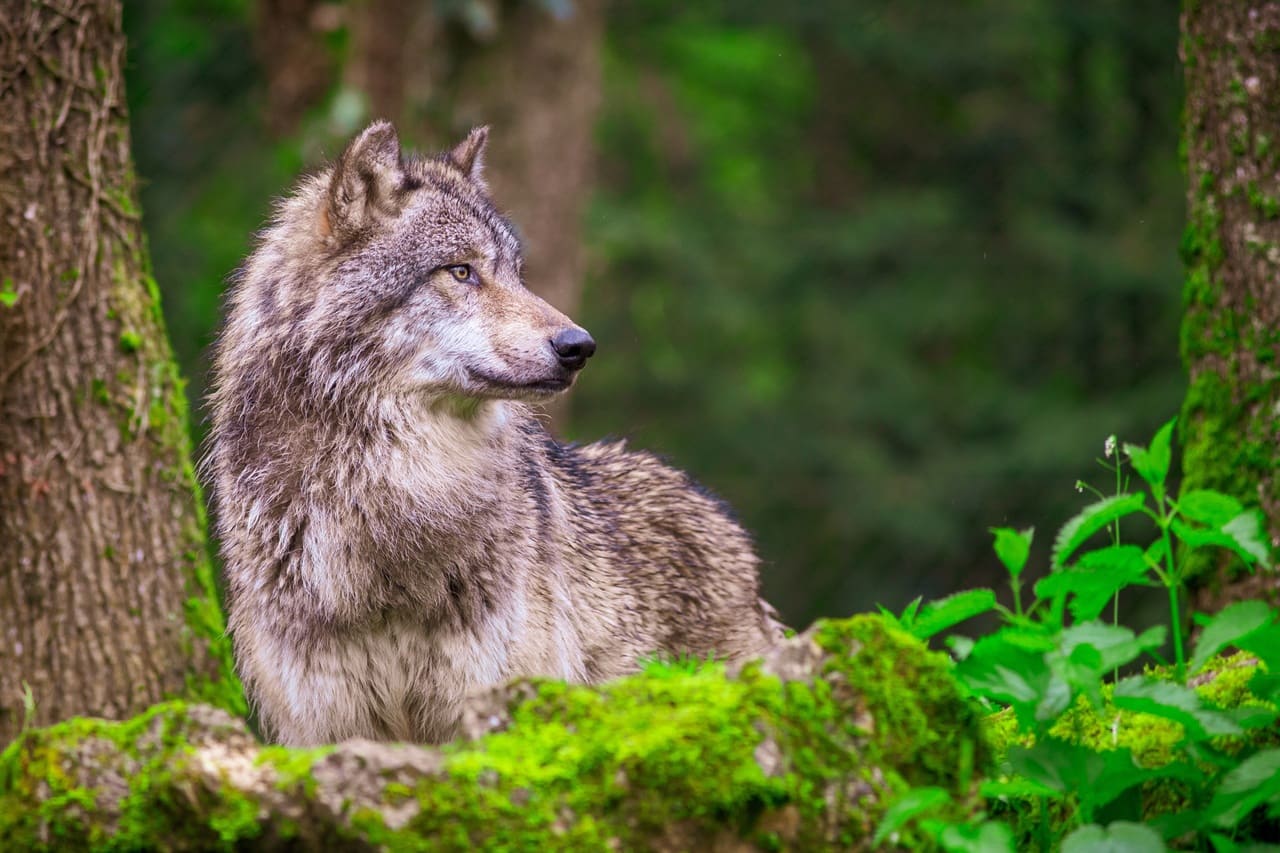
While Italian portals polish the 'nature conservation' facade, the German Hunting Association (DJV) openly celebrates political victories. On March 5, 2026, the association published the announcement 'Bundestag votes for wolf in hunting law'. The tenor: The Bundestag voted by a large majority to include the wolf in hunting law. With the amendment to the Federal Hunting Act, the conditions have been created to 'remove problem wolves without bureaucracy and quickly' and to operate 'active population management'. DJV representatives spoke of a 'great association political success'.
That it became possible at all to declare the wolf a huntable species again is directly related to the downgrading of its protection status in the Bern Convention and the subsequent EU decisions – a political breach of the dam that many biologists and nature conservation organizations had warned against. The hunting lobby is now trying to sell this setback as modernized 'population management'. How this issue is concretely implemented in Germany has already been documented by Wild beim Wild.
What is conspicuous is what is missing from DJV communication: a transparent presentation of the actual conservation status of the population, the genetic situation and the role of the wolf in ecosystems. An honest cost-benefit analysis of livestock protection measures compared to recreational hunting, including the question of whether culling actually reduces conflicts. And above all: the perspective of the wild animals themselves. Wolves only appear as a resource to be managed or as a problem, not as sentient beings with their own interests.
Hobby hunting portals as normalization machine
Besides the major issues – wolf, predators, wetlands – hobby hunter portals fulfill another function: they normalize recreational hunting as everyday routine. Websites like the 'German Hunting Portal' or the news sections of national associations are full of reports about hunting licenses, continuing education, shooting competitions and association anniversaries.
Politically explosive topics – trophy hunting, enclosure hunting, wolf, lynx, bear, lead ban – do appear, but are embedded in the language of administrative routine: 'hearing in committee', 'implementation of the coalition agreement', 'necessary adaptations to EU law'. Always with the undertone that nature conservation is bothersome but manageable through clever lobbying.
These portals thus create an impression of inevitability: recreational hunting appears as a natural constant, not as a politically desired hobby that could be restricted or abolished at any time. This is precisely where the hunting-critical perspective comes in: recreational hunting is not a natural law, but the result of legislation and lobbying. The 'normality' of recreational hunting is produced administratively – through hunting licenses, lease agreements, association structures, examinations, training, PR and media work. The question of whether it is still legitimate to kill wild animals out of 'passion' in light of today's ethical standards and ecological challenges is deliberately excluded from recreational hunting discourse.
How FACE in Brussels and the European hunting industry advance this normalization at EU level is extensively documented.
FACE and the 'Biodiversity Manifesto': Science as a Backdrop
Over many of these portals hovers the communication strategy of FACE, the European umbrella organization of hunting associations. In their 'Manifesto sulla Biodiversità' and in the 'FACE Report', they attempt to position recreational hunting as an indispensable contribution to implementing international biodiversity goals.
The core messages: hobby hunters are 'biodiversity managers' who maintain habitats, conduct monitoring and control invasive species. International processes like AEWA, CITES and the EU Biodiversity Strategy are framed so that 'sustainable use' – i.e. recreational hunting – stands as an equal pillar alongside protection and restoration. Critical voices from animal welfare and conservation organizations are discredited as 'ideological', 'unrealistic' or 'urban alienated'.
The problem is not that hobby hunters don't collect data or carry out individual biotope management measures – they certainly do. The problem is that these activities are instrumentalized in communication to legitimize a completely different practice: recreationally motivated killing of wild animals, including trophy hunting, enclosure hunting and intensive small game management.
From a wildlife protection perspective, what is crucial is: science is selectively used here to make culling appear as 'management', while ethical questions and alternative conflict solutions – livestock protection, spatial planning, agricultural regulation, non-lethal methods – are marginalized. The welfare of individual animals plays practically no role in the argumentation; it's about 'populations', 'utilization quotas', 'acceptance' – i.e. manageable numbers, not lives.
What a Realistic View of 'Recreational Hunting and Conservation' Demands
When reading the current recreational hunting portals together, a clear pattern emerges: problems are partially correctly identified, but their causes are oversimplified – industrialization of agriculture, transport planning, spatial planning, climate crisis, historical extermination of predators. Recreational hunting is declared the universal solution, although it is often itself part of the problem: overprotection, feeding, trophy focus, disturbance, bycatch. Individual PR-suitable projects – nesting boxes, collecting cartridge cases, 'ecological days' – serve as fig leaves for a system based on the systematic killing of wild animals as a recreational activity.
A realistic view in the spirit of common sense would have to acknowledge at minimum: Genuine conservation policy addresses root causes – agricultural, forestry and transport policy, spatial planning, climate and energy policy, protection of predators and habitats. When 'species conservation projects' primarily serve to increase huntable populations, they are not neutral conservation measures, but kill optimization under a green veneer. And the question of whether a modern society chooses to kill wild animals for recreation and tradition is an ethical, not a technical one. It cannot be replaced with nest boxes, cartridge collection campaigns and well-sounding manifestos.
This is precisely where platforms like Wild beim Wild can intervene: by not only refuting hobby hunter narratives, but exposing their inner logic – and consistently placing the perspective of wild animals at the center.
Support our work
With your donation you help protect animals and give their voice a hearing.
Donate now →